August smells like dying grass, diesel exhaust from idling school buses, and the distinct, coppery tang of mouthguards pulled straight from damp gym bags.
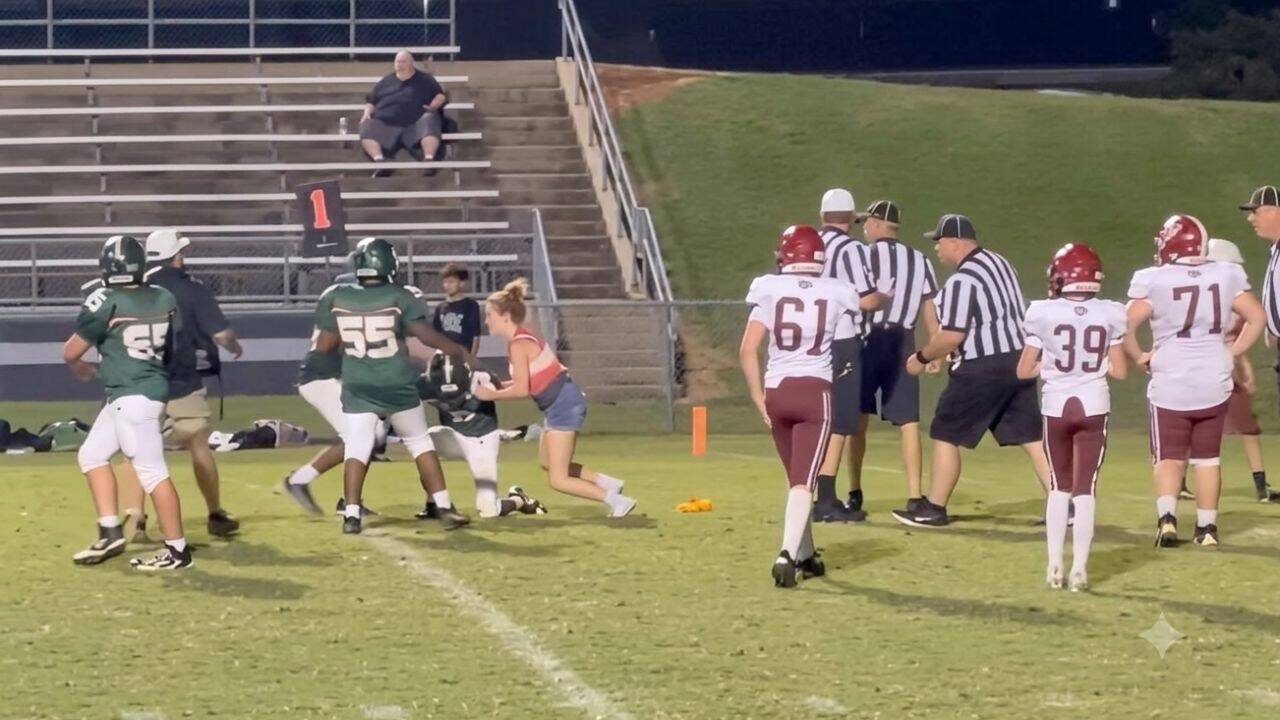
Out behind the fieldhouse, under the glare of portable lights that flicker against a humid evening sky, a seventeen-year-old offensive lineman named Marcus adjusts his chin strap. His fingers are taped twice over, swollen from two-a-days that started before the sun cleared the water tower. He is breathing hard. Not just from the Oklahoma drills, but from an invisible math problem running constantly in the back of his mind.
Preseason rankings.
They are printed in local papers, broadcasted on regional sports radio shows, and scrolled across the bottom of morning news feeds. They list twenty-five high school football teams like a royal decree. Number one. Number twelve. Number twenty-four. On the outside looking in sits Marcus’s program, unranked, unheralded, and acutely aware of it.
To anyone sitting in the aluminum bleachers eating stale popcorn, a top twenty-five list looks like harmless fun. It looks like sports page filler designed to generate chatter between quarters. But down here on the turf, in the dirt, the rankings are a physical weight. They dictate whether college scouts pull their sedans into the parking lot. They decide whether the local grocery store owner buys ad space in the playoff program. Most dangerously, they convince teenagers that their entire human worth can be mathematically summarized by a panel of sports writers who watched three quarters of a scrimmage in a neighboring county.
We treat high school sports like professional operations with high-yield investments. We forget the fragile neurology operating underneath those shoulder pads.
The Architecture of an Autumn Obsession
Consider what happens when a community anchors its entire identity to Friday night wins and losses.
In towns scattered across the country, Friday night is not an event. It is civic religion. The Main Street traffic lights flash team colors. Diners print special menus featuring the mascot's name. When a squad cracks the preseason top twenty-five, the atmosphere shifts from eager anticipation to heavy-handed expectation.
Take a hypothetical program like Westbridge High. For decades, Westbridge was a perennial afterthought. They played hard, lost close, and packed up their gear by late October. Then came a generation of exceptional talent. A bruising running back who could squat a small European car. A quarterback with a rifle for an arm and ice in his veins.
By August, the state-wide sports networks caught wind. Westbridge cracked the preseason poll at number eighteen.
At first, the town celebrated. Horns blared. The quarterback signed autographs in the hallway between third and fourth period. But by week two, when Westbridge squeaked out a sloppy, rain-soaked three-point victory against an unranked opponent, the tone soured. The message boards lit up. Is eighteen too high? They looked flat. The secondary is a liability.
Suddenly, eighteen-year-old kids were playing to defend a number they never asked to be assigned.
Football at this level is supposed to be about chaos, growth, muddy jerseys, and learning how to look someone in the eye after you fall flat on your face. When you layer corporate-style preseason metrics onto teenagers, you strip away the grace of failure. You turn a laboratory for character into a courtroom.
The Numbers Game and Its Ghostly Toll
Let us look at the cold mechanics of how these lists are built.
Writers sit in air-conditioned newsrooms comparing returning starters, star ratings from recruiting websites, and historical program pedigree. If a school went to the state championship last year, they start high. If they graduated twenty seniors, they plummet.
It is logical. It is analytical. It is completely blind to human momentum.
A high school locker room is a living, breathing ecosystem. It is fragile. Chemistry can be shattered by a single knee injury in a July passing league. It can be forged by a late-night bus ride home after a grueling overtime win. A spreadsheet cannot account for the sophomore linebacker who grew three inches and gained thirty pounds of muscle over the summer because he finally stopped working a late-night shift at the diner to help his mother pay the rent.
When the preseason rankings drop, they create an immediate caste system.
The top five teams walk onto the field wrapped in armor. Referees give them the benefit of the doubt on close holding calls. Opponents look across the line of scrimmage and defeat themselves before the opening whistle. Conversely, the unranked teams enter every game carrying a chip so heavy it fractures their collarbones. They play desperate. Desperation sometimes breeds brilliance, but more often, it breeds mistakes, penalties, and injuries born of overexertion.
I remember watching a kid from an unranked rural school break his wrist in the fourth quarter of a blowout loss. He tried to hide it from the trainer. Why? Because his coach had mentioned all week that if they didn't pull off an impossible upset against the number-four team in the state, the season was effectively over in the eyes of the media.
He was seventeen. His season wasn't a stock portfolio. It was supposed to be a memory.
Beyond the Polls
The reality of autumn football is messy, beautiful, and stubbornly resistant to neat categorization.
When the lights finally go down on a November night and the stadium empties out, the paper rankings turn to pulp in the rain. Nobody remembers who was ranked ninth in August when they are standing in the freezing locker room crying because the seniors are hanging up their jerseys for the very last time.
The numbers are an illusion we invent to keep ourselves entertained during the slow dog days of summer. They give us something to argue about over coffee or across digital comment sections. But the boys on the field are learning lessons that have nothing to do with numbers. They are learning how to stand back up when the crowd goes silent. They are learning how to trust the teammate standing to their left, regardless of what any poll says about his potential.
Drop the preseason lists. Burn the projected standings.
Let the kids play the game in the dirt where it belongs, free from the crushing weight of expectations they never voted on, returning football to the simple, violent, glorious poetry of boys chasing a pigskin under Friday night lights.