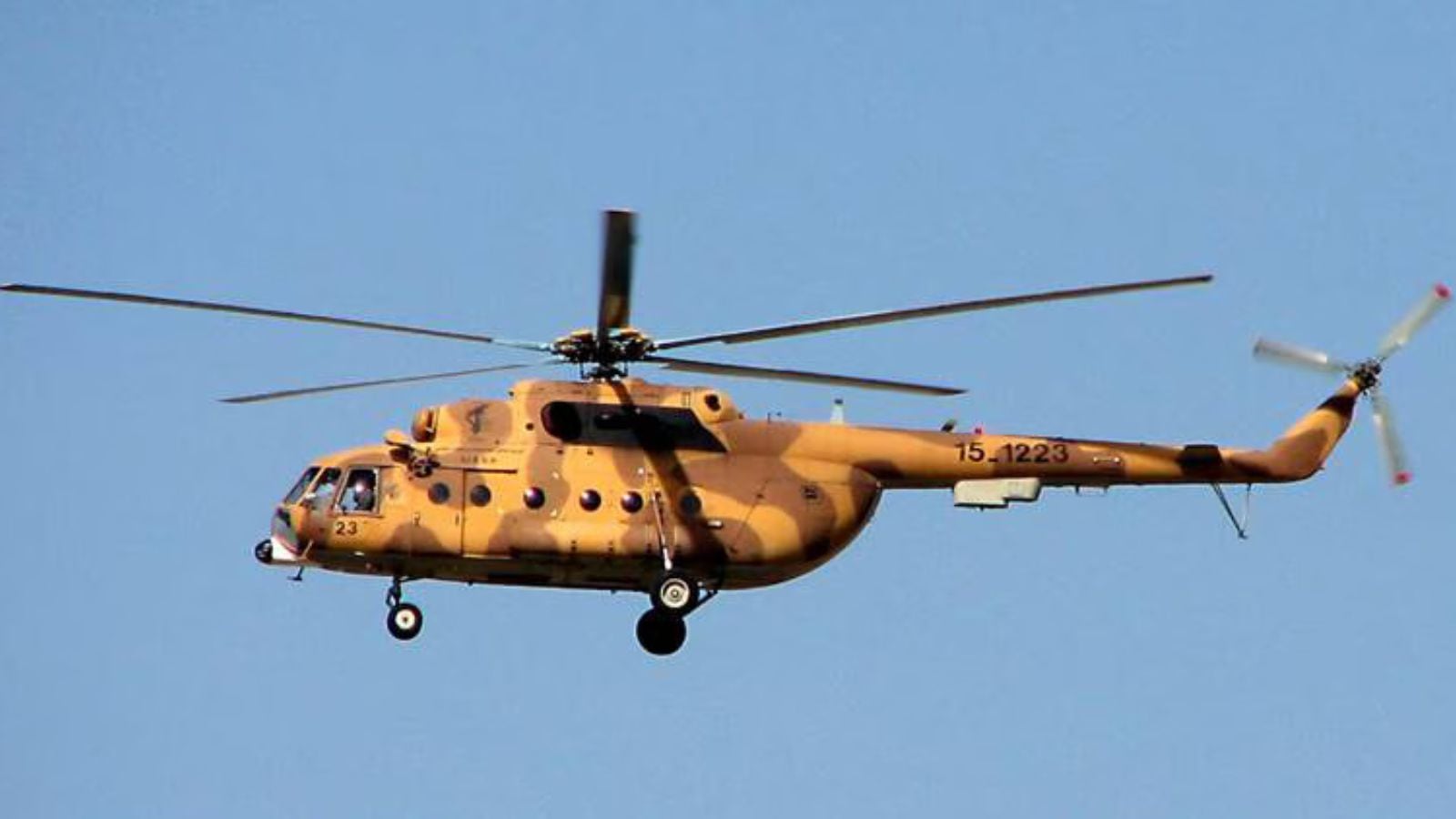
Mainstream media treats every military helicopter crash like an isolated tragedy or a localized maintenance fluke. The recent coverage of the Pakistan Army chopper crash in Muzaffarabad follows the exact same tired script. "Bad weather." "Technical glitch." "Tragic loss."
They are asking the wrong questions. They are looking at the sky when they should be looking at the supply chain.
The lazy consensus in aviation reporting focuses entirely on the pilot's final seconds or the immediate weather conditions. It completely misses the structural decay defining modern military fleet management in high-altitude zones. When a utility helicopter goes down in mountainous terrain, the crash isn't the start of the story. It is the predictable endpoint of a broken procurement and operational philosophy.
The High Altitude Illusion
The media loves to blame the terrain of Kashmir or the unpredictable mountain winds. This is a fundamental misunderstanding of aviation mechanics.
Helicopters do not fail simply because a mountain is high. They fail because of a metric known as density altitude. As temperature and altitude rise, the air thins. Thin air drastically reduces lift, engine power, and rotor efficiency.
Every manufacturer publishes rigorous performance charts detailing these limits. Operating a fleet in these conditions requires an entirely different approach to maintenance cycles and weight management than operating at sea level.
I have watched organizations burn through millions of dollars in hardware because they assumed a machine rated for 15,000 feet could operate there indefinitely without a massive escalation in maintenance hours.
Here is the math the public misses:
- A helicopter operating at high density altitudes requires up to three times the maintenance hours per flight hour compared to standard operations.
- Turbine blades degrade faster due to particulate ingestion in mountainous environments.
- Cooling systems work twice as hard in thin air, accelerating the thermal fatigue of critical components.
When an army flies standard utility choppers in these environments without adjusting their operational calculus, they aren't dealing with "unforeseen technical glitches." They are gambling with probability.
The Myth of the Unavoidable Accident
People always ask: "Can military helicopters be made completely safe in mountainous regions?"
The brutal reality is that total safety is a myth, but the current rate of attrition in developing militaries is entirely preventable. The issue is a refusal to adopt predictive logistics.
Most legacy military frameworks rely on reactive maintenance. You fly the aircraft, the part breaks or reaches its hourly limit, and you replace it. In punishing terrain, this methodology is fatal.
True operational readiness requires structural health monitoring systems (SHMS) that track real-time stress and vibration profiles of the rotor hub and gearbox. If you are not utilizing data-driven, predictive overhaul intervals, you are essentially flying blind.
The downside to this contrarian approach? It is incredibly expensive and logistically restrictive. Adopting a strict, data-driven safety protocol means grounding significant portions of your fleet when the data flags a micro-stress fracture. For a military managing active border zones, grounding aircraft feels like an unacceptable strategic compromise. So, they push the airframes past their ideal windows. They accept the risk. Then, the media calls the result an "unfortunate accident."
Dismantling the Procurement Trap
Developing nations frequently buy hardware based on political alignment or upfront sticker price rather than lifecycle sustainability.
Buying a fleet of helicopters is easy. Sustaining them for twenty years in a corrosive, high-altitude environment is where the real war is waged. When international sanctions, diplomatic shifts, or economic crises restrict access to OEM (Original Equipment Manufacturer) certified spare parts, maintenance crews are forced to improvise.
Improvisation in aviation is a death sentence.
The moment a military begins cannibalizing parts from one airframe to keep another airborne, the systemic risk skyrockets. The paperwork trails become muddy. Micro-tolerances deviate from manufacturer specifications. The media will report the final crash as a single component failure—a faulty rotor tail blade, perhaps—but the root cause was the supply chain failure months prior.
Stop Blaming the Pilots
Every time a military aircraft goes down, an investigation board convenes, and remarkably often, the blame falls squarely on "pilot error." It is the cleanest way to close a file. It protects the procurement officers, it protects the politicians, and the dead cannot argue.
But pilot error is almost always a symptom, not a cause.
If a pilot misjudges a downdraft, why were they pushed into a high-risk weather window? Were they flying an aging airframe lacking modern automated flight control systems that mitigate pilot workload in high-stress environments?
We must look at the institutional choices that put that pilot in that cockpit under those specific conditions. Stop analyzing the final three seconds of the flight data recorder and start analyzing the five years of maintenance logs leading up to it.
The status quo of aviation reporting functions as a shield for institutional incompetence. By focusing on the spectacular tragedy of the crash itself, the public is blinded to the slow, bureaucratic rot that makes such tragedies inevitable. Airframes do not just fall from the sky; they are pushed by decades of flawed logistics, compromised procurement, and a systemic refusal to face the realities of high-altitude physics.