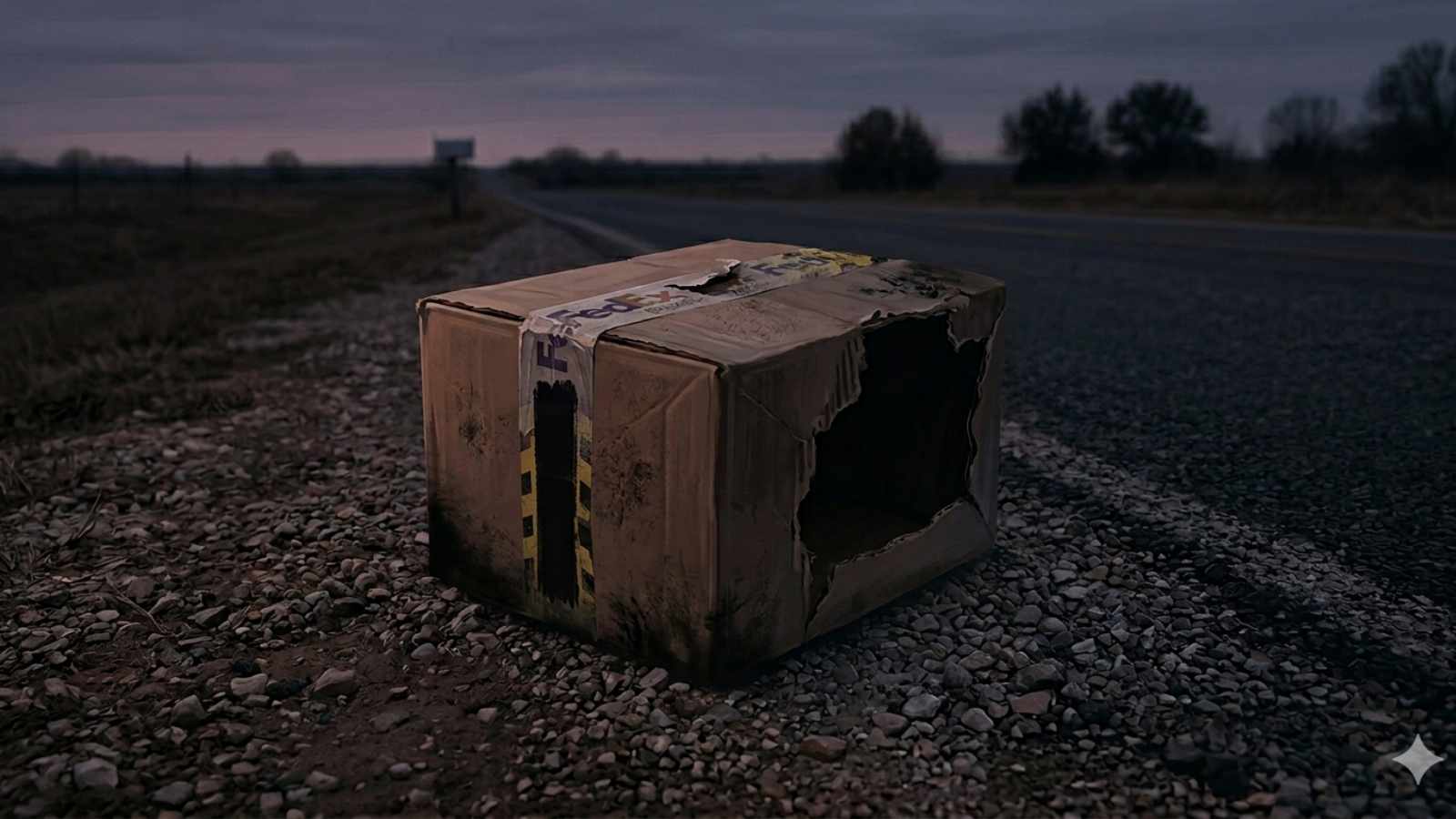
Tanner Horner, a former contract driver for FedEx, now sits on death row for the 2022 kidnapping and murder of seven-year-old Athena Strand. The tragedy began with a delivery of Barbie dolls to a home in Wise County, Texas. When Horner accidentally struck the child with his van, he panicked. Rather than calling for help or alerting the family, he forced her into the vehicle and later strangled her to prevent her from telling her father. A Texas jury needed less than two hours of deliberation in 2026 to return a death sentence, closing a legal chapter but leaving a massive, systemic wound wide open.
This was not a random act of violence in the traditional sense. It was a failure of the modern logistics infrastructure.
While the courtroom focused on the horrific actions of one individual, the industry must reckon with the environment that placed him behind that wheel. The sentencing of Tanner Horner exposes a terrifying reality about the "last mile" of the global supply chain. To the consumer, a package is a convenience. To the logistics giants, it is a mathematical problem solved through aggressive outsourcing and a relentless push for speed. Athena Strand’s death is the ultimate price paid for a system that prioritizes volume over rigorous human oversight.
The Mirage of Brand Accountability
When a truck with a purple and orange logo pulls into a driveway, the homeowner assumes they are dealing with a vetted representative of a multi-billion-dollar corporation. That assumption is often wrong.
FedEx Ground, the division involved in the Athena Strand case, operates on a model of Independent Service Providers (ISPs). These are third-party companies that own the trucks and employ the drivers. FedEx provides the branding and the software, but the actual human being walking onto your porch is technically an employee of a small business you have never heard of. This layers-of-protection strategy allows the parent company to distance itself from liability when things go wrong.
In the Texas litigation, the Strand family’s legal team pointed directly at this disconnect. They argued that the "hands-off" approach to contractor management creates a vacuum where safety protocols are treated as suggestions rather than mandates. If a contractor is under intense pressure to hit delivery quotas, the nuances of driver psychological screening or behavioral monitoring often fall through the cracks. The branding suggests a gold standard of corporate security, but the reality is a patchwork of local operators struggling to maintain margins.
The Pressure Cooker of the Doorstep Economy
Logistics is a game of seconds. Algorithms dictate the route, the speed, and the duration of every stop. Drivers are tracked via GPS and telematics, monitored for every hard brake or extended idle.
This environment creates a specific type of psychological strain. When Horner hit Athena Strand with his van, his immediate reaction was dictated by the terror of consequence. In a high-stakes corporate culture where "on-time delivery" is the only metric that matters, an accident isn't just a mistake; it's a career-ending event that disrupts the machine. This does not excuse the monstrous choice to commit murder, but it highlights how the gig-economy mindset can strip away the humanity of a situation.
The driver felt he could not afford the delay or the report. He chose a path of unimaginable cruelty to "fix" a logistical error. We have built a world where the person bringing a birthday gift to your child is often the most stressed, least compensated, and most loosely supervised link in the entire commercial chain.
Screening Gaps in the Contract Labor Market
Background checks are the industry’s standard defense, yet they are increasingly insufficient. Horner had no prior criminal record that would have disqualified him from driving. This is the argument the defense used to suggest he wasn't a "predator" in the waiting.
However, investigative scrutiny reveals that standard criminal database pulls are a low bar. They do not account for behavioral red flags, mental health instability, or the lack of professional training. When companies rely on a rotating door of contract labor, they lose the ability to build a culture of safety. You cannot "culture" a workforce that changes every six months.
The logistics industry currently faces a massive labor shortage. The demand for home delivery has exploded, yet the pool of people willing to work these grueling shifts is shrinking. This leads to a "warm body" policy where anyone with a valid license and a clean record is handed the keys to a ten-ton weapon.
The Cost of the Convenience Tax
Every time a consumer clicks "buy now" and expects a package within 24 hours, they are reinforcing this high-velocity model. We have grown accustomed to the invisible worker. We want our goods fast and we want the shipping to be free.
To make "free and fast" work, something has to give. Usually, it is the middle management layer—the supervisors who should be checking in on drivers, the trainers who should be teaching safety over speed, and the corporate auditors who should be ensuring that contractors aren't cutting corners.
The Texas verdict sends a message to individuals, but it doesn't necessarily change the P&L (Profit and Loss) statements of the companies involved. Until the legal cost of these failures exceeds the savings gained by outsourcing the workforce, the model will remain unchanged.
Reforming the Last Mile
There is no simple legislative fix for a tragedy this profound, but the industry is at a crossroads. The "independent contractor" loophole is under fire across multiple states, not just for labor rights, but for public safety.
Real reform would require a return to the "company driver" model, where the logo on the side of the truck matches the paycheck in the driver's pocket. This creates a direct line of accountability. It allows for standardized training, better benefits to reduce turnover, and more comprehensive psychological evaluation. It would also make shipping more expensive and slightly slower.
That is the trade-off the public rarely discusses. Are we willing to wait three days for a package if it means the person delivering it is a highly-vetted professional with a stake in their company's reputation?
The Jury’s Mandate for Change
The death sentence for Tanner Horner is a definitive statement by a Texas community that some crimes are so heinous they demand the ultimate penalty. Yet, if we focus only on the execution of one man, we ignore the hundreds of thousands of un-vetted vans still circling our neighborhoods.
The case of Athena Strand is a haunting reminder that our front porches are no longer the private sanctuaries we imagine them to be. They are the terminal points of a global industrial complex that is moving too fast for its own good.
The delivery of a Barbie doll should have been a mundane moment of childhood joy. Instead, it became a crime scene because a system designed for maximum efficiency failed to account for basic human morality. We must demand a logistics infrastructure that values the safety of the recipient as much as the speed of the shipment.
The industry must stop hiding behind the legal fiction of independent contracting. When you put your name on the truck, you take responsibility for the person in the seat.