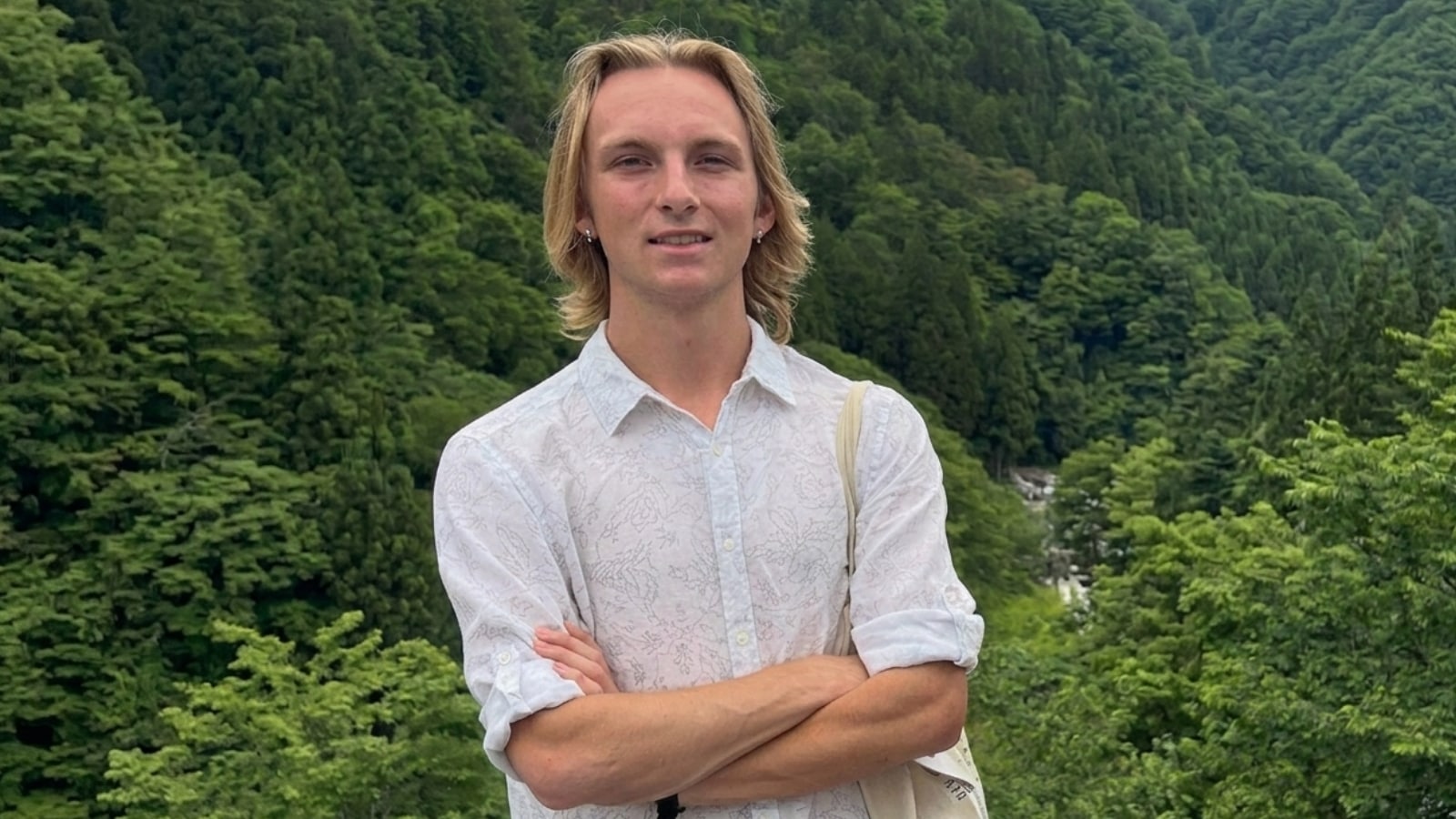
The tragic discovery of 20-year-old Auburn University junior James "Weston" Higginbotham outside Kyoto, Japan, brings a devastating end to a week-long international search. Volunteer rescue teams recovered the body of the biosystems engineering student in a dense, mountainous forest region near the Yamashina ward. He had walked away from his family on May 29 following a minor dispute regarding his mother’s reliance on ChatGPT for trip navigation. While early sensationalized headlines framed the tragedy as a fatal argument over artificial intelligence, the reality reveals a much deeper, more complex friction point.
The incident exposes a growing ideological divide between digital-native environmentalists and an older generation rapidly adopting resource-heavy automation tools. Higginbotham was an avid naturalist, a vegan, and a pacifist dedicated to sustainable engineering. To him, the invisible environmental cost of generating a restaurant recommendation through a large language model was a visceral burden. When his mother, Nancy Higginbotham, used the software to navigate the intricacies of travel in Japan, a routine vacation disagreement transformed into a catalyst for a young man to seek solitude in the wilderness. He entered a rugged, unfamiliar terrain just as a destructive regional storm system closed in.
The Breakdown in Yamashina
The mechanics of the disappearance reveal how quickly a routine family outing can spiral into a survival crisis. On the afternoon of May 29, the Higginbotham family was visiting historical landmarks in Kyoto to celebrate Weston’s younger brother’s high school graduation. Seeking physical and emotional distance after the disagreement, Higginbotham split from the group to explore independently. It was a familiar pattern for a student who regularly decompressed by hiking, having previously tackled the Pyrenees mountains in Europe alone.
Data retrieved from surveillance networks and tracking software provides a precise timeline of his final movements.
- 6:00 PM: Higginbotham departs Kyoto Station alone.
- 8:00 PM: Closed-circuit television captures him walking near Yamashina Station, heading toward a trail network entering the local mountains.
- 8:15 PM: His mobile phone, which his family noted had dropped to a critical 34% battery level, permanently loses network connectivity.
The immediate terrain outside Yamashina consists of steep, heavily forested ridges that offer minimal margin for error. Within hours of his departure, a severe regional typhoon system struck Kyoto, bringing torrential downpours and dropping visibility to near zero.
Echoes of the Digital Footprint Controversy
To understand why the argument escalated, one must look at the specific nature of Higginbotham’s academic and ethical life. As a biosystems engineering student at Auburn, his coursework directly intersected with resource management and industrial sustainability. He belonged to a demographic of young scientists acutely aware of the infrastructure required to keep modern generative systems running.
The hidden cost of artificial intelligence is no longer an academic abstraction. Training a single state-of-the-art language model can consume millions of liters of fresh water for data center cooling loops, alongside massive electrical draws. For a student committed to minimizing his ecological footprint to the point of carrying insects outside rather than killing them, the casual use of these platforms represented a profound systemic compromise.
"We had an argument because I was using ChatGPT too much to try to help us navigate the trip and find the best restaurants," Nancy Higginbotham stated during the search. "We try never to use it, and I totally agree with him. It was just a dumb, dumb argument to have."
This friction is becoming increasingly common. Everyday consumers view generative tools as harmless utilities, akin to a standard internet search. Meanwhile, environmentally conscious critics view them as ecological liabilities. The clash in Kyoto was not an isolated outburst, but rather the manifestation of a deep-seated anxiety regarding how rapidly these resource-hungry systems are integrating into daily life.
The Limitations of Search Operations in Foreign Wilderness
When Higginbotham failed to return to the family’s accommodations by 2:00 AM on May 30, local authorities launched a missing persons investigation. The ensuing search exposed the severe constraints that localized weather and geography place on modern rescue operations.
[Kyoto Urban Area] ---> [Yamashina Station (Last CCTV)] ---> [Steep Mountain Trails]
                                                                     |
                                                       (Typhoon Winds & Heavy Mud)
                                                                     |
                                                       [72-Hour Police Search Zone]
More than 100 Japanese police officers, supported by specialized K-9 tracking units and low-altitude helicopters, spent three days traversing the Yamashina forests. The operation faced immediate delays due to the typhoon. Rescuers were forced to wade through waist-high mud along trails known for sudden landslides.
Because official Japanese search protocols are tied to strict geographic parameters based on statistical probability and initial tracking data, the official deployment concluded after 72 hours without locating the student. The Kyoto Prefectural Police initially hypothesized that Higginbotham had intentionally disabled his GPS tracking to clear his head, a factor that complicated the early phase of the deployment by widening the potential search radius.
Determined to find their son, the family organized an independent recovery effort, securing private volunteer teams and experienced local hikers to comb the rugged areas bypassed during the initial police sweep. It was one of these private volunteer search-and-rescue groups that ultimately discovered Higginbotham's body on June 6 in a remote section of the mountainous terrain.
Infrastructure Realities in the Wilderness
The tragedy underscores a stark paradox of the modern era. While digital tools can map out remote global destinations in seconds, they offer a false sense of security when physical infrastructure fails. When a traveler steps off a paved path into dense East Asian forests, the safety net provided by global positioning systems, location-sharing applications like Life360, and cellular networks can vanish instantly.
A low phone battery combined with dense canopy cover and extreme weather conditions creates a lethal isolation trap. Higginbotham entered the wilderness with roughly 10,000 Japanese yen—about $62—and a dying phone. He possessed the physical stamina of an experienced hiker but lacked the specialized equipment required to survive a sudden typhoon in an unfamiliar mountain system.
The investigation into the exact medical cause of death remains ongoing, with Japanese authorities releasing no immediate signs of foul play. The narrative surrounding his final hours serves as a sobering reminder of the physical world's indifference to human ideology. The friction between an old world relying on tech convenience and a young world resisting it led to a momentary pursuit of space, but it was the unforgiving terrain of Kyoto and the arrival of a sudden storm that dictated the final outcome.