The federal government just overruled its own drug safety experts to put six unapproved peptides back on pharmacy shelves.
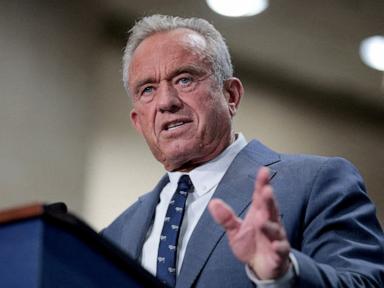
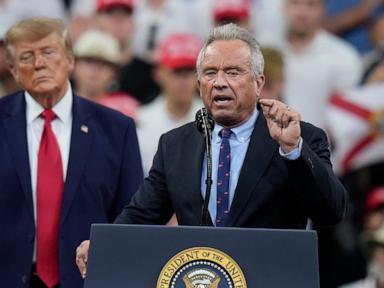
If you've spent five minutes on wellness podcasts or fitness forums lately, you already know these names. BPC-157, TB-500, KPV, MOTS-c, Semax, and Epitalon. On October 28, 2026, the Department of Health and Human Services (HHS), led by Secretary Robert F. Kennedy Jr., issued an interim policy telling the Food and Drug Administration to stand down on enforcing compounding bans against these exact six substances.
There's just one massive problem. FDA scientists opposed the Trump administration's effort to ease peptides access from the very beginning.
Behind closed doors, career drug reviewers at the FDA's Center for Drug Evaluation and Research (CDER) pushed back hard against the move. According to multiple people familiar with the deliberations, scientific staffers had almost no say in drafting the policy and warned that it blows a hole in the agency's core mission of keeping unproven drugs off the market. Yet HHS bypassed traditional FDA channels anyway, flexing a rarely used legal authority to push the plan through.
So what actually happened here, and what does it mean if you're thinking about asking a doctor for a peptide prescription? Let's break down the politics, the science, and the fine print nobody is talking about.
How HHS Bypassed the FDA to Ease Peptides Access
Normally, rules governing compounding pharmacies come straight from the FDA. The agency has an entire division dedicated to evaluating bulk drug substances and protecting consumers from contaminated or ineffective compounded medications.
In this case, HHS took the wheel directly.
Former FDA officials told the Associated Press that it's extraordinarily rare for HHS leadership to step in and draft compounding policy themselves. Technically, federal law grants the HHS Secretary overarching authority over drug regulations, which is normally delegated down to the FDA Commissioner. Kennedy's team simply reclaimed that authority.
The timeline tells the whole story:
- 2023: The FDA cracks down on several popular peptides, flagging safety concerns and removing them from lists that allow compounding pharmacies to mix them legally.
- Early 2026: Political pressure mounts as Kennedy and the "Make America Healthy Again" (MAHA) movement champion peptides for longevity, tissue repair, and inflammation.
- July 2026: An outside FDA advisory panel—the Pharmacy Compounding Advisory Committee (PCAC), whose roster included clinicians and consultants working directly in the peptide space—votes to recommend easing access to six of seven peptides reviewed, rejecting only emideltide (DSIP).
- October 28, 2026: Despite internal CDER staff recommending against every single one of the six substances, HHS files its interim enforcement discretion policy, published in the Federal Register two days later.
FDA scientists didn't just disagree with the outcome. They felt sidelined. Once it became clear HHS was moving forward regardless, agency staffers were relegated to offering technical edits—adding guardrails like mandatory ingredient testing and adverse-event reporting to minimize the potential damage.
Enforcement Discretion Is Not FDA Approval
Let's clear up the biggest misconception floating around social media right now. None of these six peptides are FDA-approved drugs.
Not one.
When people hear that the government "legalized" BPC-157 or TB-500, they assume clinical trials proved these compounds work and won't hurt you. That's flat-out wrong. HHS used a regulatory mechanism called enforcement discretion. In plain English, the federal government is saying, "We aren't approving these drugs, and they aren't officially on the safe-to-compound list, but we won't prosecute licensed pharmacies for making them while we write permanent rules."
Look at the official Federal Register notice itself. It explicitly states that the policy doesn't establish any legal rights, isn't binding on HHS, and can be yanked away the moment a safety signal or quality failure pops up.
Compare that to FDA-approved peptides you already know—things like insulin or GLP-1 medications like semaglutide. Those drugs went through massive, multi-phase human clinical trials involving thousands of patients before a single vial hit a pharmacy. By contrast, the six peptides in the October 2026 policy rely heavily on animal studies, petri-dish data, and anecdotal reports from longevity clinics.
The Six Peptides Covered and Their Strict Limits
Another detail most headlines gloss over is that you can't just compound these peptides however you want. Appendix B of the HHS policy locks each substance into specific chemical salt forms and exact routes of administration. If a pharmacy mixes a nasal spray for a peptide only cleared for injection, they're breaking the rules and lose their legal shield.
Here is what actually made the cut:
- BPC-157 Acetate: Originally isolated as a fragment of a protein in human gastric juice, this 15-amino-acid chain is famous in gym circles for tendon and gut healing. HHS permits subcutaneous, intramuscular, oral, and topical forms.
- TB-500 Acetate: A synthetic fraction of thymosin beta-4 used for soft-tissue recovery. Restricted strictly to subcutaneous or intramuscular injections.
- KPV Acetate: A tripeptide studied mostly in mouse models for gut and skin inflammation. Covered only for oral and topical use—no injections.
- MOTS-c Acetate: A mitochondrial-derived peptide pitched for metabolic health and exercise endurance. Approved under the policy solely for subcutaneous or intramuscular injection.
- Semax (Free Base): A synthetic peptide originally developed in Russia and promoted for cognitive focus. Covered strictly as an intranasal spray.
- Epitalon Acetate: A synthetic tetrapeptide marketed for cellular aging and sleep regulation. Permitted only via subcutaneous or intramuscular injection, and exclusively in intermittent courses rather than continuous daily use.
Notice what's missing? Blends. The popular "Wolverine Stack"—combining BPC-157 and TB-500 into a single vial—is explicitly excluded. The policy mandates one active ingredient per compounded product. A doctor can still prescribe both, sure, but the pharmacy has to compound and dispense them in separate vials.
Why FDA Reviewers and Doctors Are Sounding the Alarm
It's easy to paint FDA scientists as bureaucratic stick-in-the-muds standing between regular people and cutting-edge wellness tools. That's a convenient narrative, especially if you sell peptides. Honestly, it ignores the very real reasons drug reviewers objected.
First, we don't have solid human dosing or long-term safety data for these compounds. Take BPC-157. While rodent studies show impressive tissue repair, peptides that stimulate blood vessel growth (angiogenesis) raise theoretical questions about how they behave in people with undiagnosed tumors or vascular conditions. Without controlled human trials, nobody knows the true risk profile, how these substances interact with anesthesia during surgery, or what happens after two years of continuous injections.
Second, the medical community isn't buying the "trust us" approach. In November 2026, the American Medical Association (AMA) adopted a formal policy urging HHS to immediately rescind the peptide directive, warning that bypassing standard FDA drug review puts patients at risk. Even the Alliance for Pharmacy Compounding raised flags about gray areas, pointing out confusion over when the policy takes effect and how federal enforcement discretion clashes with state pharmacy boards that enforce their own strict rules.
Third, memory at the FDA is long. Compounding safety isn't an abstract debate for agency staffers—they still remember the 2012 fungal meningitis outbreak traced back to contaminated injections from a Massachusetts compounding pharmacy, a disaster that killed dozens of people. When you open the floodgates to injectable substances that lack standardized pharmaceutical monographs, quality control becomes an immediate headache.
The Black Market Argument Has Real Merit
To be fair to HHS, Kennedy's team didn't pull this idea out of thin air. Their core argument is pragmatic: millions of Americans are already buying these peptides anyway, and right now they're getting them from shady websites labeled "research chemicals — not for human consumption."
If you've ever looked into the gray-market peptide space, you know how wild it is. People routinely inject lyophilized powders ordered from unverified overseas suppliers, reconstituting them in their kitchens with bacteriostatic water bought online. Independent lab tests on gray-market vials frequently turn up under-dosed products, wrong amino acid sequences, heavy metals, or bacterial endotoxins.
HHS argues that funneling this demand through licensed U.S. 503A compounding pharmacies is a harm-reduction play. Under the October 2026 policy, pharmacies can only participate if they follow strict guardrails:
- Verified Sourcing: Bulk peptide ingredients must come from an FDA-registered facility, accompanied by a Certificate of Analysis (CoA) verifying identity, purity, potency, and screening for endotoxins, microbes, and heavy metals.
- Patient-Specific Prescriptions: Pharmacies can't mass-produce batches for walk-in buyers; every vial requires an individual prescription from a licensed clinician.
- Oral Absorption Proof: Any pharmacy compounding oral BPC-157 or KPV must keep documented evidence on file showing the formulation actually absorbs properly in humans.
- Adverse Event Tracking: Compounders must report serious side effects and quality failures directly to the FDA's MedWatch system.
Here's the catch that regulatory experts point out: clean manufacturing doesn't equal clinical safety. Knowing a vial contains 99.4% pure BPC-157 with zero bacteria is vastly better than injecting mystery powder from an overseas website. Still, purity only proves you're getting the exact molecule on the label—it doesn't prove that molecule is safe or effective inside your body.
What You Should Do Before Using Compounded Peptides
Because this policy sits in a gray zone between political deregulation and unresolved science, you have to protect yourself. If you're considering working with a physician to try one of these six peptides, take concrete steps before filling a prescription:
- Verify the pharmacy's sourcing. Ask the compounding pharmacy directly if they are operating under the October 2026 HHS enforcement discretion conditions and whether their bulk peptide supplier is FDA-registered. Request to see the lot-specific Certificate of Analysis showing endotoxin and heavy-metal testing. If they dodge the question, walk away.
- Check your state's rules. Federal enforcement discretion doesn't force state boards of pharmacy to play along. Depending on where you live, your state board may still prohibit local pharmacies from compounding unapproved peptides, meaning a clinic might try to ship from out of state—or worse, sell you gray-market vials out of a back fridge.
- Tell your surgeon and anesthesiologist. If you have any procedure scheduled, disclose every peptide you take. Compounds that alter blood vessel growth, inflammation, or metabolic pathways can affect bleeding, blood pressure, and anesthesia response.
- Watch out for competitive drug bans. Both BPC-157 and TB-500 sit on the World Anti-Doping Agency (WADA) Prohibited List, along with several major collegiate and professional sports leagues. Federal policy changes won't save you from a positive drug test.
- Don't treat peptides as shortcuts. No injectable peptide overrides bad sleep, insufficient protein, smoking, or skipping physical therapy. Treat any experimental compound as a secondary variable—and if a clinic promises guaranteed healing without explaining that human clinical trials are still lacking, find a more honest doctor.