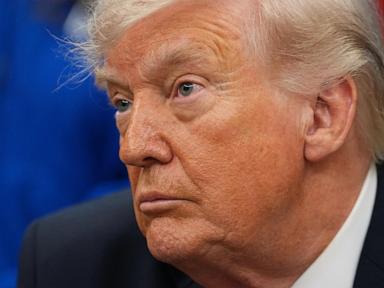
The federal government is about to start cutting checks directly into the retirement accounts of low-income workers, and the White House is moving to ensure it gets the credit for a windfall originally planted by its predecessors. On Thursday, President Trump signed an executive order to launch TrumpIRA.gov, a central clearinghouse designed to bridge the gap for the 56 million Americans who lack access to an employer-sponsored 401(k). The move is a calculated sprint to get millions of "gig" workers and small-business employees enrolled in private plans before the Saver’s Match—a direct federal subsidy of up to $1,000 per person—kicks in on January 1, 2027.
While the administration is framing this as a new populist victory for the "forgotten man," the financial engine behind it was actually built within the SECURE 2.0 Act of 2022. For decades, the government offered the Saver’s Credit, a clunky tax break that only helped if you already owed the IRS money. The new Saver’s Match flips the script. It is a fully refundable "matching contribution" that the Treasury Department will deposit directly into a worker’s IRA or 401(k). In other updates, we also covered: The Myth of the Iranian Economic Collapse and Why the West Is Asking the Wrong Question.
The $1,000 Carrot
The math is straightforward but aggressive. For every dollar an eligible worker puts into a qualified retirement account, the government will contribute 50 cents, capped at a maximum match of $1,000 for individuals or $2,000 for married couples.
To qualify for the full 50% match, a single filer’s income must generally stay below $20,500. As income rises toward the $35,500 ceiling, the match percentage tapers off. This "glide path" is a significant technical upgrade over the old system, which featured a "cliff" where earning a single dollar over the limit could cost a saver their entire credit. Investopedia has analyzed this critical issue in extensive detail.
The friction point, however, is access. You cannot receive a match if you don't have an account. Current data suggests that nearly half of the private-sector workforce is locked out of the traditional retirement system because their employers—often small shops, restaurants, or construction firms—cannot afford the administrative overhead of a 401(k) plan.
Building the TrumpIRA Pipeline
The executive order attempts to solve this "coverage gap" by bypassing the employer entirely. By directing the Treasury to build a digital marketplace, the administration is essentially creating a "HealthCare.gov for IRAs." The goal is to funnel independent contractors and service workers into low-fee, private-sector Individual Retirement Accounts that are compatible with the upcoming federal match.
There is a deeper structural play at work here. By branding the portal TrumpIRA.gov, the administration is effectively "white-labeling" a bipartisan federal benefit. When those $1,000 deposits start hitting accounts in 2028 (matching contributions made in 2027), the political optics will be unmistakable.
However, the portal isn't just about simple IRAs. The order also signals a push for alternative assets within these plans. Last year, the administration began laying the groundwork for 401(k) fiduciaries to include private equity and digital assets in their offerings. By streamlining access to these through a new federal portal, the government is betting that higher-risk, higher-reward investments will appeal to younger workers who have historically opted out of the "boring" bond-and-stock portfolios of their parents.
The Hidden Complexity of the Direct Deposit
While the promise of "free money" is a powerful marketing tool, the execution is a nightmare of tax logic. Unlike an employer match, which appears in your account every pay period, the Saver’s Match is claimed on a tax return.
- The Delay: A worker saves $2,000 throughout 2027.
- The Filing: They file their taxes in early 2028.
- The Deposit: The Treasury verifies the contribution and sends the $1,000 match to the financial institution holding the IRA.
This lag creates a psychological hurdle. Lower-income earners often live month-to-month; waiting 14 months for a "match" lacks the immediate gratification that drives savings behavior in higher-income brackets. Furthermore, the match must go into a traditional (pre-tax) account. If a worker contributes to a Roth IRA, the government's match will still be funneled into a traditional IRA, creating a dual-tax-status headache for the saver down the road.
The Privatization Shadow
Critics and industry analysts are already dissecting the "Trump Account" pilot program mentioned in recent Treasury proposals. Some see the push for private-sector IRAs as a "backdoor" attempt to shift the focus away from Social Security. By encouraging a generation of workers to rely on a government-matched private account, the administration is subtly changing the social contract of retirement.
There is also the question of "leakage." The SECURE 2.0 rules include a recovery tax if a worker withdraws the federal match early. If you take the money out before age 59½ for anything other than a qualified emergency, the government wants its match back. For a population that often uses retirement accounts as a de facto emergency fund, this "string attached" could lead to a wave of surprise tax bills.
A High Stakes Stress Test
The success of this initiative depends entirely on the "plumbing." If TrumpIRA.gov is riddled with technical glitches or if the sign-up process for the federal match is too cumbersome, the 56 million "forgotten" workers will remain exactly that.
Wall Street is watching closely. Financial giants like Fidelity and BlackRock stand to gain trillions in new Assets Under Management (AUM) if tens of millions of low-income earners are successfully onboarded. For the individual worker, the choice is now a matter of timing. Starting a plan today through the new portal means being at the front of the line when the federal checkbook opens next January.
The administration has made its move, turning a technical tax change into a cornerstone of its economic identity. Now, the burden shifts to the IRS and the Treasury to ensure that the digital infrastructure can handle the weight of 50 million new investors looking for their share of the federal pot.
The race to capture the next generation of American capital has officially begun.