The multi-billion-dollar machinery of American college athletics is cannibalizing its own future, but Washington thinks it has found a emergency brake.
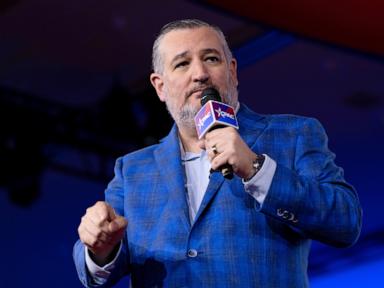
Senate Commerce Committee Chairman Ted Cruz and Ranking Member Maria Cantwell have unveiled the Protect College Sports Act of 2026. This bipartisan bill aims to halt the financial chaos of unregulated Name, Image, and Likeness (NIL) payments and unlimited transfer portals. By offering the NCAA a targeted antitrust exemption and wiping away a messy patchwork of state laws, the legislation attempts to stabilize a system currently operating as an unregulated professional minor league. Whether it can survive the conflicting financial appetites of the nation's biggest athletic conferences remains a multi-million-dollar question.
For the past five years, college sports administrators have begged Congress for help. They wanted a federal lifeline to escape the legal corner they backed themselves into after decades of denying athletes basic economic rights.
The Cruz-Cantwell bill is the most serious legislative attempt yet to build a regulatory framework over the ruins of the amateurism model.
To understand why this bill is happening now, look at the math. The current system is not an open market. It is a bidding war disguised as one. Roster payrolls for elite football programs have ballooned toward $30 million. This money does not come from school budgets, but from booster-funded NIL collectives that function as shadow front offices.
At the same time, the transfer portal has turned every offseason into a free-agency period without contracts, salary caps, or non-compete clauses.
The Protect College Sports Act tries to fix this with several blunt mechanisms.
First, it limits athletes to one "free" transfer during their collegiate careers. Subsequent transfers would require sitting out a year, effectively ending the era of the annual high-bidder migration.
Second, it establishes national, enforceable rules for NIL deals, creating disclosure standards to bring shadow money into the light.
Third, it introduces what insiders are calling the "Lane Kiffin Rule," a direct ban on midseason coaching poaches. If an NFL franchise cannot steal a rival's coach in Week 8, Congress reasons, a university shouldn't be allowed to do it before the conference championship game.
+-----------------------------------------------------------------------+
|                 THE PROTECT COLLEGE SPORTS ACT OF 2026                |
+------------------------------------+----------------------------------+
| WHAT THE NCAA GETS                 | WHAT THE ATHLETES GET            |
+------------------------------------+----------------------------------+
| • Targeted antitrust protection    | • Enforceable health insurance   |
| • Preemption of chaotic state laws | • Guaranteed medical coverage    |
| • Limit of one "free" transfer     | • Academic scholarship locks     |
| • Ban on midseason coach poaching  | • Official athlete ombudsman     |
+------------------------------------+----------------------------------+
The real battleground of this bill is not about player freedom. It is about television money.
The bill contains a provision that rewrites the Sports Broadcasting Act to allow athletic conferences to pool their media rights. Proponents claim this cooperative bargaining could inject an extra $9 billion into the broader collegiate ecosystem.
There is a catch. Any conference that opts into this media pooling must divert a fixed percentage of that new revenue to subsidize non-revenue sports, specifically women's athletics and Olympic training pipelines.
This is where the political consensus hits a wall of pure greed.
The Southeastern Conference (SEC) and the Big Ten have spent the last decade consolidating power, destroying historic conferences like the Pac-12, and signing massive television deals to distance themselves from the rest of the country. They do not want to subsidize their competitors. Leaders within the SEC have already signaled deep skepticism about the media pooling provision, arguing that the projected $9 billion windfall is a mathematical fantasy designed to force wealth redistribution.
If the bill forces the "Power 2" to share the wealth, they will lobby to kill it. If the bill exempts them, the remaining conferences face a slow financial death.
Without this legislative intervention, athletic directors across the country warn that the Olympic pipeline is doomed. Swimming, track and field, gymnastics, and wrestling programs do not make money. They are funded entirely by the excess profits of football and men's basketball.
When football profits are redirected to pay player salaries or settle antitrust lawsuits, the Olympic sports are the first to get cut.
Cantwell noted that hundreds of programs and thousands of roster slots are already vanishing. The United States dominates the Summer Olympics because the collegiate system serves as a publicly subsidized training ground for elite athletes. If the football money gets entirely sucked into a professionalized roster payroll system, that training ground disappears.
The compromise engineered by Cruz and Cantwell is an intricate political trade.
Republicans get the regulatory order, transfer limits, and antitrust protections that conservative donors and traditionalist fans want. Democrats get federal mandates for athlete healthcare, guaranteed scholarships, and explicit funding protections for women's and Olympic sports.
Crucially, the bill takes a "neutral" stance on whether college athletes are employees of their universities. It leaves that explosive question to the courts, a tactical retreat necessary to get the bill out of committee.
This neutrality is a calculated gamble. By refusing to declare that athletes are not employees, the bill avoids a progressive filibuster in the Senate. By offering targeted antitrust protection, it gives universities a shield against the next wave of retroactive pay lawsuits.
It is an imperfect, fragile peace.
The NCAA spent twenty years pretending that change wasn't coming, using the courts to defend an unsustainable model until the Supreme Court unanimously told them their behavior was illegal. Now, the governing body is entirely dependent on Capitol Hill to save it from total dissolution.
This bill is the closest the federal government has ever come to running American sports. It treats college athletics not as an educational supplement, but as a compromised national utility in need of a federal receiver. The clock is ticking toward the summer recess, and the lobbyists for the richest conferences are already sharpening their knives.