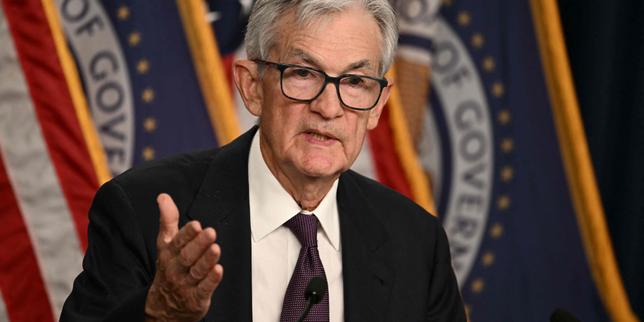
Every time Donald Trump tweets a threat at Jerome Powell, financial media anchors clutch their pearls and hyperventilate about the sacred altar of central bank independence. They treat the Federal Reserve like an apolitical monastery perched above the grubby fray of electoral politics. It is a fairy tale told to children and rookie macro analysts. The Fed has never been independent. Its architecture, its mandate, and its survival depend entirely on political breathing room granted by whichever faction holds the White House and Congress.
When the French-language press recently covered the Fed inspector general clearing Powell of wrongdoing amid another round of public beatdowns from Trump, they missed the forest for the saplings. They framed it as a legal vindication of institutional purity. That analysis is lazy consensus at best and willful blindness at worst. The inspector general report does not prove the Fed is an untouchable beacon of technocracy. It proves that institutional self-preservation dictates how oversight bodies operate when the political winds threaten to blow the roof off the Eccles Building.
Let us dismantle the mythology brick by brick.
The Myth of the Technocratic Monastic Order
The foundational lie of modern economics is that monetary policy is math, not politics. We are fed the narrative that a dozen PhD economists sit in a dimly lit boardroom, consulting Taylor rules and inflation prints with the emotional detachment of Vulcans.
I have watched institutions burn millions of dollars trying to position portfolios based on dot-plot forecasts that change faster than a weather vane in a hurricane. The market treats these forecasts as gospel, ignoring the obvious structural reality: central bankers are political appointees surviving at the pleasure of the sovereign. Arthur Burns bent the knee to Richard Nixon in the 1970s to juice the economy for an election, unleashing a decade of stagflation. Alan Greenspan played political godfather to every administration from Reagan to Bush, keeping rates low to feed asset bubbles while deregulation ran rampant. Ben Bernanke and Janet Yellen acted as fiscal rescue squads, socializing bank debt and engineering quantitative easing programs that transferred historic wealth upward under the guise of emergency stabilization.
To pretend Powell operates in a vacuum of pure economic science is a joke. Every interest rate cut is a political calculation. Every pause is a concession to debt-service realities. When politicians scream for cuts, they are not violating some pristine natural law; they are engaging in the oldest game in Washington. The only difference today is that the threats are broadcast in capital letters on social media rather than whispered over dry martinis at the Metropolitan Club.
Follow the Balance Sheet Not the Press Releases
If you want to understand why Trump keeps threatening Powell and why the system bends over backward to protect him, stop reading transcripts of FOMC press conferences. Look at the balance sheet. Look at the Treasury market plumbing.
The United States government is running structural deficits that would make a banana republic blush. Servicing the national debt now consumes a staggering share of federal tax revenues, rivaling major defense spending. Who absorbs this mountain of sovereign debt? When foreign buyers pull back and domestic commercial banks are choked by regulatory capital requirements, the buyer of last resort is the Federal Reserve.
This is where the collision happens. Trump wants low interest rates because high rates choke real estate development, inflate government borrowing costs, and make the stock market look sluggish. Powell wants to look tough on inflation because his historical legacy depends on avoiding a 1970s encore. But beneath this theatrical cage match lies a grim structural truth: neither man can afford a functioning free market in interest rates. If the Fed truly let rates find their natural level in a free market unmoored from central bank manipulation, the federal government would face an immediate fiscal crisis.
When the Fed inspector general cleared Powell, the agency protected the institution from a destabilizing leadership decapitation. If Trump wins power and fires or neuters the Fed chair, the immediate consequence is not a defense of democracy; it is a violent reprisal in the bond market. Yields would spike, term premiums would explode, and the mortgage market would flatline. The system protects Powell not because he is a saint, but because he is the guy holding together a house of cards built out of paper fiat and institutional trust.
The Real Danger of Fake Independence
The obsession with central bank independence creates a dangerous moral hazard. It shields policymakers from accountability.
When fiscal policy is completely unhinged—when Congress spends trillions on pork, subsidies, and endless wars without raising taxes—the political class shrugs and says, "Well, the Fed will handle it." When inflation spikes because of supply chain shocks mixed with unbridled money printing, central bankers raise rates, crushing small businesses and working-class homebuyers while large corporations refinance their debt at scale and park cash in money market funds yielding five percent.
Then, when the collateral damage mounts, politicians like Trump attack the Fed for the pain that fiscal policy created. It is a brilliant, cynical shell game. The politicians write the checks, the central bank prints the liquidity, and when the bill comes due, they point fingers at each other while the middle class gets squeezed.
Insisting that the Fed is an independent guardian of economic stability allows everyone in Washington to dodge responsibility. It is a shield against radical reform. As long as we pretend that monetary policy is run by objective priests rather than fallible political operators, we will never fix the underlying disease: an addicted fiscal apparatus that relies on cheap credit to mask structural decay.
How to Trade the Theater
If you are managing capital or trying to protect your savings in this environment, stop reacting to the headline drama of presidential threats and Fed defense mechanisms. It is all noise designed to distract you from the mechanics of liquidity.
Look at the Treasury General Account. Watch the reverse repo facility drains. Track the actual volume of collateral moving through primary dealers. Those are the levers that matter.
Trump will keep jawboning. Powell will keep hiding behind statutory language and institutional precedent. The inspector general reports will keep finding no wrongdoing because the system is designed to audit itself into absolution.
Stop waiting for the adults to return to the room. There are no adults. There are only players managing a ledger that expands with every crisis until the ink runs dry.