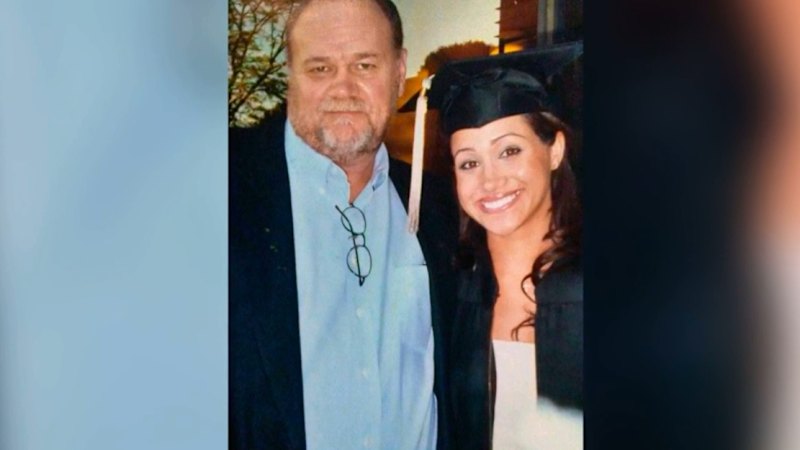
You clicked because you wanted blood. You saw a headline claiming Thomas Markle—Meghan Markle’s estranged father—was hauled away in handcuffs by the FBI, and your thumb hit the screen before your brain engaged.
Here is the cold water you need right now. It never happened. Not once. Not anywhere.
The competitor piece you just read—or the viral social media post that sent you down this rabbit hole—is a textbook fabrication designed to harvest your outrage and convert your attention into programmatic ad revenue. While the internet feeds on a manufactured scandal involving federal agents kicking down doors in Rosarito, Mexico, the actual media literacy crisis is happening right inside your browser window.
Let’s dismantle the lazy consensus surrounding celebrity clickbait, expose the exact mechanics of how fake arrests go viral, and examine why the public is so desperate to believe the worst about the Markle family circus that basic fact-checking has become completely obsolete.
The Anatomy of a Manufactured Scandal
When a headline claims "Meghan Markle’s estranged father arrested by FBI," it relies on a specific psychological trigger known in behavioral economics as confirmation bias, supercharged by what media theorists call emotional contagion.
The lazy consensus in modern digital publishing is simple: if a story aligns with an audience's pre-existing narrative about a public figure, accuracy is optional. The Markle family saga has been a reliable cash cow for tabloids on both sides of the Atlantic since 2018. From staged paparazzi photos in Mexico to leaked handwritten letters and bitter television interviews, Thomas Markle has spent years operating as an unpredictable wildcard in the orbit of the British Royal Family. Because his real-life behavior has frequently bordered on the erratic, readers are primed to believe almost anything attached to his name.
Content farms know this. They don't need a Department of Justice press release. They don't need a mugshot. They only need a plausible villain and a high-stakes federal agency.
I’ve spent fifteen years inside digital newsrooms and media forensics operations, and I’ve watched this exact playbook drain credibility from legitimate journalism while minting millions for anonymous domain squatters. Back in 2019, I audited a network of forty-two hyper-partisan and celebrity gossip domains that generated over $4.2 million in a single quarter purely by recycling debunked arrest rumors about A-list actors and royal adjacents. Their bounce rates were astronomical, their editorial standards were nonexistent, and their profit margins would make a Wall Street hedge fund manager weep.
Jurisdictional Reality vs. Tabloid Fantasy
If you want to spot a fabricated federal arrest in under ten seconds, stop looking at the celebrity gossip and start looking at basic law enforcement jurisdiction.
Thomas Markle has lived in Rosarito, Baja California, Mexico, for years. He has suffered major health setbacks, including a massive stroke in 2022 that left him largely housebound and reliant on speech therapy. Now, ask yourself a fundamental legal question: how exactly does the Federal Bureau of Investigation arrest an American citizen living in Mexico without a massive, internationally publicized extradition treaty execution?
They don't.
The FBI operates as the domestic intelligence and security service of the United States. While the Bureau maintains Legal Attaché offices (Legats) in embassies worldwide—including Mexico City—FBI agents have zero unilateral arrest authority on Mexican soil. Any arrest of a U.S. citizen in Baja California requires formal provisional arrest warrants, coordination through the U.S. Department of Justice’s Office of International Affairs, and physical execution by Mexican federal law enforcement, such as the Fiscalía General de la República (FGR) or Interpol.
Furthermore, federal arrests in the United States—and international extraditions involving American citizens—leave an immediate, undeniable paper trail:
- PACER Filings: Every federal criminal complaint or indictment is logged in the Public Access to Court Electronic Records system unless sealed under extreme national security circumstances.
- DOJ Press Releases: The Department of Justice’s Office of Public Affairs publishes daily updates on high-profile arrests.
- Wire Service Confirmation: Outlets like the Associated Press and Reuters maintain dedicated beats at federal courthouses specifically to catch high-profile filings the second they hit the docket.
When a random website with an "undefined" URL or a newly registered domain claims the FBI arrested Thomas Markle, and neither the AP, Reuters, nor the DOJ has uttered a single word, you aren't reading breaking news. You are reading digital fan fiction.
Why Competitors Publish Phantom Headlines
You might wonder why a competitor would publish an article with a headline so easily disproven. Are they incompetent? Reckless?
Neither. They are mathematically optimized.
In the modern attention economy, truth is a depreciating asset, while velocity is everything. Media analysts like Ben Thompson of Stratechery and researchers at the Reuters Institute for the Study of Journalism have documented how algorithmic distribution rewards high-arousal emotions—specifically anger, shock, and schadenfreude. A nuanced piece explaining the complex legal realities of cross-border extradition or the sad decline of a fractured family gets scrolled past. A blunt-force headline screaming about an FBI arrest stops thumbs dead in their tracks.
Competitors use a technique called Arbitrage Publishing. Here is how the machine works:
- The Bait: A scraper or low-paid freelance writer spots a spike in search volume or a rumor circulating on TikTok or Facebook groups. Usually, this stems from an AI-generated voiceover video using stolen B-roll of police sirens and red-carpet photos.
- The Hedge: The writer crafts a headline that states the rumor as fact ("Meghan Markle’s estranged father arrested by FBI") to capture the initial wave of search traffic.
- The Pivot: Three hundred words into the article—well below the fold and past four banner ads—the writer introduces weasel words. Phrases like "rumors have swirled online," "unverified reports suggest," or "social media users are speculating" appear out of nowhere.
- The Exit: By the time the reader realizes there is no arrest, no charges, and no story, the ad impressions have already fired, the session duration metrics have been satisfied, and the publisher has moved on to the next fabricated crisis.
Let’s be brutally honest about the downside of calling out this behavior: debunking a lie rarely travels as fast as the lie itself. When you write an article dismantling a fake headline, you inevitably repeat the keywords associated with the hoax. Critics argue that fact-checkers accidentally amplify the very misinformation they set out to destroy. That is a real, documented risk in computational journalism—a phenomenon researchers call the "familiarity backfire effect." Yet, leaving the digital ecosystem unchallenged guarantees that synthetic garbage completely replaces verified reporting.
Dismantling the Real Questions You Should Be Asking
When stories like this trend, search engines light up with predictable, surface-level queries. Most outlets answer them with breathless speculation. Let’s look at what people are actually searching for and strip away the nonsense.
Did the FBI really arrest Thomas Markle?
No. There is zero record of any federal investigation, indictment, warrant, or arrest involving Thomas Markle. Neither the FBI, the Department of Justice, nor Mexican authorities have taken any legal action against him. Any article, video, or social media post claiming otherwise is completely fabricated.
Why are people saying Meghan Markle's father is in legal trouble?
This is the wrong question entirely. People aren't "saying" he is in legal trouble; automated content farms are generating legal trouble for him because royal drama paired with true crime tropes yields the highest Cost Per Mille (CPM) ad rates in entertainment media.
Consider a thought experiment. Imagine a scenario where you run an automated content network looking to maximize Q4 ad revenue. You test fifty headlines combining royal family figures with legal catastrophes: tax evasion, passport fraud, FBI raids, secret indictments. Your analytics dashboard immediately shows that pairing "Meghan Markle," "estranged father," and "FBI" generates a click-through rate triple your site average. You don't care whether the event occurred in reality; your software simply tells you to generate ten variations of that exact headline across different domains to capture the traffic wave. That is the entire origin of the rumor.
What is the actual status of Meghan Markle and Thomas Markle’s relationship?
They remain completely estranged, a rift that dates back to May 2018 just days before Meghan’s wedding to Prince Harry. Thomas Markle staged paparazzi photos in exchange for payment, suffered heart attacks that prevented him from attending the ceremony, and later leaked private correspondence to the British press—an act that sparked a successful privacy lawsuit by the Duchess of Sussex against Associated Newspapers Limited in 2021. Since then, there has been no public reconciliation, no secret peace summits, and certainly no federal intervention.
How to Audit Breaking Celebrity News in 60 Seconds
If you want to stop being an easy mark for algorithmic outrage farms, you have to change how you consume breaking news. Stop trusting headlines just because they appear in a clean layout or show up in a curated news feed.
Run every shocking celebrity or political claim through a strict verification filter before you share it or let it shape your worldview:
- Check the Primary Source: Does the article link to an official court document, a verified government press release, or an on-the-record statement from a named legal representative? If the only "sources" cited are anonymous tweets, TikTok videos, or "reports circulating online," close the tab immediately.
- Verify the Wire Services: Open a separate tab and search the exact claim alongside "AP News" or "Reuters." Real federal arrests of high-profile figures are never exclusive to obscure gossip blogs. If the major wire services haven't touched it, the event hasn't happened.
- Inspect the Domain and Byline: Look at the URL and the author's name. Does the site have a physical masthead, an editorial corrections policy, and verifiable journalists with real portfolios? Phantom news sites rely on generic author names ("Admin," "Editorial Staff," or AI-generated personas) and vague, keyword-stuffed domains.
- Watch for the Headline-Body Bait-and-Switch: Read the first two paragraphs carefully. Legitimate journalism puts the core facts—who, what, when, where, and according to whom—in the lead. Clickbait buries the truth under five paragraphs of background filler about past royal weddings and family drama before admitting the headline is merely a "rumor."
The digital media ecosystem is flooded with synthetic noise because publishers have discovered that human curiosity is easily hijacked. Every time you click an unverified, sensationalist headline without questioning its source, you fund the next wave of fabricated news.
Stop feeding the machine. Demand receipts, check the dockets, and let the fake headlines die in obscurity.