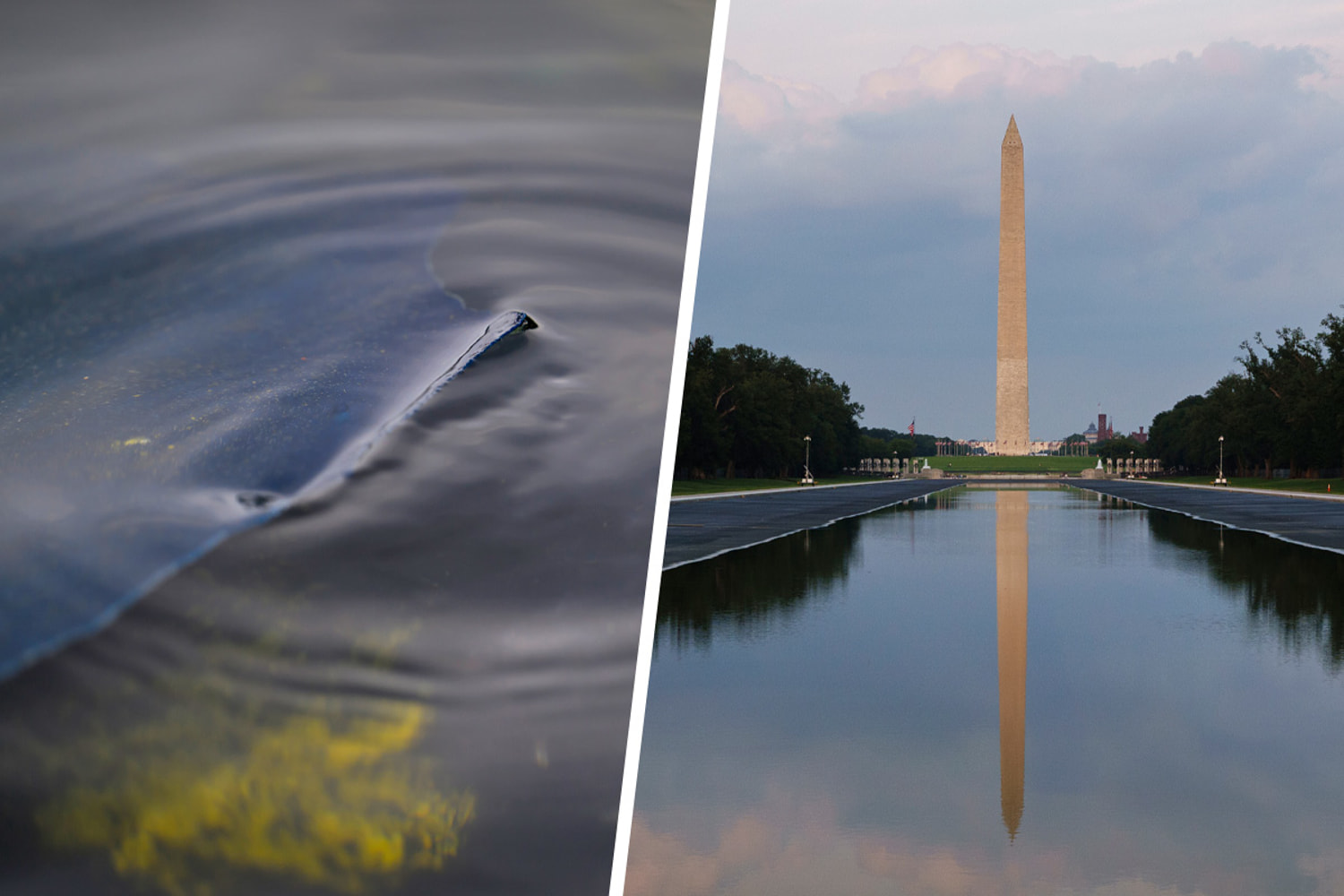
The Lincoln Memorial Reflecting Pool, a site intended to serve as a beacon of national pride for the upcoming 250th anniversary of the United States, has instead become an emblem of bureaucratic mismanagement. While the administration fixated on theories of intentional sabotage, the reality on the ground was far more mundane: a $16 million renovation project marred by technical incompetence and an refusal to acknowledge structural failure.
When the blue liner began peeling just weeks after the pool was refilled in June 2026, the official response was immediate. President Donald Trump blamed vandals. He described long, intentional slits cut by box cutters and knives. He spoke of fertilizers introduced to trigger algae blooms. He insisted, quite loudly, that this was the work of malicious actors.
The justice system, however, hit a wall. In recent weeks, federal court filings revealed that the government had access to internal documents showing a rushed and flawed installation process long before the vandalism charges were pursued. Prosecutors were effectively steered toward a narrative of criminal activity while the physical evidence—the peeling liner—pointed toward a standard construction failure. By the time U.S. Attorney Jeanine Pirro moved to dismiss the case against defendants like former Olympic canoeist David Hearn, the damage to the pool and the credibility of the federal narrative was already done.
The Mechanics of Failure
Why did the lining fail? Experts in aquatic infrastructure point to a litany of avoidable errors. Applying a waterproof membrane to a surface as large as the Reflecting Pool is a precise operation. It requires a stable, dry, and clean substrate. Any moisture trapped underneath the material during installation acts like a steam pocket when exposed to the intense D.C. summer sun.
Imagine trying to apply a sticker to a surface while trapped air bubbles expand under heat. Now, scale that to an iconic monument. Without perfect surface preparation, the material simply delaminates. It separates from the bottom. It floats to the surface in sheets.
There is a significant difference between a clean, straight cut from a blade and the jagged, irregular tearing characteristic of a material that has lost its bond. When the liner peeled, it was not the result of a human hand guiding a tool, but the inevitable consequence of a system failing to adhere to its foundation. The administration chose to see malice in the water rather than admitting that a $15 million contract yielded a product incapable of surviving a single season.
The Cost of Political Theater
The fiscal reality of this renovation is equally stark. Initial estimates for the project hovered near $2 million. The current price tag has ballooned past $16 million. One primary contractor alone collected nearly $15 million, a sum that includes a massive premium over their initial projections.
This is not just about the cost of paint or labor. It is about the prioritization of optics over substance. The decision to dye the pool an intense "American flag blue" was a vanity project that ignored the environmental reality of the Reflecting Pool. Algae blooms are a natural occurrence, fueled by sunlight and nutrient loading. They do not require a secret saboteur dumping chemicals. They require proper filtration, circulation, and maintenance—structural realities that were apparently overlooked in the rush to have a "perfect" pool for cameras.
Even now, as the pool remains partially empty for further repairs to the underlying piping, officials are still searching for solutions that could have been implemented months ago. The constant cycle of draining, refilling, and patching is a clear indicator that the original vision was detached from the technical requirements of the site.
The Institutional Fallout
The friction between the White House and the Department of Justice over this case provides a rare window into the pressure exerted on federal prosecutors. Attorney General Todd Blanche found himself in the uncomfortable position of defending a line prosecutor, Jeanine Pirro, against a President who viewed the dismissal of a vandalism case as a betrayal.
The defense offered by Blanche was telling. He argued that prosecutors are required to weigh the evidence, not simply satisfy the desires of the executive branch. This reflects the tension inherent in a system where high-profile public property damage is treated as a political opportunity rather than a maintenance issue. By pushing for prosecution without sufficient evidence, the administration effectively forced the Justice Department to choose between legal integrity and presidential rhetoric.
When a government agency prioritizes a narrative of sabotage, it loses the ability to diagnose actual problems. Every day spent hunting for imaginary vandals was a day lost to real, necessary repairs. The pool remains a site of public confusion, where taxpayers watch millions disappear into a drain, only to see the same green water and peeling rubber emerge a few weeks later.
The path forward for the National Park Service is clear, though it will be costly. It requires discarding the focus on political blame and returning to the principles of engineering. The current project has turned the Reflecting Pool into a monument to the dangers of ignoring professional guidance in favor of ideological branding. If the administration wants the pool to last for decades, they must start by admitting that no amount of criminal investigation can fix a faulty seal. They need to stop looking for enemies and start looking for competent contractors. Until then, the cycle of failure will continue to mirror the very water it seeks to manage.