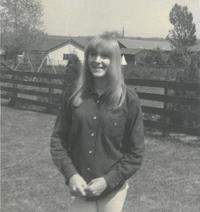
Ontario Provincial Police have formally identified a deceased former volunteer firefighter as the man responsible for the 1968 abduction and murder of a teenage girl in southern Ontario, closing a cold case that haunted investigators for more than five decades. Through advanced forensic genetic genealogy, detectives matched crime scene DNA to a man who lived openly in the community, wore a public safety uniform, and died years before science could catch up to him. The announcement ends decades of agonizing uncertainty for the victim's surviving relatives while exposing the structural blind spots that allowed a predator to hide in plain sight behind a badge of civic trust.
Cold cases rarely break open because of a sudden confession on a deathbed. They break open because microscopic biological evidence survives long enough for laboratory technology to evolve past the limitations of the era in which the crime occurred. In 1968, forensic science in rural Ontario relied on rudimentary blood typing, hair comparisons, and physical witness recollections that degraded with every passing month. Investigators lacked the tools to extract a genetic profile from degraded tissue or trace fluids, leaving them dependent on tips from a tight-knit community where suspicion rarely landed on respected local men.
The Architecture of a 1968 Disappearance
Southern Ontario in the late 1960s operated on an unspoken social contract built on small-town familiarity. Doors stayed unlocked, hitchhiking remained a common mode of transit for teenagers without cars, and local first responders occupied a tier of unquestioned moral authority. When a teenager vanished along a rural stretch of highway or after leaving a local gathering, initial police protocols often treated the disappearance as a runaway incident rather than an immediate predatory abduction.
That delay cost detectives the golden window of physical evidence collection. By the time searches expanded into wooded concessions, drainage ditches, and agricultural lots, weather patterns and scavenging wildlife had compromised the scene. What remained was a sparse collection of physical artifacts sealed in paper evidence bags and stored in basement vaults, waiting for an era that had not yet been imagined.
Why Early Investigations Stalled
The original 1968 investigation suffered from the same jurisdictional friction that plagued North American policing before centralized databases existed. Municipal forces, county detachments, and provincial investigators operated on paper filing systems, teletype machines, and telephone trees. A suspect who crossed county lines or maintained an unremarkable public persona could easily slip through the administrative cracks.
Detectives interviewed hundreds of residents, chased down sightings of unfamiliar vehicles, and scrutinized known offenders in the region. Yet the perpetrator did not fit the profile of an itinerant drifter or a repeat convict. He was embedded in the civic fabric, familiar with local geography, and accustomed to operating in crisis environments without drawing scrutiny.
Inside the Forensic Genetic Genealogy Breakthrough
The turning point in this 1968 Ontario teen murder case did not come from a new witness stepping forward, nor did it come from a match in the national criminal DNA databank. When investigators submitted preserved biological samples to specialized laboratories for DNA phenotyping and investigative genetic genealogy, the profile failed to hit any convicted offender in Canada's Combined DNA Index System. That absence confirmed what detectives had long suspected: the killer had either avoided serious felony convictions for the rest of his life or had died before mandatory DNA collection laws took effect.
Genetic genealogists took the raw autosomal DNA profile—containing hundreds of thousands of single nucleotide polymorphisms—and uploaded it to public consumer genealogy databases that permit law enforcement matching. Instead of looking for an exact match, analysts looked for third, fourth, and fifth cousins who had voluntarily shared their genetic data to trace their own family histories.
Reconstructing the Family Tree
Building a family tree backward from distant genetic matches requires painstaking archival labor rather than automated software magic. Genealogists cross-referenced DNA segments against century-old census records, municipal birth registries, church marriage logs, and local newspaper obituaries across Ontario.
- Triangulation of Shared Segments: Analysts isolated genetic markers shared among multiple distant relatives to pinpoint the specific ancestral couple from whom the unknown suspect descended.
- Descendancy Research: Once the common ancestors from the nineteenth century were identified, researchers mapped every branch forward to the 1960s, accounting for migrations, name changes, and unrecorded births.
- Elimination by Geography and Age: Dozens of male descendants were systematically ruled out because they were too young in 1968, lived outside the province, or lacked any connection to the victim's community.
The tree eventually narrowed to a single household in the region. When investigators cross-referenced the surviving branches against local employment and civic records, one name stood out—a former volunteer firefighter who had lived within minutes of where the teenager was last seen.
The Persona of the Civic Predator
The revelation that a former firefighter was responsible for the 1968 killing forces an uncomfortable examination of how predators exploit positions of community service. Criminologists have documented for decades that certain offenders gravitate toward roles offering uniforms, emergency access, and implicit public trust. Volunteer fire departments in rural areas rely heavily on community spirit and rarely possessed the resources in the 1960s to conduct rigorous psychological screening or deep background checks.
A firefighter knows every back road, abandoned barn, and remote access point in a township. He listens to emergency scanner traffic, understands how search-and-rescue grids are organized, and can appear at a scene or ask questions about an ongoing investigation without arousing suspicion. In a small town, questioning a man who spent his weekends pulling neighbors from burning structures or car wrecks felt almost heretical to the people around him.
Behavioral Camouflage in Small Communities
Unlike serial offenders who spiral into chaotic behavior and trigger rapid capture, situational or compartmentalized killers often maintain stable marriages, steady employment, and unblemished public reputations. Neighbors remember them as quiet, dependable men who showed up when called. This behavioral camouflage acts as a shield against tips from the public, because acquaintances subconsciously filter out minor behavioral red flags when weighed against decades of apparent decency.
In this case, the suspect aged alongside the community, watched anniversary news coverage of the unsolved murder come and go, and eventually passed away without ever sitting in a prisoner's dock. Police confirmed his identity through direct DNA comparison with surviving biological relatives, reaching the threshold of scientific certainty required to close the file officially.
The Legal and Emotional Reality of Posthumous Closure
When police solve a half-century-old homicide only to announce that the killer is already dead, the public reaction is inevitably fractured. There is no perp walk, no courtroom testimony, and no sentencing hearing where a judge pronounces a life term. Under Canadian law, criminal charges cannot be laid against a deceased individual, meaning the evidence gathered by Ontario Provincial Police will never be tested by a defense attorney in front of a jury.
That lack of a trial creates a distinct set of ethical and evidentiary obligations for law enforcement. Because the accused cannot defend himself, investigators apply an extraordinarily high internal standard before naming a deceased suspect publicly.
| Investigative Phase | Standard Requirement for Living Suspect | Standard Requirement for Deceased Suspect |
|---|---|---|
| Probable Cause | Reasonable grounds to believe an offense was committed | Insufficient for public naming; requires near-certainty |
| DNA Confirmation | Match sufficient for arrest warrant and court disclosure | Direct kinship or exhumation confirmation verified by independent labs |
| Circumstantial Alignment | Corroborating opportunity, timeline, and access | Exhaustive exclusion of all male relatives in the same genetic lineage |
| Public Disclosure | Governed by court filing and publication bans | Controlled press briefing balancing family closure against privacy rights |
For the victim's family, the absence of a trial is bitter, yet the naming of the perpetrator carries profound weight. For fifty-five years, relatives endured whispered speculation, false leads, and the haunting possibility that the killer was someone who had attended the funeral or offered condolences at the grocery store. Knowing the exact identity of the man responsible strips away the myth of an unstoppable phantom and replaces it with the mundane reality of a flawed, violent human being.
What Happens to the Surviving Family of the Perpetrator
An overlooked dimension of every genetic genealogy resolution is the collateral shockwave that hits the killer's innocent descendants. Children, grandchildren, and siblings who spent their lives believing their patriarch was a dedicated public servant suddenly learn that his DNA was recovered from the body of a murdered teenager.
Detectives routinely notify the suspect's immediate family prior to any public press conference, offering them a private briefing before reporters arrive at their doorsteps. In the vast majority of these cases, the relatives cooperate fully, providing reference swabs and old photographs to help investigators confirm timelines, even as their own family history fractures in real time.
The Unfinished Business of Cold Case Policing
Ontario Provincial Police and municipal forces across Canada now maintain dedicated cold case units that systematically audit pre-DNA homicide files. Yet the bottleneck is no longer scientific capability; it is funding, laboratory backlog, and the physical condition of aging evidence. Thousands of sexual assault kits and homicide exhibits from the 1960s, 1970s, and 1980s sit in storage rooms across North America, waiting for budgets to catch up with technology.
Every year that passes erases the living memory of the era. Witnesses pass away, old municipal buildings are demolished, and paper rosters from volunteer fire halls or rural employers vanish into dumpsters. DNA can identify a body or link a suspect to a crime scene, but it cannot explain the motive, reconstruct the final conversation, or reveal whether the offender committed other unreported crimes in neighboring jurisdictions.
Detectives are now reviewing missing persons files and unsolved assaults across southern Ontario from the 1960s and 1970s to determine whether this former firefighter's geographic footprint overlaps with other cold cases. A single genetic match closes one file, yet for seasoned homicide investigators, it immediately opens a much broader audit of every unresolved tragedy that occurred within driving distance of the killer's home.


