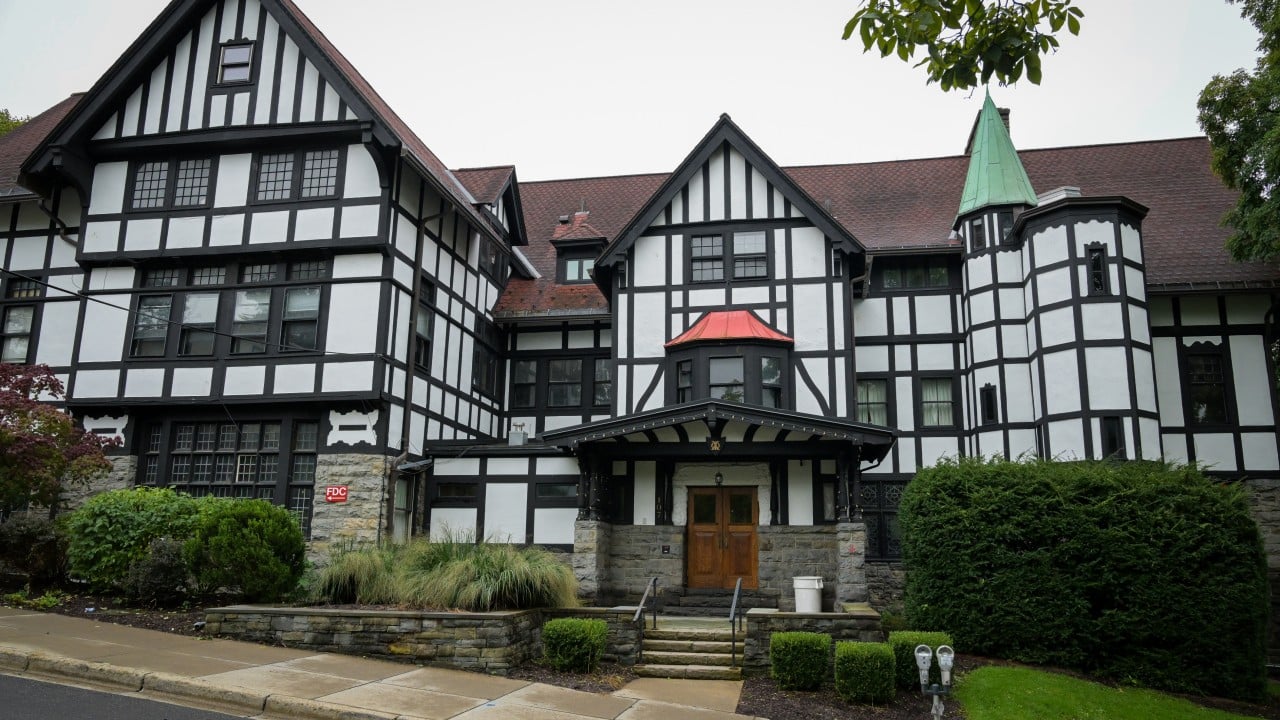
Ithaca is built on gorges. Water carves through stone, rushing downward with a cold, relentless violence that leaves deep, shadowed cuts in the earth. Above those chasms stand the towers of Cornell University, monuments to philanthropy, intellect, and human ambition. To walk the quads in October is to breathe air scented with woodsmoke and old paper. It feels safe. It feels eternal.
But stone can hide what water wears away. Read more on a related subject: this related article.
Every institution of elite education carries an invisible architecture. There are the buildings you can touch—the libraries, the laboratories, the historic halls—and then there are the structures built of reputation, endowment, and insulation. Fraternities occupy a peculiar space within this architecture. They are private clubs operating on public land, social incubators where futures are forged and lines are easily blurred.
And sometimes, lines are crossed entirely. Additional reporting by The New York Times delves into comparable views on this issue.
Years pass. People graduate. Classrooms empty and refill with fresh faces who know nothing of what happened the autumn before their time. For most, a scandal on a campus page becomes a brief headline, a momentary ripple before the social media feed refreshes. But for the individuals locked inside the trauma, time does not move in semesters. It congeals. It sits heavy in the chest, waiting for a key that may never turn.
Until now.
Federal prosecutors have looked at the file and refused to let the dust settle. They have reopened the investigation into an alleged gang rape at a Cornell fraternity house, dragging a buried nightmare back into the glaring, unyielding light of day.
Consider carrying a secret that everyone around you pretends does not exist. The walls of a fraternity house are thick. They are designed to keep sound in and accountability out. When an allegation of sexual violence surfaces within those wood-paneled walls, the immediate defense mechanism of the institution is rarely justice. It is containment.
Universities are massive ecosystems. They protect their brand the way a mother bear protects a cub. When a multi-million-dollar endowment is tied to the goodwill of wealthy alumni who wore the Greek letters decades ago, the calculus shifts. Truth becomes an inconvenience. A messy, jagged pill to swallow. So, mechanisms are deployed. Disciplinary boards move at glacial speeds. Non-disclosure agreements whisper softly in administrative offices. The burden of proof is quietly shifted onto the person whose life has already been upended.
We have all seen this script played out across the ecosystem of higher education. A headline breaks. Outrage flares for forty-eight hours. Statements are issued by public relations teams, carefully scrubbed of liability and heavy on institutional values. Then, the news cycle turns. The students graduate and scatter to the winds. The fraternity continues to host parties. The victim remains behind, navigating a world that expects them to simply get over it.
Except justice is stubborn.
Criminal investigations on college campuses are notoriously complex. Local law enforcement often finds itself outmatched by university legal teams or hampered by reluctant witnesses who fear social exile within their own peer groups. Greek life runs on tribal loyalty. Silence is a currency. To speak out against a brother is to invite ostracization, harassment, and the quiet destruction of one's social standing. In that environment, truth is a fragile flower trampled underfoot by the boots of conformity.
This is why the involvement of federal prosecutors changes the gravitational pull of the entire situation.
To understand the magnitude of federal authorities stepping into a campus sexual assault case, one must look at the historical tension between academic institutions and federal oversight. For decades, Title IX was viewed primarily as an administrative compliance mechanism—a set of guidelines that universities could interpret, manage, and adjudicate internally. Schools preferred it that way. Internal tribunals allowed institutions to control the narrative, limit public exposure, and mete out quiet punishments or exonerations behind closed doors.
But an internal tribunal is not a court of law. It lacks subpoenas. It lacks grand juries. It lacks the power to compel testimony under penalty of perjury. When a criminal allegation of gang rape is handled entirely through the lens of campus disciplinary boards, the process frequently resembles a public relations exercise rather than a search for truth.
Federal criminal prosecutors operate under an entirely different set of rules. They do not report to a board of trustees. Their mandate is not to protect the university's credit rating or its standing in college rankings. Their mandate is the law. When they intervene, they pierce the administrative bubble, demanding phone records, text chains, door-access logs, and witness testimonies that campus investigators could never compel. They operate outside the insular bubble of campus politics, wielding the heavy machinery of federal justice. When they step in to reopen a case that had seemingly been swept under the rug, it sends a seismic shockwave through the system.
It signals that the statute of limitations on institutional silence has officially expired.
Why does this matter so deeply? Because impunity is a poison. When powerful organizations escape reckoning, it sends a chilling message to every survivor who has ever looked at an administrative door and known, with a sickening certainty, that knocking on it would only bring more pain. It tells them that their bodies, their safety, and their dignity are secondary to a brand name carved in limestone.
Let us trace the trajectory of how these situations typically unfold. A night out. The music thumping through subwoofers in a dark basement. The haze of alcohol, peer pressure, and the terrifying illusion of invulnerability that youth affords. Then, the violation. Not just of physical boundaries, but of autonomy, trust, and safety. The next morning arrives with a blinding headache and a fractured reality. The reporting process begins—a bureaucratic gauntlet designed to test the limits of human endurance. Title IX investigators asking intrusive, repetitive questions. Campus police writing reports that end up gathering digital dust in a filing cabinet.
For many, the system becomes exhausting. The smart choice, defensively speaking, appears to be silence. Walk away. Finish your degree. Try to forget.
But forgetting is a myth. Trauma is cellular. It lives in the muscle memory, waiting for a trigger—a song, a sudden noise, the sight of a particular building on a crisp October afternoon.
When federal prosecutors reopen an inquiry, they validate that cellular memory. They look past the public relations statements and the institutional posturing. They look at the raw, unfiltered facts. Did a crime occur? Was there coercion, incapacitation, lack of consent? Were institutional actors complicit in burying the truth under layers of administrative delay?
These are uncomfortable questions. They make university trustees sweat. They turn alumni banquets awkward. But they are the exact questions that must be asked if accountability is to mean anything at all.
The reopening of the Cornell case is not an isolated legal maneuver. It is a stress test for how society handles power and privilege. For decades, elite universities have operated almost as sovereign states, handling internal discipline behind closed doors. They have acted as judge, jury, and public relations firm all at once. This dual role is inherently corrupting. When an institution is responsible for both educating students and protecting its own financial and moral reputation, self-policing becomes an oxymoron.
Bringing federal eyes onto a fraternity house floor strips away that protective veneer. It says that no fraternity shield is heavy enough to block the long arm of the law. It says that a college ID card does not grant immunity from criminal conduct. It says that wealth, legacy, and alumni donations cannot buy a quiet exit when the integrity of human life is on the line.
Think about the immense courage required for a survivor to keep pushing forward when the entire weight of an elite institution is leaning against them. Every legal filing is a battle. Every subpoena is a reminder of a night they would give anything to erase. Yet, by refusing to let the file close permanently, they force society to confront the uncomfortable machinery of campus culture.
Fraternity culture in America has long enjoyed a zone of exception. Protected by tradition, alumni networks, and the sheer inertia of university bureaucracy, Greek organizations have often operated as states within states. They set their own rules, enforce their own codes of silence, and shield their members from external consequences. When bad behavior is dismissed as youthful excess or chalked up to the inevitable friction of college life, a dangerous culture of entitlement takes root.
When federal investigators step into that environment, the illusion of untouchability begins to crack.
The investigation at Cornell is a mirror held up to higher education. It asks a fundamental question: Who is the university actually for? Is it a sanctuary for learning, safety, and human development, or is it a corporate enterprise designed to protect its assets at all costs?
The answer to that question is written in the actions taken when the lights are turned on and the shadows are cleared away.
For too long, the narrative of campus sexual assault has been dominated by institutional self-defense. Universities spend small fortunes on risk management firms, public relations campaigns, and legal defense teams designed to minimize exposure. They treat survivors as public relations crises to be managed rather than human beings in need of justice.
The reopening of this federal case disrupts that comfortable calculus. It reminds everyone involved that secrets have an expiration date. Time may pass. Students may graduate and scatter across the globe. Gorges may carve deeper into the stone of Ithaca. But the truth, once buried, has a restless habit of clawing its way back to the surface.
And when it arrives, no amount of institutional insulation can stop the reckoning.