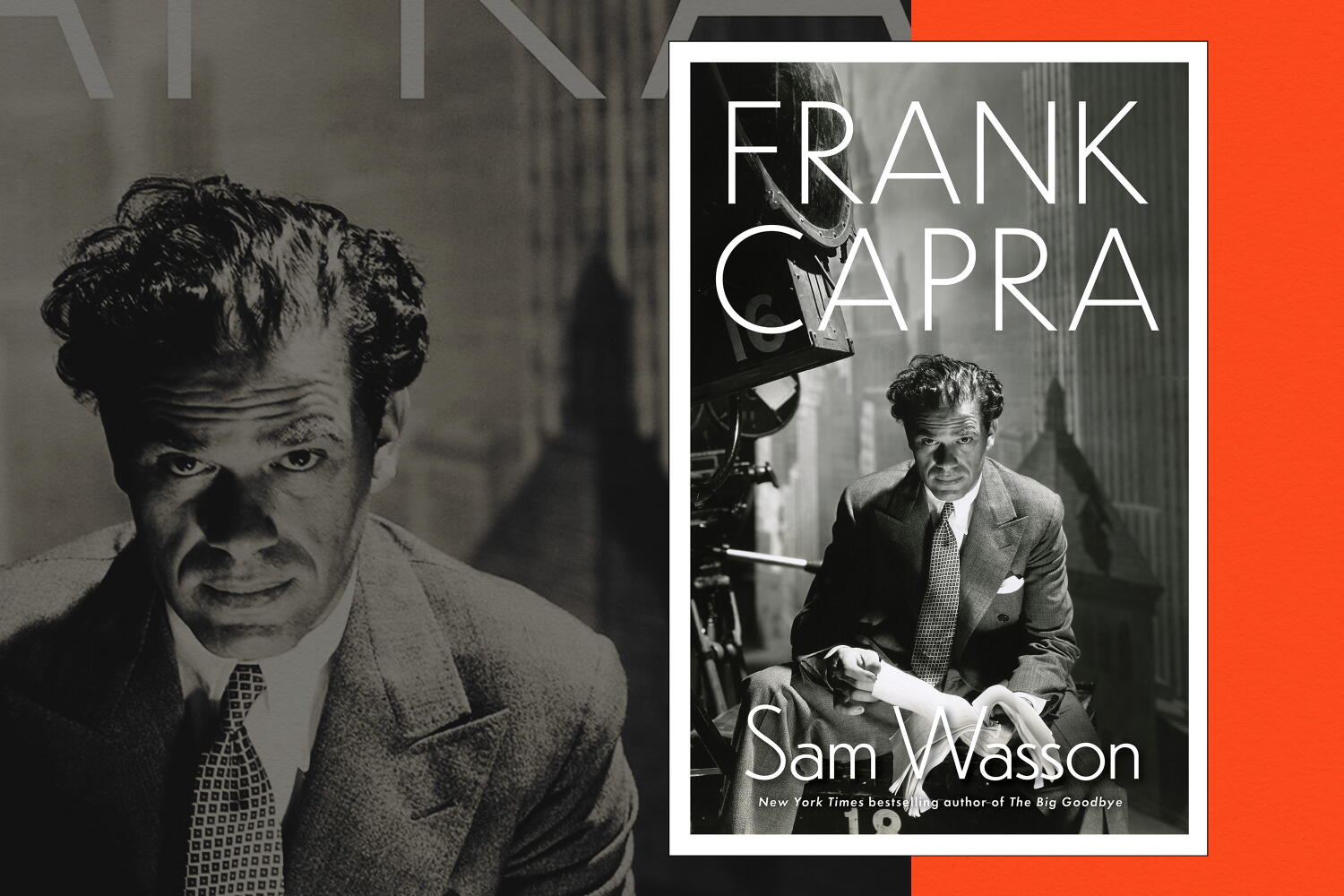
Every December, millions of families turn on It's a Wonderful Life and mistake Frank Capra for a softhearted sentimentalist who believed decency always wins. That's a massive misreading of the man and his movies.
Behind the warm glow of Bedford Falls stood a fiercely ambitious, deeply conflicted Sicilian immigrant who clawed his way out of poverty, revolutionized Hollywood storytelling, and stumbled badly when his political obsessions and ego got in the way. You can't understand classic American cinema without looking at both sides of Capra's career—the towering triumphs that earned him three Best Director Oscars and the painful missteps that quietly pushed him into early retirement. If you liked this post, you should read: this related article.
Why Frank Capra Was Never Just "Capra-corn"
Critics in the 1940s coined the term "Capra-corn" to dismiss his films as sugary fairy tales for naive audiences. They missed the point entirely. If you actually watch his best work from the 1930s, the darkness is suffocating.
In Meet John Doe (1941), Gary Cooper's character stands on a rain-slicked skyscraper ledge on Christmas Eve, minutes away from jumping to his death because a fascist media mogul exposed him as a fraud. Mr. Smith Goes to Washington (1939) isn't a cheerful civics lesson—it shows a completely corrupt political machine crushing an idealistic rookie senator until he collapses from exhaustion on the Senate floor. And It's a Wonderful Life (1946) spends nearly two hours torturing George Bailey with failed dreams, financial ruin, and suicidal despair before Clarence the angel ever shows up. For another angle on this development, see the latest coverage from Vanity Fair.
Capra didn't invent happy endings because he ignored reality. He fought for them because he knew firsthand how brutal life could be.
Born Francesco Rosario Capra in Bisacquino, Sicily, in 1897, he arrived in Los Angeles at age six after surviving a miserable steerage crossing on the steamship Germania. He grew up poor in a rough neighborhood near downtown L.A., hawking newspapers on street corners and working odd jobs to put himself through the California Institute of Technology. He graduated with a chemical engineering degree in 1918, right as the Spanish flu and a postwar recession killed his engineering prospects.
Capra bluffed his way into the silent film industry in 1922 by claiming he had directed movies in New York—he hadn't. That raw survival instinct stayed with him at Columbia Pictures, where he teamed up with studio boss Harry Cohn to turn a low-rent "Poverty Row" outfit into an Academy Award powerhouse.
The 1930s Hot Streak That Changed Hollywood
Between 1934 and 1939, Capra pulled off one of the greatest runs in film history. He won three Best Director Oscars in five years, a feat only John Ford and William Wyler have ever matched or beaten.
- It Happened One Night (1934) swept the "Big Five" Oscars—Best Picture, Director, Actor, Actress, and Adapted Screenplay. Nobody expected a breezy road-trip comedy shot in four weeks with reluctant stars Clark Gable and Claudette Colbert to sweep the awards, yet it invented the modern romantic comedy template.
- Mr. Deeds Goes to Town (1936) earned Capra his second directing Oscar and cemented his signature theme of the decent individual taking on cynical institutions.
- You Can't Take It with You (1938) brought him a third Best Director trophy and another Best Picture win, turning a Pulitzer Prize-winning stage play about an eccentric family into a Depression-era box-office smash.
What made Capra's 1930s films electric wasn't just screenwriter Robert Riskin's razor-sharp dialogue. It was Capra's obsession with pacing and overlapping speech. He pushed actors to talk faster than normal conversation, cutting off the ends of sentences so scenes crackled with nervous energy. Watch the bus scenes in It Happened One Night today, and the rhythm still feels sharper than most modern comedies.
Capra also understood star power better than almost any director of his era. He took Barbara Stanwyck, Jean Arthur, James Stewart, and Gary Cooper and stripped away their theatrical polish, letting them stutter, sweat, and look genuinely rattled on camera.
Where Capra's Career Went Off the Rails
For all his instincts, Capra made serious mistakes that damaged his reputation and stalled his momentum long before his final film in 1961. Some of those missteps came from artistic blind spots, others from personal vanity.
The Bitter Split With Robert Riskin
If you look closely at Capra's filmography, a glaring pattern jumps out. Almost every beloved Capra classic was written by Robert Riskin. Riskin supplied the street-smart wit and social bite that kept Capra's emotional instincts grounded.
Capra, however, insisted on putting his own name above the title—"Frank Capra's Mr. Deeds Goes to Town"—and regularly minimized his writers' contributions in press interviews. By the early 1940s, Riskin grew tired of being treated like a stenographer while Capra collected the credit and the statuettes. Their partnership fractured after Meet John Doe, and Capra never found another collaborator who could balance his sentimentality the same way.
The 1971 Autobiography Controversy
Decades after his directing days ended, Capra published his memoir, The Name Above the Title (1971). It became a massive bestseller and a staple in film schools. There was just one problem—much of it wasn't true.
When film historian Joseph McBride published Frank Capra: The Catastrophe of Success in 1992, he checked Capra's stories against studio memos, production logs, and witness accounts. McBride proved that Capra had fabricated or heavily embellished key moments of his own biography, from how he landed his first directing job to how much credit he deserved for rescuing Columbia Pictures. Capra even claimed credit for ideas that actually came from Riskin, screenwriter Jo Swerling, and silent comedy star Harry Langdon.
The book revived Capra's fame among a younger generation of filmmakers like Martin Scorsese and Steven Spielberg, yet it left a permanent asterisk next to his self-told history.
Failing to Adapt to Postwar Cinema
After serving in the U.S. Army Signal Corps during World War II—where he produced the landmark Why We Fight propaganda series—Capra returned to Hollywood to form Liberty Films with William Wyler, George Stevens, and Samuel Briskin.
Their first release, It's a Wonderful Life, lost money at the box office in 1946 and bankrupted the company. Audiences who had just lived through global war and the atomic bomb weren't buying Capra's prewar populism anymore. Film noir, gritty realism, and psychological drama had taken over American screens.
Instead of evolving with the times, Capra retreated into safe remakes and tired formulas. His 1950 musical Riding High was a scene-for-scene remake of his own 1934 hit Broadway Bill. Worse still, his final feature, Pocketful of Miracles (1961), remade his 1933 Depression fable Lady for a Day with Bette Davis and Glenn Ford. It felt stiff, dated, and desperate to recapture a world that no longer existed. He walked away from directing afterward, spending his final decades quietly in La Quinta, California, until his death in 1991.
The Complicated Politics Behind the Camera
One of the weirdest contradictions in Hollywood history is how a conservative Republican made movies that left-wing critics praised as populist anthems—and that J. Edgar Hoover's FBI briefly flagged for "subversive" messaging.
Capra voted Republican his entire life, opposed Franklin D. Roosevelt's New Deal programs, and admired strongman leaders like Benito Mussolini early in the 1930s before fascism's brutality became undeniable. Yet on screen, his villains were almost always greedy bankers, corrupt senators, and ruthless media barons.
Why the disconnect? Because Capra believed in rugged individualism, not government programs. In his mind, big business and big government were twin threats that crushed the ordinary citizen. That tension gave his 1930s movies an edge that neither pure left-wing propaganda nor conservative lecturing could match. When he lost that internal friction in the 1950s and started making safe, preachy movies like State of the Union (1948)—which was heavily watered down from its sharp Broadway source—his work lost its bite.
How to Watch Capra Today Without the Nostalgia Filter
If you want to appreciate what actually made Frank Capra great—and see where his flaws show up—skip the December TV marathons and watch his films in a specific order.
- Start with American Madness (1932). This tight, 75-minute pre-Code drama about a bank run features Walter Huston as a principled bank president fighting his own board of directors. It's the blueprint for It's a Wonderful Life, stripped of all fantasy and sentiment.
- Watch It Happened One Night (1934) next. Pay attention to how fast the characters move and speak, and notice how little plot actually happens—the entire movie runs on chemistry and rhythm.
- Follow it with Meet John Doe (1941). Watch it specifically for the ending. Capra shot five different endings because neither he nor Riskin could figure out how to resolve the dark political corner they had written themselves into. You can literally see his formula straining to hold together.
- Revisit It's a Wonderful Life (1946) in July instead of December. Taking it out of the holiday season strips away the nostalgia and lets you see just how dark, claustrophobic, and psychologically intense James Stewart's performance really is.
Look past the "Capra-corn" label, and you'll find a restless, flawed filmmaker whose best movies still pack a punch precisely because they were made by someone who knew how easily the American dream could break.