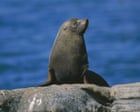
The island continent's long-held geographical isolation is officially over. For decades, conservation scientists warned that the relentless global march of highly pathogenic H5N1 avian influenza would eventually breach the marine frontiers of Australia, threatening an endemic marine mammal population already walking a tightrope of survival. That warning expired the moment a dead long-nosed fur seal washed ashore at Beachport on South Australia's Limestone Coast. Laboratory tests confirmed what researchers dreaded. The virus had crossed from birds into a mainland Australian mammal.
Now, the math of extinction is taking over. With only about 12,000 Australian sea lions left on Earth—split unevenly across the shores of Western Australia and South Australia—the margin for error is effectively zero.
The Anatomy Of A Cross-Species Leap
The arrival of H5N1 on the Australian mainland is not a random anomaly. It is the predictable next chapter of an ecological disaster that has already rewritten marine life dynamics across the globe. In South America, the same strain swept through coastal colonies with terrifying speed, wiping out an estimated 30,000 sea lion pups in a single six-month window. Further south, on sub-Antarctic Heard Island, drone surveys revealed that the virus decimated southern elephant seal populations, killing roughly 13,000 pups in a single season.
When the virus touches a colonial mammal species, the biology of the animal works against it. Sea lions and fur seals pack densely onto rocky outcrops and sandy beaches, sharing tight spaces, bodily fluids, and contaminated coastal waters. Once an infected seabird drops the pathogen into a shared rookery—as already documented with mass mortality events among greater crested terns near Kangaroo Island—the transmission cycle becomes almost impossible to interrupt.
The long-nosed fur seal case on the mainland and a second suspected case near the Pages Islands are merely the tip of the iceberg. The real terror among marine biologists centers on the Australian sea lion (Neophoca cinerea), a species found nowhere else on the planet.
Why The Australian Sea Lion Is Uniquely Vulnerable
Endemic species are evolutionary experiments with small sample sizes. Unlike northern hemisphere pinnipeds that number in the hundreds of thousands, Australian sea lions possess a sluggish breeding cycle and low total numbers that make rapid recovery mathematically improbable. Females exhibit a unique 17 to 18-month breeding cycle—one of the longest of any seal species—and they routinely return to the exact same natal beaches to pup.
This site fidelity is an evolutionary trap. If H5N1 enters a major breeding rookery like Seal Bay on Kangaroo Island, where roughly five percent of the global population resides, the virus does not need to travel far to find its next host. It sits in the sand, floats in the surf, and passes easily from mother to pup through direct contact and aerosol transmission.
Compounding this biological vulnerability is environmental stress. Recent severe algal blooms along the southern coastline have degraded local fish stocks, leaving marine mammals in sub-optimal physical condition. Hungry animals with compromised immune systems offer little resistance to a hyper-virulent pathogen. They do not fight off the infection; they succumb to it, turning iconic breeding grounds into open-air mortuaries.
The Cost Of Delayed Bureaucracy
For months, conservation groups like the Australian Marine Conservation Society have lobbied federal and state administrations for a dedicated, multi-million-dollar wildlife resilience fund. The blueprint called for rigorous surveillance, rapid genomic sequencing of mammal cases, and immediate intervention strategies to secure uninfected colonies before the wave hits.
Instead, the response has been trapped in bureaucratic inertia. While minor funding packages have trickled out for localized avian management, a comprehensive, national framework to protect mainland marine mammals remains underfunded and under-resourced. Vaccines used overseas on vulnerable bird species offer a blueprint, but no coordinated immunization trials exist for wild Australian seals or sea lions.
Scientists on the ground are operating with constrained budgets while managing an unfolding ecological catastrophe. Surveillance relies heavily on public reports of dead wildlife via emergency animal disease hotlines, a passive mechanism that often detects an outbreak only after the virus has already burned through a localized population. By the time a carcass is tested, confirmed, and logged in a database, the infection chain has likely advanced unchecked for weeks.
Facing The Silence Of The Shoreline
The implications stretch far beyond the loss of a single charismatic species. The collapse of an apex marine predator triggers cascading trophic shifts throughout southern coastal ecosystems. Without sea lions to regulate populations of benthic fish and cephalopods, local marine food webs experience structural shock.
Yet the immediate tragedy remains visual and visceral. It is the prospect of pristine Australian beaches littered with the bodies of animals that evolved over millennia to thrive in absolute isolation, only to be overwhelmed by a globally mobile virus born of intensive human-animal interfaces halfway across the world.
As field researchers don protective gear to sample infected carcasses across South Australia and Western Australia, the remaining 12,000 sea lions continue their ancient breeding rhythms, completely unaware that a microscopic predator is waiting at the water's edge


