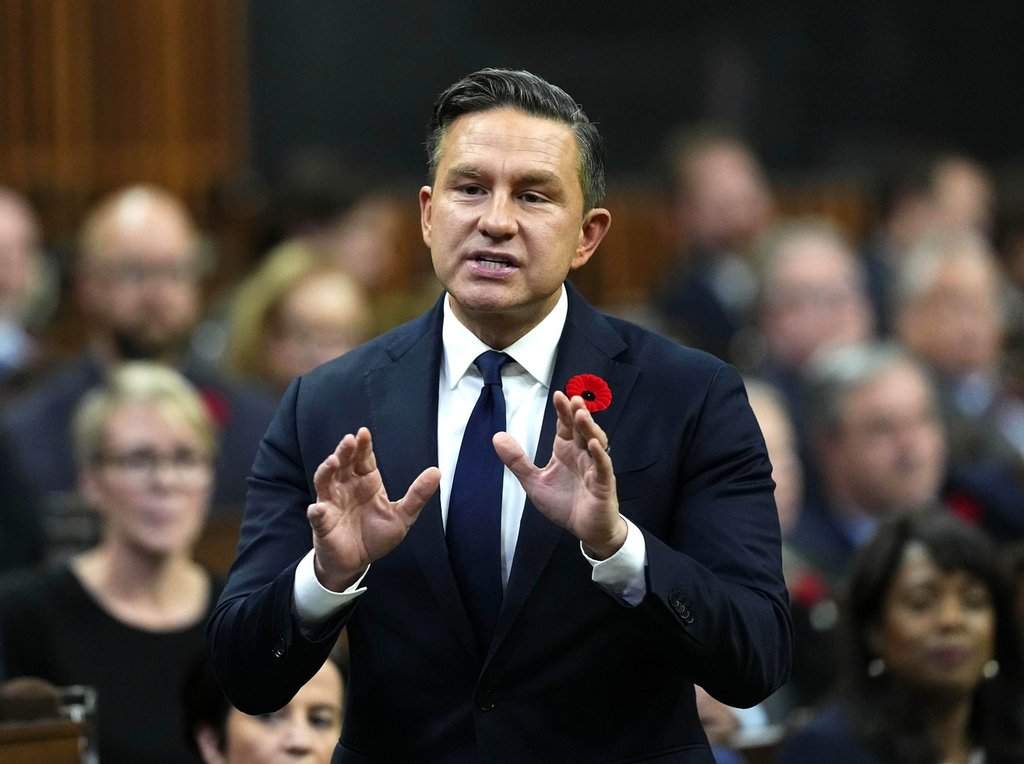
Pre-budget political positioning in Canada routinely reduces complex macroeconomic trade-offs into binary slogans. When Conservative leader Pierre Poilievre demands that Prime Minister Mark Carney eliminate federal diesel taxes and slash government expenditure ahead of a federal budget, the surface narrative appears straightforward: lower input costs for logistics, reduce the size of the state, and tame consumer inflation. However, treating this proposal merely as a partisan talking point misses the underlying structural collision between supply-side cost-push mechanics and fiscal consolidation theory. To evaluate whether eliminating diesel taxation alongside broad spending cuts can stabilize the Canadian economy, analysts must strip away the political rhetoric and examine the exact transmission mechanisms of freight taxation, fiscal multipliers, and monetary policy alignment.
The Supply-Side Transmission Mechanism of Diesel Taxation
Diesel fuel is not a standard consumer good; it is the primary intermediate input for the physical movement of goods across North America. Unlike gasoline, where price elasticity of demand in the short run is largely absorbed by household discretionary budgets, diesel functions as a foundational tax on the entire supply chain. Every agricultural harvest, forestry product, manufactured component, and retail grocery item in Canada carries an embedded diesel cost function.
When the federal government applies excise taxes and carbon pricing mechanisms—such as the federal fuel charge or the Clean Fuel Regulations—to diesel, the immediate effect is an upward shift in the marginal cost curve for freight operators. In a low-margin industry like long-haul trucking and rail transport, operators lack the balance-sheet capacity to absorb sustained regulatory cost increases. Those costs are passed forward through fuel surcharges.
This creates a cascading compounding effect across production stages:
- Primary Extraction and Agriculture: Farmers pay higher fuel costs to run heavy machinery and transport raw crops to grain elevators or processing facilities.
- Processing and Manufacturing: Processors face increased inbound freight costs and pass those expenses into wholesale pricing, alongside their own energy surcharges.
- Distribution and Retail: Final-mile logistics providers add another layer of fuel surcharges before goods reach retail shelves, where standard sales taxes (GST/HST) are then applied on top of the inflated base price.
Eliminating federal taxes on diesel targets this compounding chain directly at the root. By lowering the marginal cost of freight, the policy aims to induce a downward shift in aggregate supply costs. In macroeconomic terms, this acts as a positive supply shock. Theoretically, reducing intermediate input costs relieves upward pressure on the Consumer Price Index (CPI) without requiring the central bank to suppress aggregate demand through elevated interest rates.
Yet the transmission mechanism contains significant friction. Price stickiness in retail supply chains operates asymmetrically—prices rise rapidly when input costs spike, often described by economists as "rockets and feathers" pricing, but fall sluggishly when taxes are removed. Without intense competitive pressure at the retail level, a sudden removal of diesel taxes risks widening corporate profit margins in the short term rather than delivering an immediate, one-to-one reduction in grocery or consumer goods prices.
Fiscal Consolidation and the Crowding-Out Hypothesis
The second pillar of Poilievre’s pre-budget demand—cutting federal government spending—addresses the demand side of the inflation equation and the structural trajectory of sovereign debt. Over the past decade, Canadian federal expenditure expanded significantly, driven first by emergency pandemic transfers and subsequently by permanent program spending, industrial subsidies, and rising debt-servicing costs.
From an operational standpoint, sustained deficit spending during periods of full employment or supply-chain bottlenecks creates two distinct economic distortions:
- Monetary-Fiscal Policy Conflict: When the fiscal authority injects liquidity into the economy through deficit-financed spending while the central bank (the Bank of Canada) attempts to tighten financial conditions to hit its 2 percent inflation target, the two institutions work at cross purposes. Fiscal expansion forces the central bank to maintain a higher terminal interest rate for longer than would otherwise be necessary, penalizing private-sector borrowers and mortgage holders.
- Resource Crowding Out: Government expenditure does not create resources; it reallocates them. When the federal public sector expands its workforce and procurement footprint, it competes directly with private enterprises for finite labor and capital. In an economy plagued by chronically weak business investment and declining labor productivity per capita, state-led capital allocation often displaces higher-yielding private capital formation.
Cutting federal spending aims to reverse this dynamic by shrinking the public sector's claim on national output. If executed by targeting operational overhead, non-essential consulting contracts, and inefficient corporate subsidies, spending restraint reduces aggregate demand pressure. This allows the Bank of Canada greater latitude to normalize interest rates, lowering the cost of capital for private industry and reducing mortgage renewal shocks for households.
The constraint lies in the composition of the cuts. Modern federal budgets are heavily weighted toward statutory transfers—such as Old Age Security, the Canada Health Transfer, and provincial equalization payments—alongside debt interest payments that cannot be legally reduced without defaulting. Consequently, meaningful spending reductions must be extracted from a relatively narrow slice of discretionary operational spending and targeted program grants. Cutting too aggressively into productive public infrastructure or core regulatory enforcement can degrade long-term economic capacity, negating the supply-side benefits of lower taxes.
The Revenue-Expenditure Mismatch and Deficit Dynamics
Combining a major tax cut with spending reductions introduces an immediate accounting problem: the timing mismatch between revenue loss and expenditure contraction.
Eliminating federal diesel taxes produces an instant, quantifiable drop in federal revenue from the day the legislation takes effect. Fuel excise taxes and carbon charges are collected continuously at the wholesale rack level, providing a predictable cash flow to the Receiver General. Removing them creates an immediate fiscal hole that widens the federal deficit unless offset dollar-for-dollar by immediate spending reductions.
Spending cuts, by contrast, operate on a lagged operational timeline. Even when a government announces a multi-billion-dollar reduction in departmental budgets, actual cash outlays decline slowly due to multi-year procurement contracts, severance obligations for public sector reductions, and statutory notice periods. During the transition window—often spanning twelve to twenty-four months—the federal deficit temporarily expands.
Under Mark Carney’s economic framework, which traditionally emphasizes targeted public-private capital mobilization and transition-focused industrial policy, an abrupt removal of carbon-linked diesel levies disrupts both fiscal projections and climate policy architecture. If the government abandons the revenue stream without an immediate, binding mechanism to strip out equivalent operational expenditure, bond markets may interpret the move as fiscal slippage. In a high-rate environment, an expanding deficit increases sovereign bond issuance, putting upward pressure on long-term yields and expanding the share of tax dollars consumed by debt service.
The Productivity Imperative Behind the Rhetoric
Beneath the surface of fuel taxes and budget line items sits Canada’s primary structural vulnerability: collapsing labor productivity. Business investment per worker in Canada has lagged behind the United States and the broader OECD average for years. High regulatory burdens, internal interprovincial trade barriers, and elevated marginal tax rates have discouraged capital deepening.
To evaluate the Poilievre-Carney pre-budget clash through a rigorous strategic lens, one must assess how each policy lever affects capital allocation:
- Input Cost Certainty: Capital investment requires predictable operating margins. Volatile or escalating carbon taxes on heavy transport penalize domestic manufacturing and resource extraction relative to U.S. jurisdictions that lack equivalent federal fuel charges. Removing diesel taxes restores cost parity for cross-border freight and export-oriented industries.
- Capital Reallocation: High government spending funded by debt or taxation extracts liquidity from the private sector. Reducing the federal footprint signals a shift back toward market-driven capital allocation, encouraging firms to invest in automation, logistics optimization, and physical plant upgrades rather than navigating federal grant bureaucracies.
- Environmental Policy Trade-offs: Eliminating diesel taxes removes a primary price signal designed to force fleet electrification and alternative fuel adoption. For a government committed to net-zero targets, scrapping the price signal requires replacing it with either strict regulatory mandates—which impose hidden compliance costs on businesses—or direct subsidies, which contradict the goal of spending restraint.
Strategic Execution for Fiscal Stabilization
A coherent fiscal strategy cannot treat tax cuts and spending reductions as independent variables; they must be sequenced to prevent deficit expansion while maximizing supply-side relief. If the federal government moves to eliminate diesel taxes to relieve supply-chain inflation, it must simultaneously implement a hard statutory cap on operational program spending, indexing departmental budgets to zero real growth until the structural deficit is eliminated.
To prevent the tax cut from being absorbed by intermediary margins rather than reaching consumers, policymakers must pair the removal of federal fuel charges with aggressive enforcement of competition law in the grocery and freight sectors, ensuring price transparency at the wholesale level. Simultaneously, expenditure reductions must spare capital-enhancing infrastructure while systematically dismantling overlapping federal agencies, external consulting dependencies, and corporate welfare programs that distort market signals. Without strict synchronization between revenue reduction and expenditure contraction, cutting diesel taxes will merely shift the cost of government from the fuel pump to the sovereign bond market.


