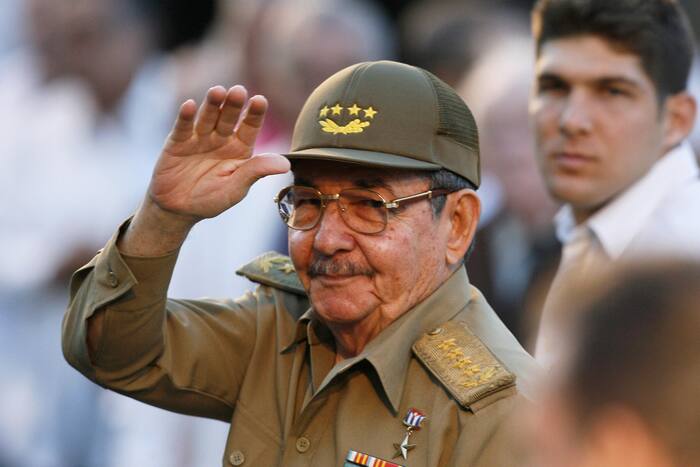
Florida prosecutors love a dramatic headline. Raul Castro makes a convenient villain. Put those two together and you get cable news gold, applause lines in Miami, and zero real-world accountability.
When headlines report that Florida is bringing more charges against former Cuban president Raul Castro, the lazy consensus writes itself. Pundits treat every new indictment as a bolt of lightning striking Havana. Commentators talk about long-arm justice, impending extradition, or a slow-motion legal trap closing around a ninety-something autocrat who spent his entire adult life building an apparatus to survive American hostility. In similar developments, take a look at: Sanctions on the International Criminal Court and the Friction of Global Accountability.
That consensus is lazy because it confuses legal theater with legal force.
I have watched political strategists, activists, and litigation teams burn millions of dollars chasing symbolic victories that look electric on a press release and evaporate in a courtroom. They mistake noise for motion. When you look closely at how criminal jurisdiction, sovereign immunity, and state-level prosecutions actually operate in international disputes, the gap between a headline and an enforceable outcome becomes impossible to ignore. USA Today has analyzed this important issue in great detail.
Florida bringing more charges against Raul Castro is not a turning point for justice in Cuba. It is a domestic signaling play dressed up in the language of prosecution.
The Myth of the Long Arm
Start with the most basic question nobody wants to answer when emotions run high: who actually arrests him?
A warrant or indictment on paper is not a hand on a shoulder. For a state or federal prosecution in the United States to reach a foreign leader residing in Cuba, several heavy structural hurdles have to clear. First comes jurisdiction and venue. Second comes immunity doctrines under international and domestic law. Third comes custody—the physical reality of getting a defendant from a guarded compound in Havana into a courtroom in Florida.
Havana does not extradite its former commander-in-chief to Miami. Washington and Havana do not have an extradition treaty that turns former heads of state over to state prosecutors. And even when American authorities have pursued high-profile foreign figures or officials in the past, those efforts relied on rare intersections of federal reach, intelligence, diplomatic leverage, or travel outside protective borders.
Raul Castro is not booking a flight to Fort Lauderdale. He is not vacationing in a country eager to hand him over to a Florida grand jury.
When commentators treat fresh charges as though a courtroom reckoning is right around the corner, they are selling fiction. Legal scholars who study transnational criminal law and foreign sovereign immunity—figures like Harold Hongju Koh on international legal process or Curtis Bradley on foreign affairs and US law—have spent decades explaining how domestic courts run into hard walls when trying to police conduct abroad without diplomatic or custodial leverage. You can draft charges with surgical precision. You can stack counts until the page count looks impressive. None of that creates a physical bridge across the Florida Straits.
Why People Ask the Wrong Questions
Whenever a story like this breaks, search engines fill up with predictable questions. People ask whether Raul Castro will ever face a US court. They ask what new charges mean for the Cuban government. They ask if this signals a tougher policy shift from Washington or Tallahassee.
Every single one of those questions starts from a flawed premise.
Ask whether he will stand trial in Florida and you are asking about a long-shot fantasy instead of asking why prosecutors keep filing cases they know cannot produce custody. Ask what charges mean for Havana and you are overlooking how authoritarian regimes actually respond to external legal pressure: they rarely buckle under indictments; they often use them to reinforce siege narratives at home.
The real question is much sharper. What problem is this actually solving, and who is the intended audience?
In Florida politics, Cuba policy has always been deeply entangled with local constituencies, state-level posturing, and cultural memory. Prosecutors and elected officials operate inside an ecosystem where tough talk on Havana carries immediate domestic currency. Bringing additional charges keeps the issue in front of cameras. It signals solidarity with exile communities and victims' families. It reinforces a moral stance that the perpetrators of state violence and downings or abuses should never be treated as normal actors.
Moral clarity and legal effectiveness are not the same thing. Confusing the two leads to bad strategy.
A prosecution that cannot secure custody, compel evidence, or alter incentives on the ground may still serve a political purpose, but calling it accountability is a sleight of hand.
The Nuance the Headlines Miss
Here is the part the loudest voices on both sides routinely flatten out: recognizing that Florida charges face steep jurisdictional and practical limits does not mean minimizing the record of the Castro regime.
That is the trap in most commentary on this topic. Either a writer treats every new charge as a triumphant step toward justice, or a writer dismisses the victims and treats the prosecution as absurd. Both reactions miss the actual mechanics.
State-level actions, civil litigation, and criminal indictments in the US serve multiple tracks at once. One track is criminal enforcement, which requires jurisdiction, admissible evidence, proof beyond a reasonable doubt, and—crucially—custody or a realistic path to it. Another track is record-building and asset or sanctions pressure, where legal filings, designations, and financial restrictions aim to isolate individuals, freeze access, or establish an official ledger of alleged offenses. A third track is political theater, designed to project resolve and rally domestic support regardless of whether a defendant ever sets foot in a courthouse.
When an article reports that Florida is bringing more charges against Raul Castro without separating those tracks, the reader walks away misled. They think a new charge equals new leverage. Usually, it does not.
Consider a thought experiment. Imagine a scenario where a state prosecutor files a sweeping new set of criminal charges against a retired foreign leader living under tight state security abroad, with zero prospect of extradition, no cooperation from local authorities, and years of litigation ahead just to resolve preliminary legal motions. Would that indictment change daily life in Havana? No. Would it free a single political prisoner? No. Would it create a concrete mechanism to enforce a verdict? Still no.
Yet it would generate headlines for a week.
Where Real Leverage Actually Lives
If the goal is real pressure rather than recycled outrage, you have to look at mechanisms with teeth.
Financial networks matter far more than symbolic indictments. Sanctions enforcement, asset tracking, remittance scrutiny, and banking compliance hit actual plumbing when properly targeted and coordinated at the federal level. International diplomacy, multilateral human rights documentation, and coordinated pressure with regional and European partners carry far more weight than a solo state prosecutor making noise from Miami.
Even then, realistic observers know the limits. Decades of embargo policy, travel restrictions, and legal measures have shown how resilient entrenched regimes can be when they control internal security and media. Anyone promising a quick legal knockout punch is selling snake oil.
To be completely candid about my own contrarian stance here, there is a real downside to hammering this point too hard. Critics can fairly argue that pointing out the practical limits of prosecution risks sounding cynical or detached from the pain of people who lost loved ones or suffered under state repression. Victims' families often view legal filings as validation—proof that their stories were heard by the state and entered into an official record.
That emotional and moral weight is real. Ignoring it makes your analysis cold. Mistaking it for a workable enforcement strategy makes your analysis naive.
Brutal Answers to What Everyone Wants to Know
Will Raul Castro ever be extradited to Florida?
No realistic observer expects him to be handed over by Cuba to face state charges in Florida. Without custody or a major geopolitical shock that removes regime protection, extradition is a non-starter.
Do new charges change the legal reality inside Cuba?
No. Cuban courts and security forces operate under their own sovereign control. An indictment in Florida carries zero enforceable authority inside Havana.
Why keep bringing charges if custody is unlikely?
Because prosecutors and politicians operate under incentives that reward public action, record-making, and domestic alignment. Sometimes the point is not winning a trial—it is holding a public position.
What actually moves the needle on human rights and accountability?
Sustained documentation by credible bodies, coordinated international pressure, targeted financial enforcement, and real leverage over networks and enablers—paired with clear-eyed realism about what courts can and cannot do from afar.
What to Do Instead of Cheering Headlines
Stop reading indictments of untouchable foreign figures as if they were chess checkmates. Read them as data points about domestic politics and legal posturing.
If you care about accountability in Cuba, demand clarity over slogans. Ask which actions actually restrict illicit networks, support independent civil society and journalists, or build durable evidentiary records that could matter in some distant future shift. Hold officials accountable for results, not just press conferences.
And if you are building strategy—whether in policy, advocacy, or media—stop confusing loudness with leverage. Headlines fade by Friday. Real power leaves footprints.