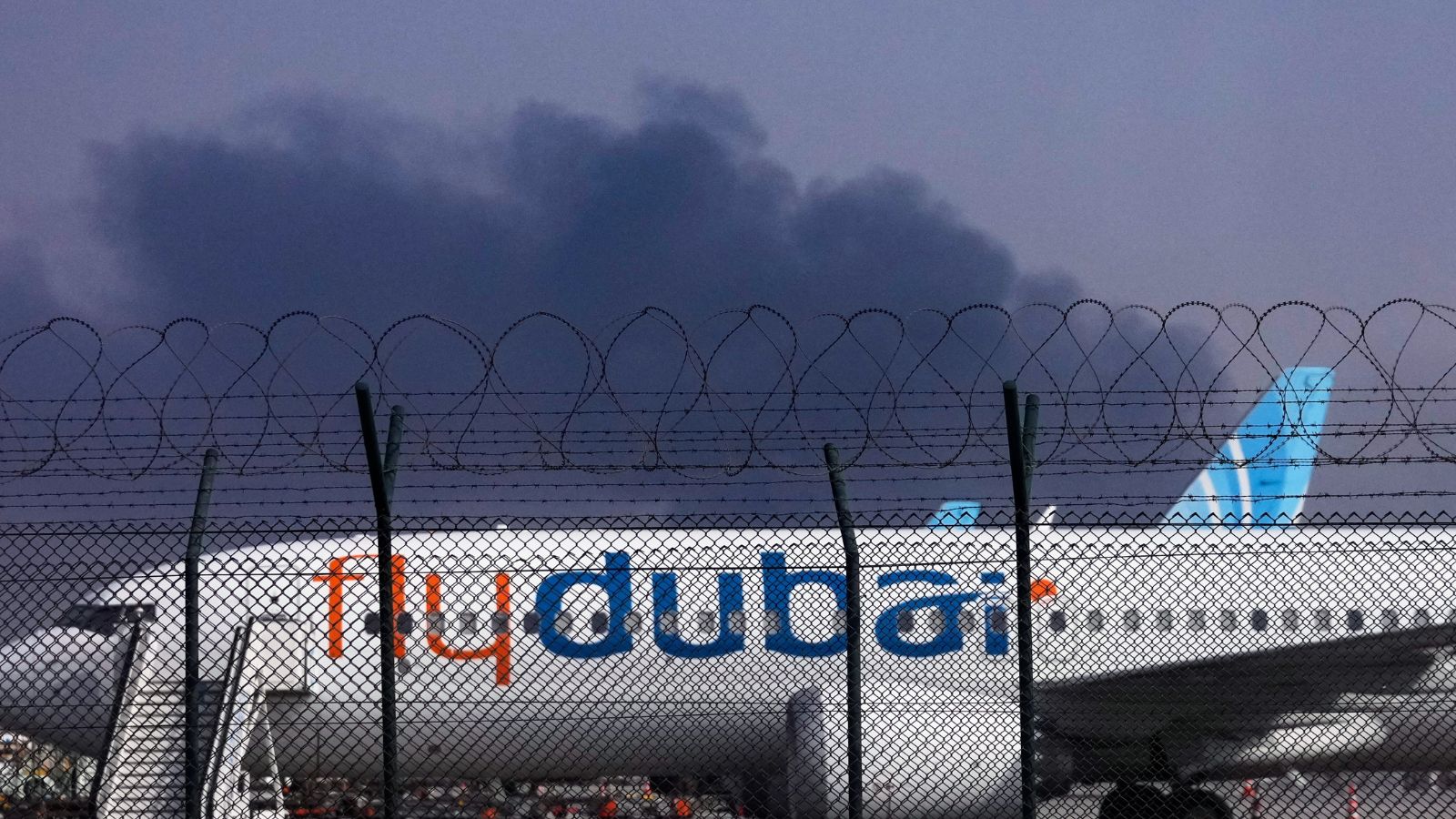
Thirty-four thousand feet above the earth, the illusion of automated invulnerability shattered into raw metal, blood, and sheer human terror. When FlyDubai Flight 1073 pitched downward into a near-vertical dive, the passengers trapped in the cabin did not know that the threat had originated behind the locked door of the flight deck. They only knew the violent, stomach-churning weightlessness of a commercial jetliner plunging fourteen thousand feet in a matter of seconds.
The cockpit attack executed by co-pilot Hamam al-Hammami against Captain Smit Machchhar dismantled decades of comfortable aviation security dogma. For twenty-five years, global aviation policy operated on a single, rigid binary: harden the door against external threats, and trust the two men or women sitting inside it unconditionally. That foundational assumption is now dead. Yet, while the immediate physical struggle is over, the systemic vulnerabilities exposed by the FlyDubai cockpit incident remain entirely unresolved.
The Myth of the Sacred Flight Deck
Modern aviation security was built to fight yesterday's ghosts. Following the tragedies of September 2001, civil aviation authorities across the globe mandated heavy, bulletproof, reinforced cockpit doors designed with one explicit directive: keep everyone outside from getting in. Electronic locking mechanisms, peepholes, and strict code entry protocols became the standard gospel of commercial flight.
The architecture of the modern flight deck assumes that the greatest danger to an aircraft always originates from passenger row twelve. It treats the pilots not just as operators, but as infallible guardians of the sanctuary.
This design philosophy creates a catastrophic single point of failure. When the threat originates from inside the flight deck, that same reinforced door transforms from a shield into a prison. Passengers and crew on FlyDubai Flight 1073 faced an architectural nightmare. The barrier engineered to protect the flight controls from outside intruders instead locked a wounded captain out and trapped passengers in the path of a rogue pilot actively attempting to dive the airframe into the ground.
Captain Machchhar’s survival and the subsequent intervention by passengers who breached the flight deck were miracles of raw courage, not design outcomes. Relying on passenger heroics to override a compromised flight crew is an admission of regulatory bankruptcy.
The Psychological Blind Spot
Aviation regulators love metrics they can measure. They mandate hours of simulator training, strict medical renewals, and meticulous drug and alcohol screenings. They check the physical heart rates and visual acuity of pilots twice a year.
Yet, psychological monitoring remains an archaic, self-reporting charade. Pilots operate in high-stress, fatigue-heavy environments where admitting to mental health struggles, radicalization vectors, or acute personal crises is often an occupational death sentence. The professional culture of aviation encourages stoicism, masking, and pushing through distress.
The investigation into the FlyDubai attack revealed a trail of ideological radicalization and behavioral red flags that slipped right past the systemic safety nets. Commercial airlines spend millions tracking engine vibrations, fuel flow rates, and structural metal fatigue through real-time telemetry. They spend virtually nothing on monitoring the cognitive stability and ideological radicalization of the human beings holding the yoke.
To suggest continuous psychological surveillance or more intrusive vetting triggers immediate, fierce pushback from pilot unions citing privacy and discrimination. But the calculus has fundamentally shifted. When a single flight deck occupant possesses the capability to turn a wide-body or narrow-body aircraft into a guided missile, the privacy rights of the individual must be balanced against the collective survival of hundreds of souls on board.
The Regulatory Paralysis
In the wake of the incident, airlines rushed to implement cosmetic adjustments. Enhanced background checks, stricter gate security for crew members, and temporary route suspensions became the immediate band-aids. Governments issued stern press releases about international cooperation and intelligence sharing.
None of these measures fix the core vulnerability.
If an insider decides to bypass security or is radicalized after hiring, paper-based background checks become useless. Intelligence agencies frequently fail to share cross-border behavioral anomalies in real time. Relying on pre-flight screening to catch a dedicated insider threat is like building a massive seawall while ignoring a crack in the foundation.
Furthermore, the two-person-in-the-cockpit rule—where a cabin crew member must step inside whenever one pilot leaves to use the restroom—was originally designed to prevent pilot incapacitation or unauthorized lockouts. In the FlyDubai scenario, adding a flight attendant to the equation did not stop the internal assault; it merely added another potential casualty or obstacle inside a confined, high-stress workspace where split-second physical control of the flight controls was already compromised.
Redesigning the Human Element
If commercial aviation wishes to retain public trust, the industry must fundamentally rethink how flight decks are operated and monitored. The solution does not lie in more authoritarian secrecy, but in technological redundancy and zero-trust operational frameworks.
First, remote override capabilities must move from science fiction to engineering reality. Ground control centers and automated flight management systems already possess the capacity to monitor aircraft flight parameters globally. Developing secure, encrypted remote override protocols that allow authorized ground stations to lock out manual flight control inputs during catastrophic descent profiles or erratic flight paths could prevent intentional crashes. Critics immediately point out the cyber security risk of remote hacking, but modern avionics are already heavily digitized; the risk of external hacking must be weighed against the proven, catastrophic risk of internal rogue actors.
Second, cockpit monitoring must evolve beyond simple voice and flight data recorders. Advanced cabin monitoring using passive sensor arrays can detect abnormal physiological stress, sudden violent physical struggles, or rapid incapacitation indicators long before an aircraft deviates from its flight plan.
Third, the sacred status of the cockpit door needs an emergency architectural rethink. The absolute barrier must incorporate mechanical or digital override mechanisms accessible under strict multi-factor authentication by senior cabin crew or automated safety systems when anomalous flight vectors coincide with internal cockpit distress signals.
The industry prefers to treat the FlyDubai cockpit attack as an isolated anomaly—a dark, statistical outlier that defies ordinary safety forecasting. That perspective is dangerously comforting. When the architecture of global travel relies entirely on the psychological stability of two individuals behind an impenetrable door, an outlier is not a matter of if, but when. The blood has long been cleaned from the flight deck carpets, but the structural cracks in aviation security remain wide open.