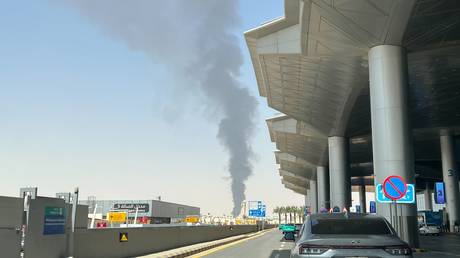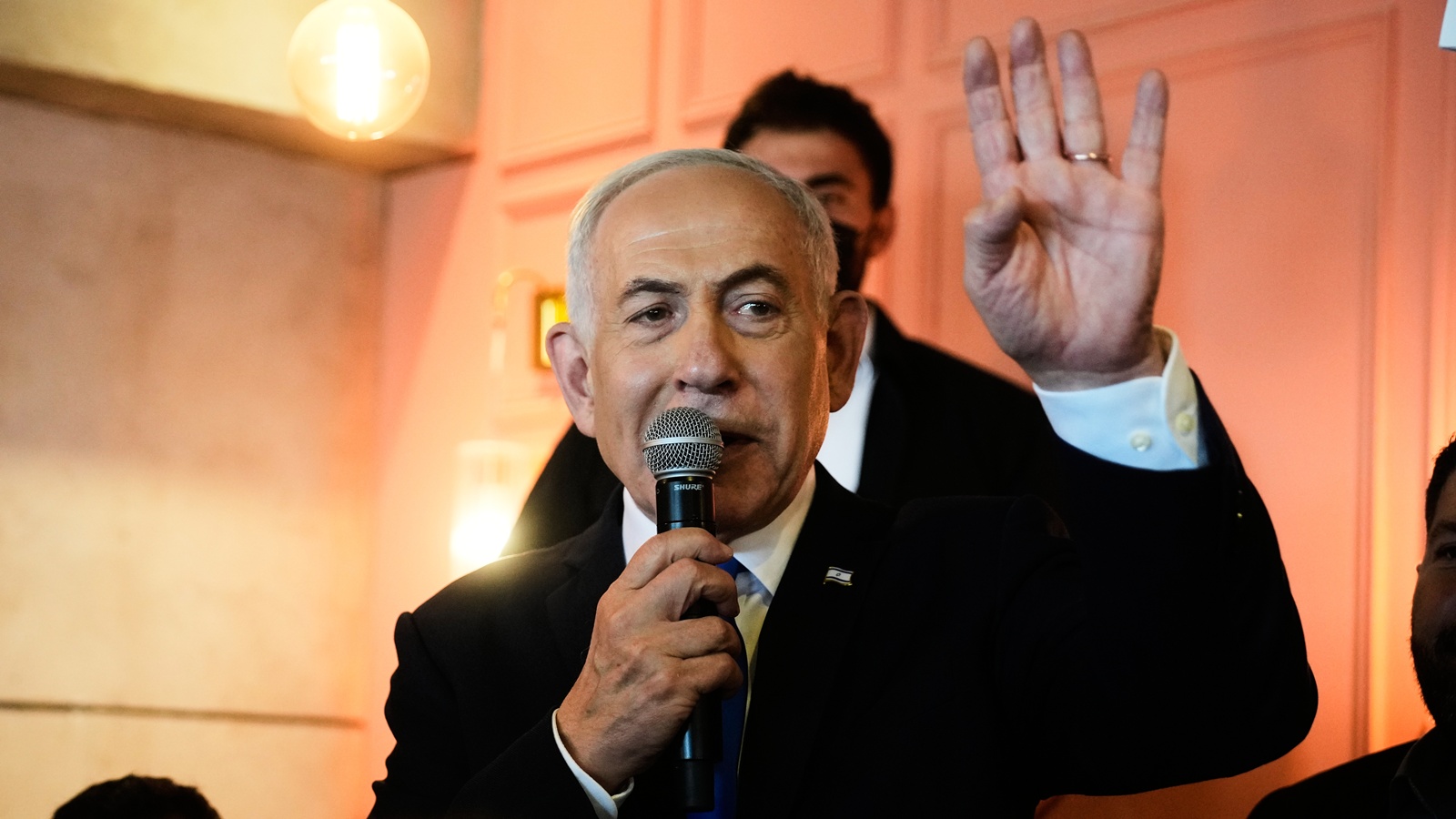
The boarding gates at JFK, Heathrow, and Berlin Brandenburg always tell the same emotional story before an Israeli election. Tearful interviews. Passionate declarations about civic duty. A narrative framed by international outlets—like the widely circulated coverage depicting Israeli expats flying home under the banner of a "last chance to save Israel"—that treats plane tickets as the ultimate weapon against Benjamin Netanyahu.
It makes for compelling human-interest journalism. It also fundamentally misunderstands how Israeli electoral math, demographic shifts, and institutional power actually work.
According to political analysts and electoral researchers at the Israel Democracy Institute (IDI), the romanticized notion that a wave of returning expatriates can tip the scales in a parliamentary system ignores the hard realities of turnout, seat allocation, and structural realignment. While expat mobilization generates headlines, treating diaspora flights as a decisive political force is a comforting illusion for critics of the Israeli government—and a distraction from the real mechanics driving the country's political trajectory.
The Structural Illusion of the Expat Vote
Israel is one of the few democracies that does not offer absentee voting to ordinary citizens living abroad, restricting overseas ballots almost exclusively to diplomatic staff, military attachés, and emissaries of national institutions. To cast a ballot, a citizen living in New York or London has to physically fly to Ben Gurion Airport, pay thousands of dollars in airfare, and take days off work.
Because the barrier to entry is so high, every single voter who makes that trip becomes a walking human-interest story. Media outlets naturally gravitate toward the drama of the "flight for democracy." Yet, when you strip away the airport terminal interviews and look at the Central Elections Committee data, the scale of the phenomenon shrinks dramatically.
Even in the most intensely contested recent elections—such as the five-election cycle between 2019 and 2022—the number of Israelis living abroad who flew back specifically to vote numbered in the low tens of thousands at most. In a country with roughly 6.8 million eligible voters and a turnout rate consistently hovering around 70 percent, an influx of 10,000 to 20,000 voters represents less than half of one percent of the electorate.
Under Israel's pure proportional representation system, where the entire country acts as a single electoral district and parties must clear a 3.25 percent threshold to enter the 120-seat Knesset, a single seat requires roughly 35,000 to 40,000 votes depending on total turnout. Even if every single flying expat voted in lockstep for the same opposition bloc—an assumption that ignores the presence of right-wing and religious expats flying in from Brooklyn or Paris—the mathematical impact amounts to fractions of a seat.
Why the "Last Chance" Framing Misses the Real Battleground
The phrase "last chance to save Israel" appears before virtually every Israeli election cycle, regardless of who sits in the Prime Minister's Office. Political strategists across the spectrum rely on existential urgency to solve their primary logistical headache: differential turnout.
In Israeli politics, elections are rarely won by persuading voters to cross ideological lines. Polling from the IDI and the Viterbi Family Center for Public Opinion and Policy Research consistently shows that the bloc divide—pro-Netanyahu versus anti-Netanyahu, or right-religious versus center-left-Arab—remains remarkably rigid. Few voters swing between blocs. Instead, outcomes hinge on which side successfully mobilizes its own base to show up on election day.
- The Haredi and National-Religious Engine: Ultra-Orthodox (Haredi) communities routinely achieve turnout rates exceeding 80 to 85 percent, driven by rabbinical directives and tight-knit community infrastructure.
- The Secular Center-Left Bottleneck: Turnout in affluent, secular cities like Tel Aviv and Herzliya often lags behind religious strongholds, while turnout among Arab citizens of Israel—who make up roughly 20 percent of the population—has fluctuated wildly, dropping below 45 percent in 2021 before rebounding slightly to around 53 percent in 2022.
When media coverage focuses on a few thousand expats boarding flights in Europe or North America, it misses the statistical elephant in the room. A five-percentage-point shift in turnout among Arab citizens inside Israel, or a modest drop in voter apathy in secular suburbs around Haifa and Tel Aviv, outweighs the entire global diaspora's airport arrivals by a factor of ten.
The Demographic Reality Nobody Wants to Confront
There is a deeper reason why the "fly home to fix it" narrative falls short. It assumes that the political friction in Israel is merely a temporary fever caused by one leader, rather than the byproduct of long-term demographic and cultural transformation.
Consider the Central Bureau of Statistics (CBS) projections for Israel's population. High birth rates among Haredi and religious-Zionist families mean that the electorate grows measurably more religious and more right-leaning with every passing year. According to CBS data, Haredi Jews account for roughly 13.5 percent of the population today, a figure projected to rise toward 16 percent by 2030 and nearly a third of the population by 2065.
At the same time, the political center of gravity has shifted away from the secular, universalist ethos that dominated Israel's founding decades. For many younger Israelis who grew up during the Second Intifada and subsequent conflicts in Gaza and Lebanon, traditional left-wing arguments about territorial compromise carry little weight. As political scientist Tamar Hermann has documented in her longitudinal studies of Israeli public opinion, self-identification on the political right has steadily climbed across younger cohorts, independent of Benjamin Netanyahu's personal popularity.
Flying in from abroad to vote against a single prime minister does nothing to alter these underlying tectonic plates. Even when an anti-Netanyahu coalition successfully assembled a majority in 2021 under Naftali Bennett and Yair Lapid, the government survived barely a year. Its diverse ideological components—spanning right-wing nationalists, centrists, left-wingers, and an Islamist party—could agree on whom they opposed, but they fractured the moment they had to govern on core questions of religion, state, and security.
Does Expat Mobilization Actually Backfire?
There is an uncomfortable paradox in high-profile diaspora electoral activism that opposition organizers rarely acknowledge. In a polarized political environment, visible campaigns by Israelis living in Berlin, London, or San Francisco can inadvertently hand domestic opponents a potent rhetorical weapon.
Populist politics thrives on the contrast between "the rooted locals" and "the detached elites." Throughout recent election campaigns, right-wing commentators and Likud strategists have framed anti-government protesters—and particularly those living abroad—as privileged outsiders who do not bear the daily security or economic burdens of life inside Israel, yet wish to dictate policy from afar.
When news segments highlight tech workers and academics flying in from foreign capitals to "save" the country from the choices of working-class voters in periphery towns like Sderot, Dimona, or Netanya, it reinforces the exact cultural grievance that fuels Netanyahu's base. Rather than softening support for the coalition, the spectacle of diaspora intervention often hardens domestic resolve, turning the election into a referendum on cultural sovereignty rather than governance or policy.
What People Get Wrong About Israeli Elections
When observers outside Israel watch these drama-filled election cycles, they tend to project the mechanics of winner-take-all systems like the United States or the United Kingdom onto a parliamentary structure that operates by completely different rules.
Does Israel allow absentee voting for citizens abroad?
No. Aside from official state representatives—diplomats, Jewish Agency emissaries, and certain maritime workers—Israeli citizens must be physically present in Israel on election day to cast a ballot. Proposals to introduce overseas voting have repeatedly stalled in the Knesset, largely because different political factions fear it would unpredictably alter the delicate demographic balance of the electorate.
Can the Israeli diaspora realistically swing a close election?
Only under the most extreme, razor-thin circumstances—and even then, indirectly. In a 120-seat parliament where coalitions are built through post-election horse-trading among 10 to 12 parties, a difference of 15,000 votes rarely flips a seat unless a small party is teetering right on the 3.25 percent electoral threshold (roughly 150,000 votes). In 2022, the left-wing party Meretz fell just 3,800 votes short of that threshold, wiping out four seats for the anti-Netanyahu bloc. In that specific scenario, a few thousand extra votes in the right column could have prevented a collapse—not by electing a prime minister directly, but by keeping a micro-party alive.
Why do expats fly back if the mathematical impact is so small?
Because voting in a high-stakes environment serves an emotional and identity-affirming function. For many Israelis abroad, the flight home is less a calculated tactical strike and more a personal ritual—a way to assert that they still belong to the national story and refuse to surrender their stake in the country's future, regardless of the statistical odds.
The Real Lever of Change Isn't at the Airport
If the goal is genuinely to reshape Israel's political direction, the decisive levers have nothing to do with transatlantic airfare.
First, political outcomes inside Israel are determined by coalition architecture and threshold management, not raw popular vote totals. In 2022, the pro-Netanyahu bloc won a decisive 64-seat majority despite receiving almost the exact same total number of votes as the opposing parties combined. Why? Because Netanyahu ruthlessly engineered party mergers on the right so no votes were wasted below the 3.25 percent threshold, while the anti-Netanyahu camp fractured, allowing both Meretz and the Arab nationalist party Balad to fall below the cutoff and discard nearly 290,000 votes into thin air.
Second, long-term political power in Israel is built through domestic institution-building and year-round civic organizing, not quadrennial airport arrivals. The movements that have most successfully reshaped Israeli policy over the past two decades—from the religious-Zionist settlement enterprise to the Haredi parliamentary parties—focused relentlessly on local municipal councils, judicial appointments, educational curricula, and grassroots voter turnout in peripheral cities.
Third, any durable political alternative must speak to the economic and security anxieties of middle- and working-class Israelis living outside the Tel Aviv metropolitan bubble. High cost of living, housing shortages, and personal security concerns drive voting behavior far more reliably than abstract appeals to liberal democratic norms.
Airline tickets make for great television. They provide a clean, heroic visual of citizens crossing oceans to defend their homeland at the ballot box. But democracy in Israel will not be saved or lost at the arrivals gate of Ben Gurion Airport. It will be decided in the mundane, unglamorous grind of domestic party mergers, municipal politics, and the voting booths of cities where the people who live there every day decide what kind of country they actually want to inhabit.