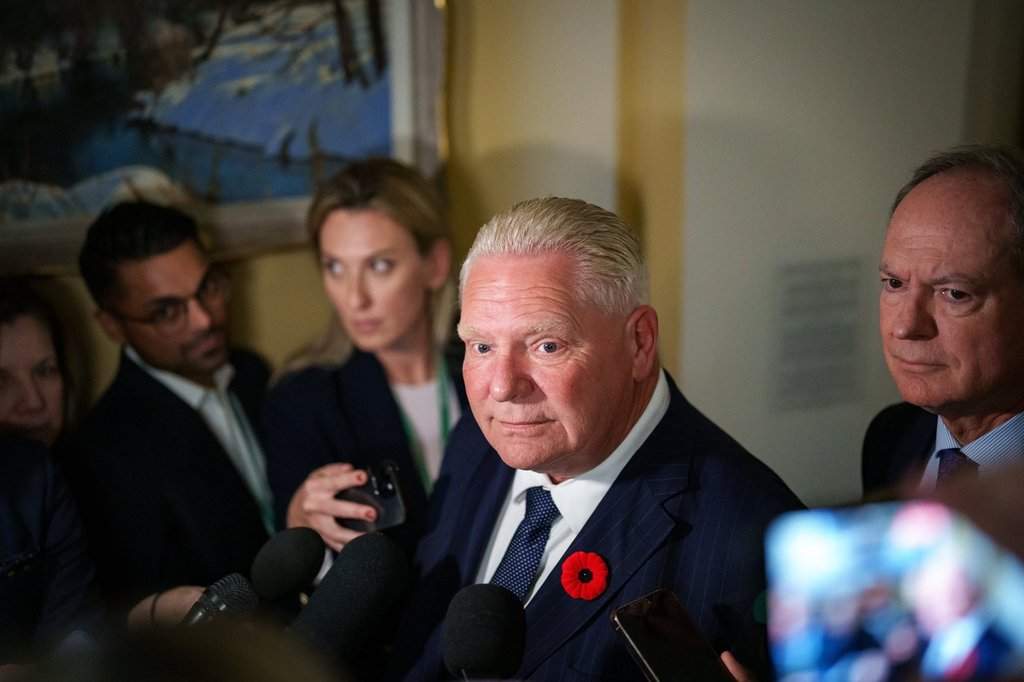
Politicians love announcing factory rescues before the checks actually clear. That's exactly what happened when Ford pushed back against claims from a government minister suggesting the automaker was ready to pump fresh cash into a Stellantis plant.
When a minister publicly floats an investment lifeline that the company hasn't approved, markets notice immediately. Ford's refusal to confirm any new financial commitment isn't just corporate cautiousness—it's a stark reminder that automakers run on capital discipline, not political press conferences.
What Actually Happened Between Ford and the Minister
Let's strip away the political spin. A government minister made public remarks implying that Ford was stepping up with fresh funding tied to a Stellantis manufacturing facility. Within hours, Ford poured cold water on the narrative, clarifying that it isn't committing new cash to the site.
This kind of public contradiction rarely happens by accident. Usually, backchannel talks between ministries and legacy automakers stay behind closed doors until a memorandum of understanding is signed. When a minister jumps the gun to score local headlines about saving industrial jobs, the automaker has two choices. Stay quiet and let shareholders think management is subsidizing a direct rival's footprint, or issue a blunt correction.
Ford chose the blunt correction. Honestly, they had no other choice. Publicly traded automakers are under intense pressure from institutional investors to justify every single dollar of capital expenditure.
Why Automakers Won't Bail Out a Rival's Footprint
Think about the basic economics of automotive manufacturing right now. Legacy carmakers are already drowning in fixed costs while trying to fund software development, hybrid powertrains, and battery supply chains simultaneously.
Overcapacity Is Already Eating Margins Alive
North American and European auto plants are struggling with utilization rates. A factory generally needs to run at roughly 80% capacity just to break even on its massive overhead. Taking on financial obligations for a facility tied to Stellantis—a competitor facing its own well-documented inventory and plant utilization headaches—makes zero financial sense unless there is a deeply discounted asset transfer or massive state subsidy attached.
- Capital allocation rules everything. Ford has spent the last few years restructuring its global operations, cutting unprofitable vehicle lines, and trimming excess plant capacity.
- Rival platforms don't mix easily. You can't simply walk into a Stellantis stamping and assembly facility and start building Ford vehicles without hundreds of millions of dollars in retooling.
- Shareholder scrutiny is brutal. Wall Street punishes automakers the second they hint at undisciplined spending outside their core product roadmap.
If Ford wanted more assembly capacity, it would expand existing underutilized lines within its own network first. Writing a check for a competitor's plant ecosystem only happens when distress prices make the math undeniable.
The Dangerous Gap Between Political Promises and Boardroom Reality
I've watched industrial policy announcements play out across the auto sector for years, and the pattern never changes. Ministers face election cycles measured in months. Auto executives manage product cycles measured in five-to-seven-year increments.
When a plant faces downsizing or uncertain volume, local officials scramble for a white knight. They hold exploratory meetings with every major OEM, ask what it would take to bring volume to the region, and sometimes mistake a polite "we'll look at the numbers" for a binding commitment.
That's where things go sideways. Exploratory conversations happen every week in corporate strategy departments. Analysts model hypothetical scenarios—what if we acquired this plant, what if we partnered on a joint venture, what if the government covered 60% of the retooling bill? A spreadsheet exercise isn't a check.
When a minister treats an early-stage conversation like a done deal, it actually poisons the well. Legal and communications teams immediately lock down external discussions because nobody at corporate headquarters wants their brand used as political leverage.
What This Means for Stellantis Plants and Auto Workers
Stellantis has been navigating a turbulent stretch marked by leadership transitions, dealer inventory pushback, and fierce debates over plant commitments with unions like the UAW and Unifor. Whenever questions swirl around the future of a Stellantis assembly or parts plant, rumors of outside buyers or joint-venture partners inevitably surface.
Here is the hard truth for workers and suppliers watching these headlines. Another automaker is almost never going to swoop in to rescue a rival's plant out of goodwill.
How Real Plant Transfers Actually Happen
When one automaker genuinely takes over another's facility, three things happen long before a politician steps up to a podium:
- The existing owner formally exits or declares the asset non-core. You rarely see active cash injections into a rival's operating plant without an outright sale or a formal joint-venture entity.
- State or federal governments put binding tax credits and grants on paper. Automakers don't move without guaranteed public co-investment offsetting retooling costs.
- Union labor agreements are renegotiated upfront. Transferring seniority, pension liabilities, and wage tiers between two different corporate contracts takes months of grueling legal work.
None of those pieces were in place here. That's why Ford's pushback was so swift and unambiguous.
How to Read Auto Industry Investment Headlines Without Getting Fooled
If you follow automotive stocks, supply chain news, or manufacturing policy, you need a filter for political announcements. Ministers will always frame preliminary talks as imminent breakthroughs.
Look for three specific signals before believing any factory investment claim. First, check if the automaker issued a simultaneous press release with exact dollar figures and a timeline—if the news only comes from a government official's speech, treat it with heavy skepticism. Second, look for board approval language, because major capital commitments require formal sign-off rather than informal ministerial handshakes. Third, verify whether the money is net-new capital or simply previously announced spending being repackaged for a new press cycle.
Watch Ford's quarterly capital expenditure guidance and official investor relations filings instead of political soundbites—that's where the real money always shows up first.