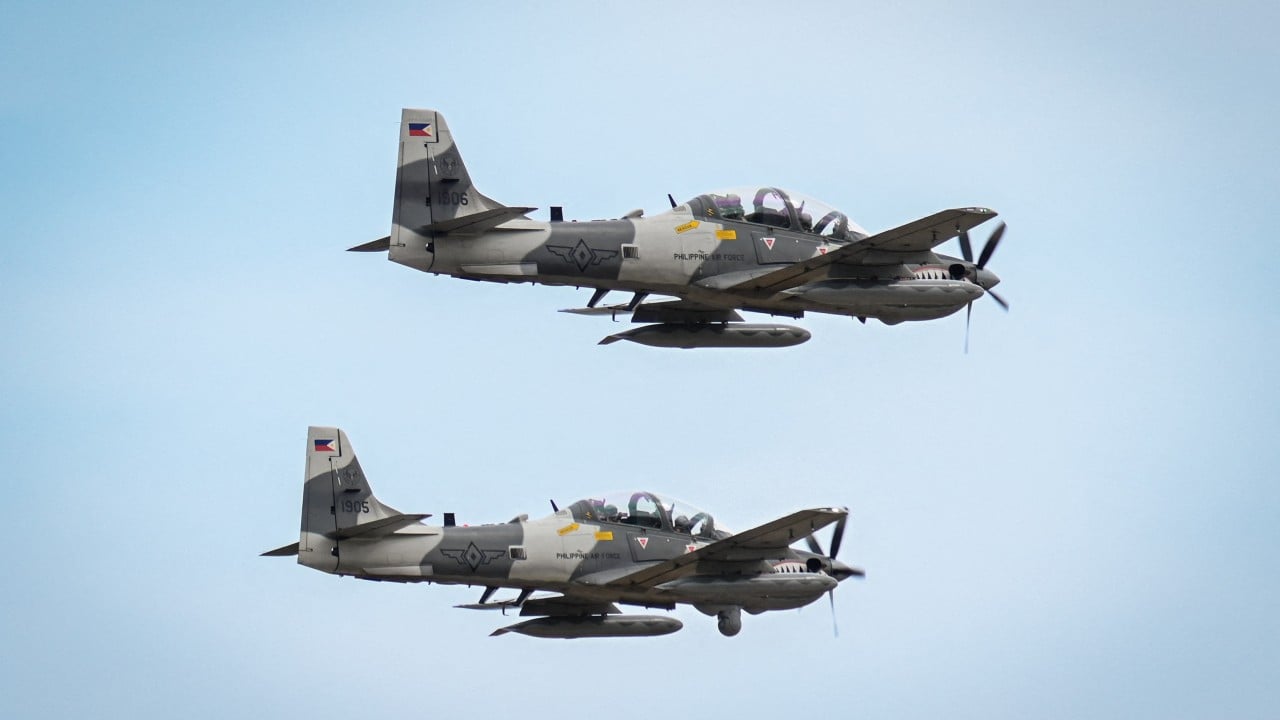
Four Philippine Air Force pilots died when two military training aircraft collided in mid-air during a routine flight exercise, exposing critical vulnerabilities in aviation safety protocols and the operational strain of maintaining aging defense fleets. The crash claimed the lives of two instructor pilots and two student aviators, halting local training operations while military investigators examine the wreckage for mechanical failure or human error. Beyond the immediate tragedy, this incident forces a hard look at how developing air forces balance aggressive modernization goals with the daily realities of keeping legacy propeller-driven trainers safely in the sky.
Mid-air collisions rarely happen because of a single catastrophic mistake. They are almost always the final link in a chain of small, compounding failures. When two aircraft occupy the same patch of sky, physics leaves zero room for negotiation. In military flight training, where instructors push students to master tight formation flying, spatial awareness, and split-second decision-making, the margins for error shrink to mere feet. Meanwhile, you can find similar stories here: The Quiet Shift in Asymmetric Warfare (And Why the Targets Are Closer Than You Think).
Anatomy of a Training Disaster
The mechanics of a military training sortie demand absolute precision from both the cockpit and the ground control tower. Student pilots rely heavily on their instructors to manage the broader airspace while they focus on instrument readings and stick-and-rudder mechanics. When two planes are flying in close proximity—whether practicing tactical maneuvers, executing simulated dogfights, or simply transitioning through a shared training corridor—visual acquisition is everything.
See-and-avoid remains the primary defense against mid-air collisions in visual meteorological conditions. Yet human eyesight is fundamentally flawed for aviation. The human eye struggles to detect an object on a constant bearing with decreasing range because that object appears stationary against the horizon until it suddenly blooms in the windscreen. By the time a pilot recognizes an impending impact, closure rates of several hundred knots mean there is less than a second to react. To explore the full picture, we recommend the recent report by NPR.
Modern commercial airliners rely on Traffic Collision Avoidance Systems (TCAS) to alert crews and issue automated climb or descend commands when aircraft get too close. Many basic military trainers, particularly older turboprop or piston-engine models still in service across Southeast Asia, either lack advanced TCAS integration or operate with systems deactivated during close-formation drills to prevent constant false alarms. Without electronic guardrails, pilots are entirely dependent on radio discipline, pre-flight briefings, and eyeballs outside the canopy.
The Human Factor in the Cockpit
Cockpit workload during training flights is notoriously high. An instructor is simultaneously flying the aircraft, monitoring the student's inputs, scanning the horizon for traffic, and listening to air traffic control frequencies. Cognitive overload sets in quickly.
If a student falls behind the aircraft—a common occurrence during complex maneuvers—the instructor's attention naturally narrows to correct the mistake. That brief fixation inside the cockpit breaks the visual scan outside. If the wingman or a second flight element makes an unannounced turn or misjudges altitude separation at that exact moment, the two flight paths intersect.
The Structural Strain on the Philippine Air Force
To understand why these accidents continue to plague regional air arms, you have to look at the balance sheet and the hangar floor, not just the flight line. The Philippine Air Force (PAF) has spent the last decade trying to transition from an internal-security force focused on counter-insurgency to a territorial defense force capable of patrolling the South China Sea. That pivot requires massive capital expenditure on supersonic lead-in fighters, long-range maritime patrol aircraft, and modern radar networks.
Money spent on high-end deterrence often creates friction elsewhere in the budget. Maintaining a fleet of legacy trainer aircraft—such as the SIAI-Marchetti SF.260 or older utility platforms—becomes an exercise in creative logistics. Spare parts grow scarce as original equipment manufacturers shift focus to newer platforms. Ground crews work longer hours to keep airframes airworthy, cannibalizing parts from grounded planes to keep others flying.
| Operational Factor | Ideal Training Environment | Reality in Constrained Fleets |
|---|---|---|
| Avionics & Safety | Integrated TCAS, modern glass cockpits, real-time telemetry | Analog gauges, limited collision warnings, reliance on visual scans |
| Flight Hours | Consistent monthly sorties ensuring muscle memory | Irregular schedules due to maintenance bottlenecks and weather |
| Maintenance | Abundant OEM spare parts and predictable overhaul cycles | Aging airframes requiring extended inspection and part sourcing |
| Airspace Management | Dedicated, radar-monitored military operating areas | Congested corridors shared with commercial and general aviation |
None of this means ground crews are negligent. On the contrary, aviation mechanics in resource-constrained militaries are often among the most resourceful technicians in the world. The problem is systemic. Older airframes demand more maintenance man-hours per flight hour, which inevitably compresses training schedules when weather clears and planes are finally available. Pilots feel subtle, unspoken pressure to maximize every sortie, cramming multiple training objectives into a single flight window.
Airspace Congestion and Ground Control Gaps
The sky over the Philippines is no longer empty. Rapid commercial aviation growth across Southeast Asia has steadily encroached on airspace once reserved almost exclusively for military maneuvers. When military training zones sit adjacent to busy civilian flight corridors, air traffic controllers face a complex juggling act.
Military training bases frequently operate with aging primary and secondary radar systems. While major international hubs boast high-definition surveillance and automated conflict-alert software for controllers, regional military airfields sometimes rely on procedural separation—tracking aircraft through pilot radio reports rather than continuous radar sweeps. If a pilot misstates an altitude or if radio transmissions step on each other during a busy training block, controllers on the ground have no independent way to spot the converging paths until it is too late.
What Aviation Investigators Actually Look For
Following a fatal mid-air crash, the military immediately grounds the affected fleet type and convenes a board of inquiry. Contrary to popular belief, investigators do not start by looking for someone to blame. They look for systemic failures that allowed two aircraft to occupy the same coordinates.
- Wreckage Distribution and Impact Angles: By mapping where debris lands on the ground, forensic engineers reconstruct the exact geometry of the collision. The angle of paint transfers, sheared propeller blades, and crushed wing spars reveals which aircraft struck which, and whether either pilot attempted a last-second evasive maneuver.
- Communication Transcripts: Investigators pull every second of audio from the control tower and military command frequencies. They listen for clipped transmissions, misunderstood clearances, or deviations from the briefed flight plan.
- Maintenance Logs and Airframe History: Every inspection, part replacement, and pilot squawk sheet from the preceding months is audited. A faulty altimeter or a malfunctioning transponder can easily place a pilot 500 feet off their assigned altitude without them ever knowing it.
- Medical and Physiological Records: Autopsies and toxicology screens are standard, alongside a review of the pilots' sleep schedules, recent flight hours, and physical stress levels over the previous 72 hours.
Small propeller trainers rarely carry the heavy, crash-hardened flight data recorders—the so-called black boxes—found on commercial jets or modern fighter aircraft. This absence of digital telemetry makes the investigation vastly more difficult. Without recorded stick inputs and engine parameters, investigators must piece together the final seconds entirely from physical metal, radar tracks, and eyewitness accounts on the ground.
The Myth of Zero-Risk Military Aviation
Military flying is inherently dangerous. You cannot train combat aviators to operate in hostile, high-stress environments by keeping them safely on the ground or restricting them to gentle, straight-and-level flight. Aggression, precision, and calculated risk are baked into the profession. If an air force eliminates all risk from its training syllabus, it produces pilots who cannot survive actual combat.
Yet there is a sharp distinction between operational risk and preventable systemic hazard. Losing four pilots in a peacetime training collision is a devastating blow to a military institution. Beyond the profound human grief borne by their families, the loss of two experienced instructor pilots represents years of accumulated institutional knowledge wiped out in an instant. You can buy a new trainer aircraft in two years; it takes nearly a decade to season a combat-ready flight instructor.
Where Defense Modernization Must Go Next
The Philippines has committed billions of pesos to its Horizon modernization phases, acquiring new assets to secure its borders. That spending strategy needs an immediate recalibration toward the foundational layer of air power: the training pipeline.
Upgrading the primary and basic trainer fleets is not as politically glamorous as unveiling supersonic fighter jets or missile batteries, so it rarely headlines defense budgets. It is, however, the absolute bedrock of aerial survival. Equipping existing trainers with lightweight, commercial-off-the-shelf collision avoidance transponders and modern GPS telemetry pods costs a fraction of a single fighter jet. Ground-based radar modernization at primary training airfields would give controllers real-time visibility over crowded practice areas.
True air power is not measured by the hardware parked on the tarmac during an independence day parade. It is measured by the safety, discipline, and survivability of the crews flying routine sorties on an ordinary Tuesday morning. Until militaries treat training safety infrastructure with the same urgency as frontline combat hardware, young pilots will continue paying the ultimate price for systemic blind spots.