Silence.
In the dusty limestone neighborhoods of Jordan, where the afternoon call to prayer rolls over flat-topped roofs and mingles with the scent of roasted cardamom and diesel exhaust, silence inside a church is supposed to feel heavy with centuries of peace. It is the sound of beeswax melting onto brass stands, the soft shuffle of leather soles on worn flagstones, and the whispered cadence of ancient liturgies that have survived empires.
When that silence is shattered by the sharp, metallic crack of gunfire, the sound does not stay within the sanctuary walls. It echoes down narrow alleyways, rattles the shutters of neighboring shops, and threatens to fracture a social contract that millions of people rely on simply to wake up and go to work each morning.
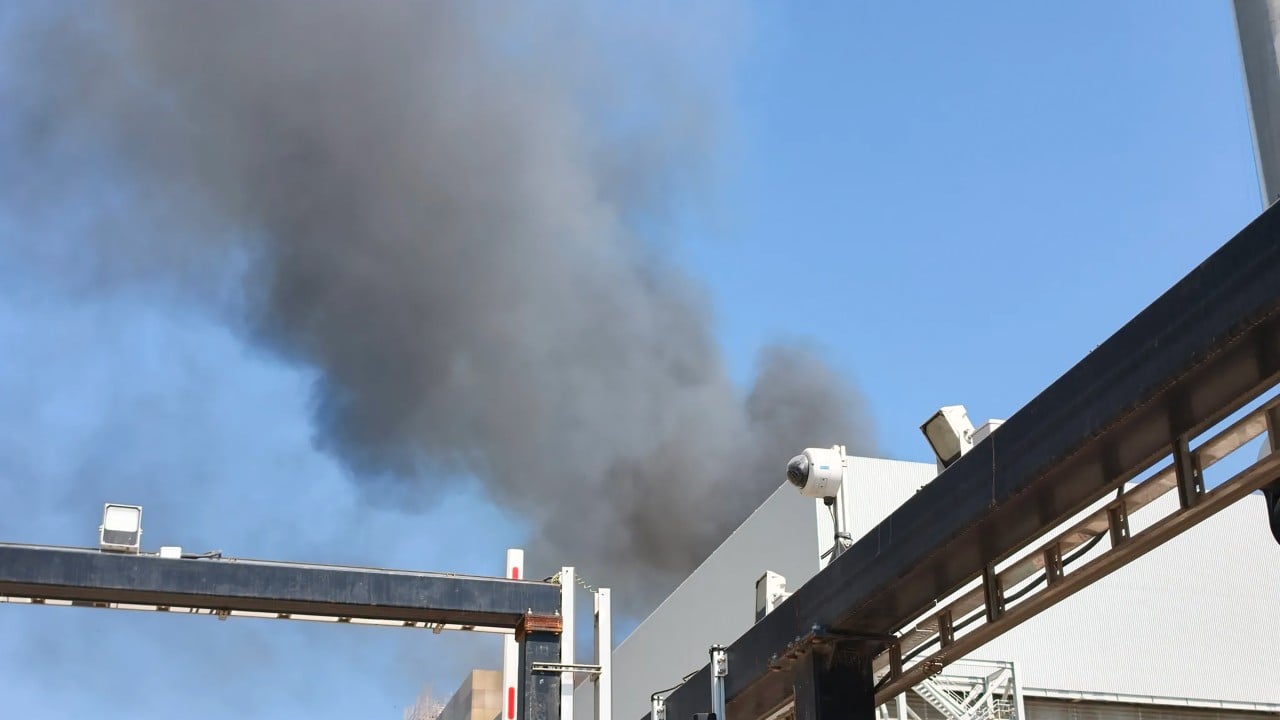
Earlier this week, Jordanian security forces announced the arrest of three men in connection with a deadly attack on a church—a dry, six-word headline that flashed across international wire services before sinking beneath the weight of louder global crises. On paper, it reads like a routine law enforcement blotter. Three suspects detained. Investigation ongoing. Security restored.
To read it that way is to miss the entire story. Behind those three arrests lies a high-stakes battle over whether one of the Middle East’s last stable pluralistic societies can hold its center when extremism tries to pry it open from the inside.
The Architecture of an Ordinary Sunday
To understand what was nearly lost in that sanctuary, you have to step away from police reports and picture an ordinary congregation gathering for worship. Consider a hypothetical family—let us call them the Haddads—preparing for Sunday morning in a mixed neighborhood on the outskirts of Amman or Zarqa. For generations, their mornings have followed an unremarkable rhythm. Tariq buttons his collared shirt while his mother wraps warm flatbread in a clean cloth to share with neighbors after the service. Outside their door, the street belongs to everyone. The grocer downstairs is Muslim; the pharmacist across the road is Christian. Their children walk the same pavement to school, complaining about the same geometry exams.
In Jordan, Christians make up roughly two to four percent of a population of more than eleven million people, forming one of the oldest continuous Christian communities in the world. Their presence is not a modern diplomatic arrangement. It is woven into the limestone bedrock of the Levant, stretching back to the earliest days of the faith along the Jordan River.
Yet living as a small minority in a volatile region carries an unspoken awareness—a quiet vigilance that rarely makes it into tourist brochures. Every time a violent attack strikes a house of worship anywhere in the world, the air inside these sanctuaries changes subtly. Parents glance toward the heavy wooden doors a fraction of a second longer when footsteps approach from the street. Ushers who used to spend their mornings handing out hymnals find themselves scanning the faces of unfamiliar visitors.
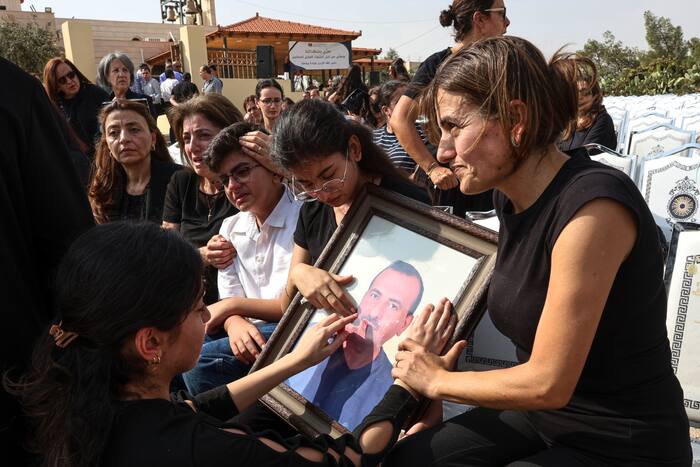
When the gunfire erupted in this latest attack, killing innocent worshippers and turning a space of refuge into a crime scene, that quiet vigilance turned into cold dread. For those inside, time collapses in moments like these. The smell of incense vanishes, replaced instantly by the acrid sting of cordite and dust kicked up from chipped stone pillars. In those first chaotic minutes, nobody knows whether the violence is an isolated burst of madness or the opening salvo of something far worse.
How Extremism Targets the Seam
Why attack a church in a country renowned for its intelligence apparatus and regional stability? The answer has very little to do with theology and everything to do with geometry.
Think of a diverse society like an ancient stone arch. The arch stands for centuries not because the stones are glued together, but because pressure is distributed evenly across every block, pressing them tightly against one another. Terrorist cells and lone-wolf extremists rarely have the military strength to knock down the whole wall. Instead, they look for the seam—the narrow mortar line between two stones—and drive a chisel directly into it.
By targeting a Christian sanctuary, the attackers were not merely trying to take lives. They were trying to manufacture mutual suspicion. They wanted the Haddads of Jordan to look at their Muslim neighbors with fear, and they wanted Muslim neighbors to feel defensive or alienated from the grief next door. If fear takes root, people retreat behind higher walls. Trust evaporates. Once trust is gone, the arch collapses under its own weight.
This is why the speed of the Jordanian security response matters so deeply. In counterterrorism, the seventy-two hours immediately following an attack are a race against rumor and panic. Every hour that perpetrators remain at large gives extremist networks time to claim credit, circulate propaganda on encrypted messaging apps, and inspire copycat violence. By tracking down and arresting three men swiftly, Jordan’s General Intelligence Directorate and public security forces did more than solve a crime. They denied the attackers the prolonged psychological siege they were hoping to trigger.
Inside the Invisible Dragnet
To someone watching from afar, an arrest announcement looks effortless, almost clinical. A statement is released; suspects are in custody. The reality on the ground is messy, exhausting, and deeply human.
I still remember the first time I walked past a cordoned-off street in Amman years ago following a security operation—the strange stillness of a city block frozen in amber while plainclothes officers moved quietly between parked cars, speaking in low tones into lapel mics. There were no sirens blaring for dramatic effect, no theatrical displays of force. Just an intense, methodical compression of space around a target until there was nowhere left to run.
Modern counterterrorism in Jordan relies heavily on that quiet precision. Over the past two decades, particularly since the 2005 Amman hotel bombings that killed sixty people and scarred the national psyche, Jordan has built one of the most experienced intelligence and security infrastructures in the Arab world. The lessons learned from that tragedy reshaped everything from border surveillance to neighborhood policing.
When an attack hits a soft target like a church, investigators immediately begin working backward through concentric circles of human behavior:
- Digital and financial footprints: Burner phones discarded near transit hubs, sudden withdrawals of small amounts of cash, or encrypted messages routed through foreign servers.
- Physical surveillance and local tips: Blurry frames from a bakery’s security camera, a taxi driver who remembers dropping off three nervous passengers two blocks away, or a landlord who noticed strangers moving into a basement apartment without furniture.
- Ideological networks: Cross-referencing the suspects’ movements against known radicalization pipelines, whether domestic cells or online recruiters operating across borders in Syria and Iraq.
What makes these investigations uniquely difficult today is the shift away from large, hierarchical terror organizations toward small, fragmented cells. Three men operating with minimal external communication leave a much fainter trail than an organized militia. Catching them requires human intelligence—neighbors willing to pick up the phone and report something that felt slightly off, shopkeepers willing to hand over camera footage without hesitation, and investigators willing to sift through thousands of hours of mundane street life to find ten seconds of truth.
The Weight of Unanswered Questions
Even with three men behind bars, honest observers have to admit a deeply uncomfortable truth: arrests do not erase vulnerability.
Whenever authorities announce that suspects are in custody, a wave of natural questions follows. Were these three men acting entirely on their own, or are there handlers still sitting behind screens miles away? How did the weapons enter the country or slip past checkpoints? Could the warning signs have been caught two weeks earlier, before a single shot was fired?
Pretending that security forces are omniscient does a disservice to the victims and insults the intelligence of ordinary citizens. No intelligence agency on earth can seal every street corner or read every mind before violence occurs. Jordan sits at a perilous geographic crossroads, bordered by Syria to the north, Iraq to the east, Saudi Arabia to the south, and Israel and the West Bank to the west. The country hosts millions of refugees who fled regional wars, stretching its water supplies, municipal budgets, and security bandwidth to their limits.
In that environment, extremism does not always arrive as an invading army. Sometimes it festers quietly in economically marginalized districts, feeding on unemployment, regional anger, and online echo chambers that promise cosmic purpose to young men who feel invisible in their own lives. You cannot arrest an ideology out of existence, nor can you place an armed guard outside every chapel, mosque, and schoolyard in the kingdom without turning daily life into an open-air prison.
That tension—between keeping people safe and keeping society open—is the tightrope Jordan walks every single day.
What Happens When the Police Tape Comes Down
The real test of a nation’s resilience begins not when the handcuffs click shut, but when the forensic teams pack up their cameras and the yellow police tape is finally rolled away.
In the aftermath of attacks on churches across the broader Middle East—from Egypt to Iraq to Syria—communities have often faced a heartbreaking crossroads. Some congregations dwindle as families pack their suitcases, convinced that the future belongs elsewhere. Every departure thins out the cultural fabric a little more, turning living sanctuaries into quiet museums.
Jordan has fought fiercely to prevent that hollowing out, both through state protection and through deep-rooted social solidarity. Following past incidents of extremist violence, it has not been unusual to see Muslim neighbors standing outside churches during holiday services, offering flowers or simply standing shoulder-to-shoulder as an unspoken shield. Tribal leaders, clerics, and ordinary shopkeepers routinely condemn attacks on Christian citizens not as an attack on "them," but as an assault on the entire national household.
Consider what happens in our hypothetical neighborhood the Sunday after the arrests. The heavy wooden doors of the church still bear the fresh plaster patches where bullets chipped the limestone. Inside, the pews are full. Tariq Haddad sits near the aisle, his hand resting firmly on his young son’s shoulder. Two rows behind him sits the pharmacist from across the street, who came not to pray, but simply to be present—to prove with his physical body that the mortar between the stones is still holding.
That quiet act of showing up is the antidote that extremists fear most. Violence thrives on isolation. It wants communities to fracture into terrified, self-contained islands. When people refuse to surrender their shared streets, the attackers lose their leverage even before a judge reads their sentence.
A Fragile Victory Worth Defending
The arrest of three men in Jordan is a victory for the rule of law, a testament to relentless investigative work, and a vital shield raised over a grieving community. Those families deserve justice delivered transparently in a courtroom, where the mechanisms of hatred are exposed to daylight rather than hidden in shadows.
Yet security forces can only ever buy time. They can clear the street, detain the gunmen, and dismantle the immediate threat. What happens inside that bought time belongs to everyone else—to teachers, parents, clerics, neighbors, and citizens who decide every morning whether to meet fear with suspicion or with solidarity.
Outside the church in Amman, the late afternoon sun turns the pale limestone walls the color of warm honey. Inside, someone strikes a match, touches the flame to a fresh beeswax candle, and sets it gently in the brass stand beside dozens of others already burning.
The flame trembles once in the draft from the open door, steadies itself, and stays lit.