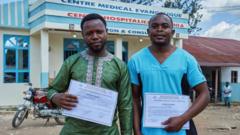
Five patients just walked out of an Ebola treatment center in the Democratic Republic of the Congo, alive and cured. In the lexicon of international public health, this is a monumental victory. It proves that advanced therapeutics, when deployed rapidly, can stop one of the world’s most lethal pathogens in its tracks. But look closer at the mud and gravel of North Kivu, and the celebratory narrative begins to fracture. The survival of these five individuals obscures a harsher, systemic reality.
Behind the cameras and the official press releases lies a grinding logistical nightmare. These recoveries did not happen because the local healthcare infrastructure is thriving. They happened because a massive, hyper-funded international apparatus temporarily supercharged a broken system. The real story isn't just that five people survived. It is that hundreds of others remain trapped in a cycle of conflict, deep-seated institutional distrust, and broken supply chains that make these medical miracles vanishingly rare.
The Mechanized Miracle of Modern Therapeutics
To understand how these five patients survived, you have to look at the transformation of Ebola treatment over the last decade. We are no longer in the era of passive observation, where doctors could do little more than provide intravenous fluids and hope a patient's immune system would hold the line.
The breakthrough lies in monoclonal antibodies. When a patient tests positive, they are now administered treatments like Ebanga or Inmazeb. These are engineered proteins designed to bind to the glycoprotein of the Ebola virus, effectively blocking it from entering human cells.
[Ebola Glycoprotein] <--- Blocked by Monoclonal Antibody (Ebanga/Inmazeb)
          |
          X ---> Cannot penetrate Human Cell Membrane
When administered within the first few days of symptom onset, these therapeutics drop the mortality rate from a terrifying 70 percent down to well under 20 percent. The science is definitive. The biological battle can be won.
But biology is only ten percent of the problem in the DRC. The remaining ninety percent is pure, unadulterated logistics. Monoclonal antibodies require a pristine cold chain. They must be kept at precise, freezing temperatures from the moment they leave a manufacturing facility in Europe or North America until they are reconstituted at a bedside in a tropical jungle.
Consider the journey. The medicine arrives via cargo plane in Kinshasa. It is transferred to a smaller propeller aircraft to reach regional hubs like Goma or Beni. From there, it travels by motorbike or four-wheel-drive vehicle over dirt roads turned to soup by equatorial rains, vulnerable to ambush by any one of dozens of active rebel militias. Every single link in that chain must hold. If a generator fails at a rural clinic for just a few hours, thousands of dollars of life-saving medicine turns into useless sludge.
The Wall of Distrust
Even the most sophisticated medicine is useless if the patient refuses to walk through the clinic door. In eastern Congo, the legacy of exploitation has left a profound deposit of skepticism toward outside intervention.
When an Ebola outbreak occurs, white SUVs arrive, manned by foreigners in terrifying, ghost-like personal protective equipment. They isolate loved ones, and if those loved ones die, traditional burial practices—which involve washing and kissing the deceased—are strictly banned because the corpse remains highly infectious. To a traumatized community, the response grid can look less like a rescue mission and more like an occupying army.
This distrust is not irrational. Local residents look at the millions of dollars pouring into Ebola containment and ask a poignant question: Why does the international community only care about us when we have a disease that might catch a plane to Europe or America? They die by the thousands from preventable malaria, measles, and contaminated drinking water every year, entirely ignored. Then, an Ebola case appears, and suddenly money is no object.
This hypocrisy breeds conspiracy theories. Rumors spread that the virus is manufactured, or that the treatment centers are harvesting organs. As a result, many symptomatic individuals hide. They stay home, infecting family members, and only seek care when they are already in the advanced stages of hemorrhagic fever. By then, even the most advanced monoclonal antibodies cannot reverse the widespread organ failure. The five who walked out of the hospital survived because they defied the local consensus and sought care early. They are the exception, not the rule.
The Distorted Economy of Disease
An influx of foreign aid during an outbreak creates a highly volatile, artificial economy that often destabilizes the very region it aims to help. International agencies arrive with deep pockets. They rent out local hotels, hire local drivers at inflated rates, and pay massive hazard premiums to healthcare workers.
| Role | Standard Local Monthly Salary | Crisis-Rate Monthly Premium |
|---|---|---|
| Community Nurse | $80 - $120 | $500 - $800 |
| Local Driver | $100 | $600+ |
| Logistics Fixer | $150 | $1,000+ |
This distortion creates perverse incentives. Normal health services collapse because the best doctors and nurses abandon their regular clinics to chase Ebola money. Immunization drives for polio and measles grind to a halt. When the outbreak ends and the international organizations pack up their tents, they leave behind a medical vacuum. The local economy crashes back to reality, and the basic healthcare system is often in worse shape than it was before the virus arrived.
Furthermore, the monetization of the response has occasionally fueled security incidents. If status, employment, and funding depend on the continuation of an Ebola crisis, the incentives to completely eradicate the virus become muddied. Armed groups have been known to attack treatment centers not out of blind ignorance, but to force international agencies to pay protection money or hire local militia youth for security details.
Beyond the Isolation Ward
True victory over Ebola will not look like a photo opportunity outside a treatment center. It will look like a boring, functional provincial clinic that has electricity twenty-four hours a day, clean running water, and regular salaries for its staff.
We must shift from reactive crisis management to proactive systemic fortification. Instead of flying in field hospitals after bodies start piling up, international funding needs to be channeled into permanent African-led institutions. The Africa Centres for Disease Control and Prevention must be given the resources to lead these responses independently, reducing the foreign footprint that triggers local hostility.
Training local community leaders to deliver care and communicate risk is far more effective than deploying heavily armed escorts. When a trusted village elder explains the mechanism of a virus, the wall of distrust begins to crumble. When a local nurse, known and respected by the community, administers an injection, the fear evaporates.
The survival of those five patients is a testament to human ingenuity and the bravery of frontline medical staff who risk their lives in volatile territory. Their recovery proves that the virus is no longer an automatic death sentence. But let's not mistake a successful skirmish for a won war. Until the structural rot of the region's healthcare architecture is addressed, every single outbreak will require the same frantic, expensive, and unsustainable rescue operation. The five empty beds in the recovery ward are a brief pause in a long, ongoing tragedy.