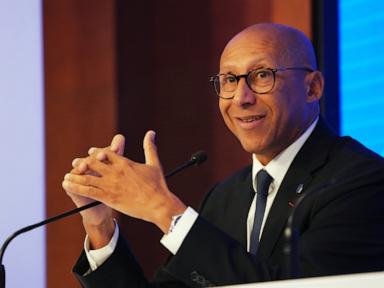
The French Football Federation has formally nominated its president, Philippe Diallo, as a candidate for the FIFA presidency, setting up a rare European challenge to the existing global soccer order. Confirmed through the FFF executive committee, the decision places a seasoned sports administrator into one of the most politically treacherous elections in international sports. While standard news reports treat the announcement as routine diplomatic maneuvering, the reality runs much deeper. France is not merely entering a name on a ballot; Paris is attempting to reassert European regulatory influence over a governing body that has steadily shifted its financial and political center of gravity away from traditional soccer powers.
For decades, the relationship between France and FIFA has defined the architecture of modern soccer. Jules Rimet built the World Cup from Paris. Michel Platini reshaped European club competitions and nearly captured the FIFA presidency before ethics investigations ended his career in sports governance. Now, with Philippe Diallo stepping into the arena, French soccer administrators are betting that a quiet, technocratic operator can succeed where louder political figures stalled.
Who Is Philippe Diallo and Why Does His Profile Matter
To understand why the French Football Federation backed Diallo, you have to look at how he rose to power in Paris. He is not a former World Cup winner. He does not trade in populist speeches or locker-room nostalgia.
Instead, Diallo spent years operating inside the machinery of French sports labor and administration. Before taking the helm of the FFF following the turbulent exit of Noël Le Graët in 2023, Diallo led the Union of Professional Football Clubs (UCPF), negotiating broadcast revenues, player union agreements, and tax disputes with the French government. He stabilized a federation rocked by governance scandals, internal audits, and public scrutiny, eventually winning a full mandate from French soccer’s grassroots and professional stakeholders.
That background makes him an unusual candidate for the FIFA presidency. Global soccer elections usually favor charismatic networkers who promise massive development grants to smaller federations. Diallo represents the opposite archetype. His appeal rests on institutional predictability, legal fluency, and administrative discipline.
In the boardrooms of Zurich and Paris, those traits carry specific weight. European federations and major domestic leagues have grown increasingly frustrated with FIFA’s unilateral expansion of the international match calendar. From the expanded 48-team World Cup to the revamped, month-long Club World Cup, national associations and top clubs feel squeezed by fixture congestion and player welfare risks. Putting forward a candidate steeped in collective bargaining and league economics sends an unmistakable signal. France wants a seat at the head of the table before the commercial calendar breaks the domestic game.
The Structural Math of a FIFA Presidential Election
Winning the FIFA presidency has very little to do with how many World Cups a candidate’s country has won. It is purely an exercise in arithmetic.
Under FIFA statutes, the election operates on a strict one-member, one-vote system across all 211 member associations. That means the voting power of the French Football Federation, which oversees millions of registered players and a multi-billion-euro domestic industry, equals the exact voting power of Montserrat, Guam, or San Marino.
To secure victory on the first ballot, a candidate needs a two-thirds majority of the votes cast. If no one reaches that threshold, subsequent rounds require a simple majority—106 votes if every member association participates.
Here is where the geography of global soccer becomes unforgiving for any European contender:
- UEFA (Europe) holds 55 votes. Even if Europe votes as a unified bloc—something it has historically struggled to do—that accounts for roughly a quarter of the electorate.
- CAF (Africa) commands 54 votes.
- AFC (Asia) controls 46 votes.
- CONCACAF (North, Central America, and the Caribbean) holds 35 votes.
- OFC (Oceania) has 11 votes.
- CONMEBOL (South America) possesses 10 votes.
Any candidate emerging from Paris, London, or Berlin faces an immediate deficit of more than 50 votes before the campaign even leaves the tarmac. Incumbent administrations at FIFA understand this math intimately. By distributing FIFA Forward development funds directly to national associations—money that pays for technical centers, administrative staff, and travel expenses in smaller nations—the sitting leadership builds durable loyalty across Africa, Asia, and the Caribbean.
For Philippe Diallo, overcoming that structural advantage requires more than a polished manifesto. He must convince federations outside Europe that institutional reform will not shrink their development budgets. If smaller associations suspect that a European president will prioritize the interests of wealthy domestic leagues over global solidarity payouts, his campaign will stall before the first ballot is counted.
The Friction Between European Leagues and Global Governance
The timing of the FFF’s confirmation cannot be separated from the ongoing legal and political warfare over the soccer calendar. Over the past several years, the relationship between FIFA and European stakeholders has deteriorated from cautious cooperation into open hostility.
Major European leagues and the global players' union, FIFPRO, have filed formal complaints with European Union competition regulators, arguing that FIFA abuses its dual role as both the sport’s global regulator and a commercial tournament organizer. The core complaint is straightforward. When FIFA expands its own competitions, it captures a larger share of global broadcast and sponsorship revenue while offloading the physical cost onto players employed by domestic clubs.
France sits directly in the crossfire of this dispute. Ligue 1 clubs depend heavily on player trading and domestic broadcast rights to survive, operating without the massive television windfalls enjoyed by the English Premier League. When French internationals return from expanded international windows injured or exhausted, French clubs absorb the financial shock.
By nominating Diallo, the FFF is attempting to move this conflict from the courtrooms of Brussels back into the political arena of FIFA. Rather than simply suing FIFA from the outside, French administrators want to place one of their own inside the presidency to rewrite how the calendar is negotiated.
Yet this strategy carries an obvious contradiction. The very arguments that make Diallo attractive to European clubs and leagues—reining in tournament expansion, protecting domestic windows, and enforcing stricter governance—are the exact policies that make non-European federations nervous. Many national associations outside Europe rely on the revenue generated by expanded FIFA tournaments to fund their entire four-year operating cycles. Diallo will have to walk a narrow rhetorical line, promising financial continuity to the global south while offering regulatory restraint to Europe.
Historical Precedent and the Curse of the European Challenger
French soccer officials know better than anyone how treacherous a run for the FIFA presidency can become. The ghosts of previous campaigns hang over every corridor of the FFF headquarters on Boulevard de Grenelle.
When Jules Rimet led FIFA from 1921 to 1954, global soccer was still largely a European and South American enterprise. Decolonization and the rapid expansion of FIFA membership in the second half of the twentieth century permanently altered the balance of power. João Havelange of Brazil demonstrated in 1974 how to dismantle European control by building a coalition of African and Asian federations, promising them expanded World Cup slots and direct financial subsidies. Sepp Blatter perfected that model over seventeen years, turning FIFA into a cash-generating machine that insulated its leadership from European criticism.
When European leaders tried to reclaim the presidency, they repeatedly stumbled over internal divisions. UEFA has rarely spoken with one voice during FIFA elections. National rivalries, competing bids for major tournaments, and bilateral deals between individual European presidents and Zurich have consistently fractured the 55-member bloc.
Consider what happened during the 2015 and 2016 succession crisis. Europe had multiple potential candidates, yet infighting, staggered announcements, and regulatory bans cleared the path for Gianni Infantino—then UEFA’s general secretary—to step forward and build his own cross-continental coalition.
For Diallo to avoid becoming a symbolic protest candidate, he must first secure ironclad backing across UEFA. If Germany, England, Spain, or Italy hedge their bets or quietly cut separate agreements with the incumbent administration, the French nomination will lose credibility overnight. In FIFA politics, perceived weakness inside your own confederation is fatal.
What Diallo Must Actually Offer to Break the Incumbency Advantage
Campaigning for the FIFA presidency is less like running for public office and more like negotiating a complex corporate merger across six continents. Public speeches matter very little; private guarantees in hotel suites during confederation congresses decide the outcome.
To turn the FFF’s endorsement into a viable global campaign, Diallo’s team will need to address three concrete operational issues that quietly frustrate member associations around the world.
Transparency in Commercial Revenue Allocation
While FIFA’s top-line revenues have surged into the billions per World Cup cycle, some national associations privately question how commercial contracts, hospitality rights, and regional sponsorship packages are structured. A platform built on transparent auditing and predictable revenue-sharing formulas—areas where Diallo has extensive professional experience—could appeal to reform-minded federations in North America, South America, and parts of Asia.
Co-Governance of the International Match Calendar
Instead of promising to cancel expanded tournaments, which would alienate confederations that want more teams in the World Cup, Diallo can propose a formal co-decision mechanism. Under such a framework, any future changes to international windows or tournament formats would require ratified agreements between FIFA, the confederations, domestic leagues, and player unions. That removes the threat of unilateral decrees without immediately cutting existing payouts.
Restoring Institutional Credibility in Europe
FIFA’s headquarters remains in Zurich, and its core legal operations remain bound by Swiss law and European Union competition rules. Ongoing regulatory battles with European courts drain resources and damage the sport’s commercial stability. Positioning himself as a bridge-builder who can end the legal attrition between Zurich and Brussels gives Diallo a practical selling point that no outsider can easily match.
The Risk of Blowback for French Soccer
Entering a candidate into a FIFA presidential race is never a cost-free exercise for a national federation. If Philippe Diallo runs and loses badly, the political consequences will land squarely on French soccer.
In international sports governance, defeated challengers rarely receive warm treatment once the ballots are tallied. Hosting rights for youth tournaments, appointments to lucrative FIFA standing committees, and influence over refereeing and regulatory panels all flow through the president’s office. While major tournaments like the men's World Cup are now decided by full FIFA Congress votes, subtle institutional leverage still shapes everything from technical grants to diplomatic access.
France also has domestic vulnerabilities that opponents will inevitably highlight during a global campaign. French club soccer has endured repeated crises over domestic television rights deals, resulting in sharp revenue drops for Ligue 1 clubs and emergency financial interventions. Critics outside Europe will almost certainly point to the financial instability of France’s domestic league and ask why its chief administrator should be entrusted with managing FIFA’s multi-billion-dollar reserves.
Diallo’s defenders will counter that he was brought in to clean up messes created by others, pointing to his steady management of the FFF since 2023 and his successful oversight of soccer operations during the Paris 2024 Olympic Games. Still, on the global campaign trail, perception often outweighs nuance.
The Real Stakes Behind the Ballot
The French Football Federation’s decision to confirm Philippe Diallo as a candidate signals that Europe’s traditional soccer powers are no longer willing to accept passive compliance with FIFA’s centralized model. Even if the arithmetic of the 211 member associations remains steeply tilted against a European challenger, forcing a contested election changes the internal dynamics of the organization.
Unopposed incumbents govern without friction. Contested elections force promises onto the public record, expose fractures within regional confederations, and compel the leadership to negotiate with stakeholders it would otherwise ignore. Whether Diallo ultimately gathers enough votes across Africa, Asia, and the Americas to threaten the status quo, his candidacy ensures that the battle over who controls the calendar, the money, and the governance of world soccer will be fought in the open rather than behind closed doors in Zurich.