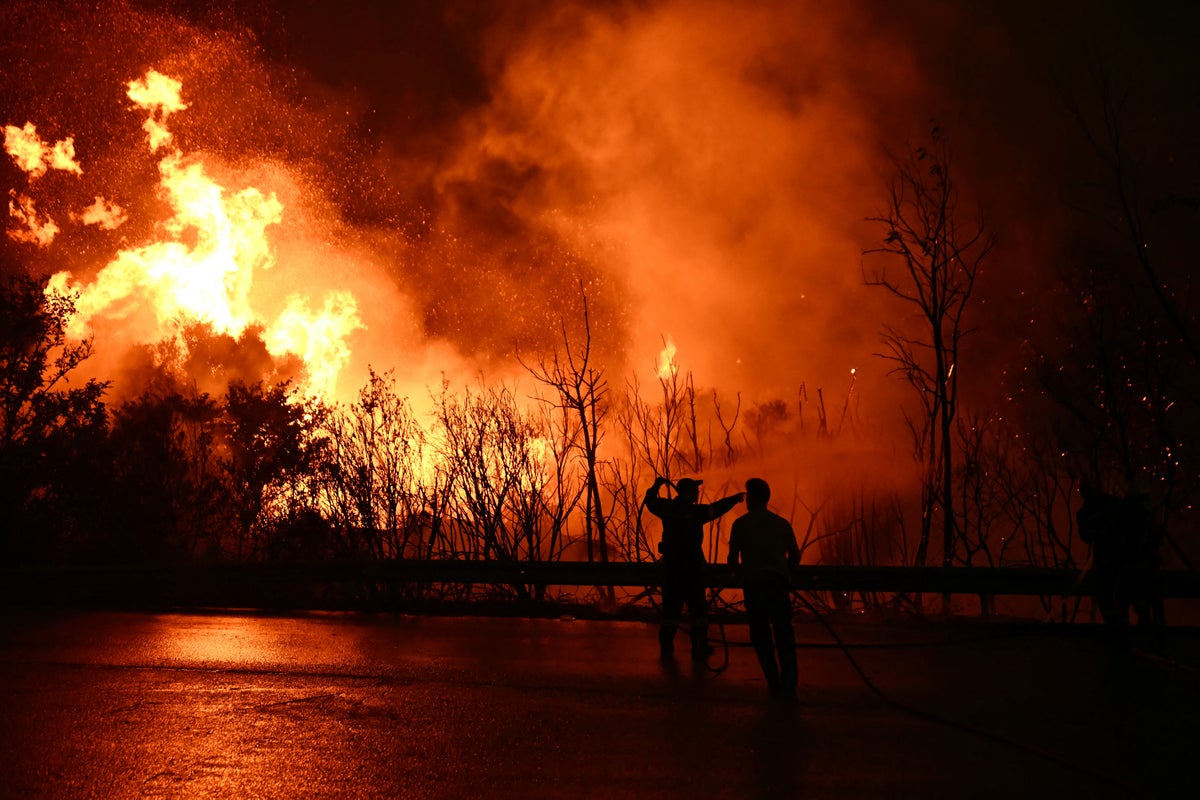
You can't throw enough water at a firestorm when the atmosphere itself acts like an oven. That is the stark reality emerging from the scorched earth of Western Europe, where recent mega-fires tore through France and Spain. Scientists didn't have to guess why these blazes grew so violent. A rapid analysis by the World Weather Attribution group laid it out plainly: human-caused climate change made the destructive fire weather in central Spain 20 times more likely, and doubled the risk in south-western France.
If you think this is just another seasonal hiccup, you're missing the bigger picture. Europe is heating up at roughly twice the global average. The systems we rely on to protect forests, homes, and human lives are buckling under a new class of extremes.
The Trap of Weather Whiplash
How does a region go from waterlogged fields to catastrophic infernos in a matter of weeks? It comes down to a dangerous atmospheric pivot known as weather whiplash.
Both countries experienced unusually wet winters. That rain was a mixed blessing. It triggered an explosion of lush plant growth across forests and unmanaged lands. But spring didn't bring a gradual transition. Instead, an intense early summer heatwave slammed the region, evaporating soil moisture and turning that fresh vegetation into millions of acres of dry tinder.
Think of the atmosphere as a growing sponge. As global temperatures rise, warm air sucks moisture straight out of the soil and plants with brutal efficiency. By the time the sparks started flying, the landscape was primed to explode.
When Fires Create Their Own Weather
Old-school wildfire management assumes you can contain a blaze by cutting firebreaks and dropping water from helicopters. But the France and Spain fires crossed a terrifying threshold. Some of these blazes grew so massive and hot that they generated their own weather systems.
Towering columns of smoke formed pyrocumulonimbus clouds, churning out erratic winds and lightning strikes that launched new spot fires miles ahead of the main front. When a fire starts manufacturing its own wind patterns, human intervention becomes nearly useless. As climate researcher Raúl Cordero pointed out, you simply cannot stop a fire's propagation when the background weather forcing is this extreme, no matter how many resources you throw at it.
The human cost mounted fast. More than 250,000 people faced displacement, and thick toxic smoke choked cities hundreds of miles away. In Bordeaux, particulate matter spiked to levels twenty times higher than safe air quality standards, forcing emergency distribution of respirator masks.
Why Adaptation Plans Are Failing
Governments across Europe are reacting too slowly to a threat that is accelerating faster than predicted. For decades, land abandonment in rural regions has left unmanaged forests choked with dense brush. Combine neglected landscapes with relentless fossil fuel-driven warming, and you get a recurring hazard rather than a rare anomaly.
Fire weather that used to strike central Spain once every few decades is now expected every six years. In south-western France, a similar severe spell now repeats every two decades. These aren't remote wilderness fires anymore. They are slamming directly into the edges of towns, tourist destinations, and suburban neighborhoods.
What Needs to Change Right Now
Waiting for the next disaster to strike and treating it as a surprise is no longer an option. If communities want to survive this new era, the strategy has to shift from reactive suppression to radical prevention.
- Reinvent forestry management: Clear out high-risk fuel loads near populated zones during cooler months, rather than waiting for summer emergency declarations.
- Upgrade early-warning infrastructure: Integrate real-time soil moisture monitoring with hyper-local wind forecasting to spot vulnerability before ignition occurs.
- Harden residential zones: Enforce strict building codes in fire-prone regions, requiring fire-resistant roofing, cleared defensible space, and modern community-level air filtration shelters.
Every fraction of a degree of warming pushes ecosystems further into uncharted territory. Until emissions drop globally, communities must assume every dry summer will test the absolute limits of human endurance.