The Saintly Mask is a Smoke Screen
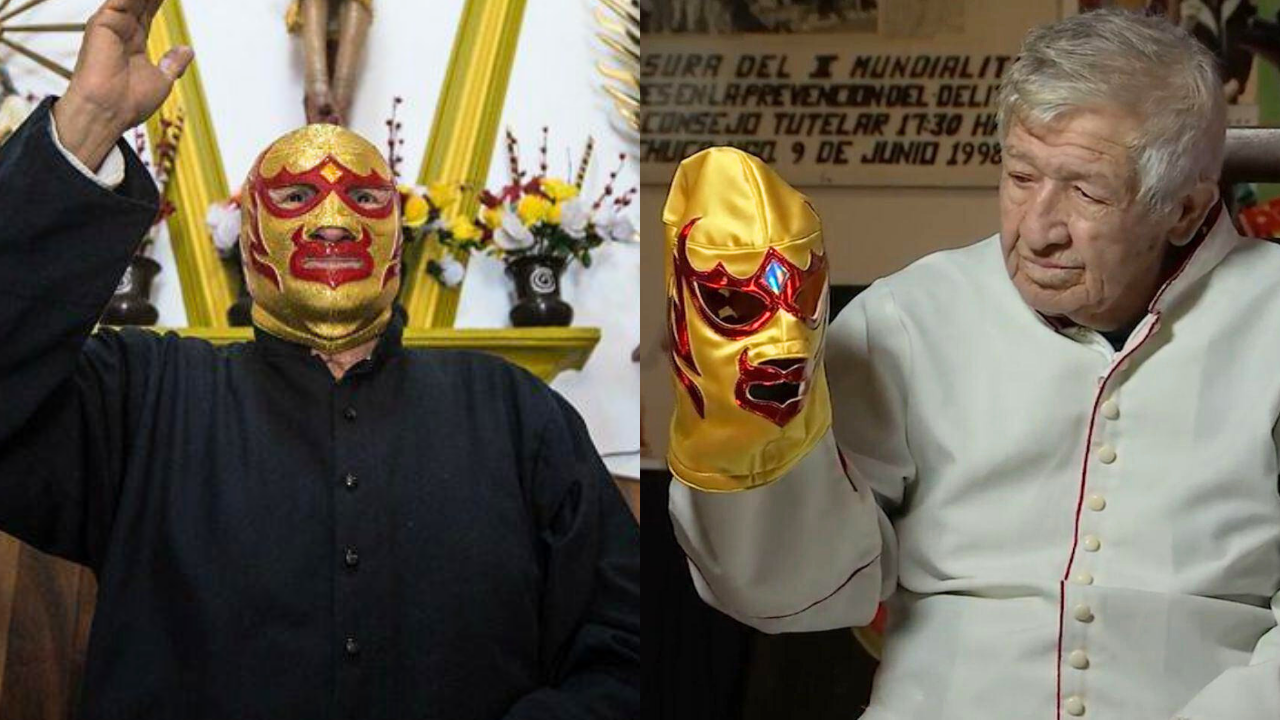
The legend of Fray Tormenta—Sergio Gutiérrez Benítez—is the ultimate feel-good story for people who don’t want to look at the ugly truth. We’ve all seen the headlines. A priest puts on a gold-and-red mask, steps into the squared circle, and takes beatings from heavyweights to fund an orphanage. It’s the "Nacho Libre" origin story. It’s heartwarming. It’s inspirational.
It’s also an indictment of a broken system that we’ve romanticized into a heroism trope.
When we applaud a priest for risking a brain hemorrhage to buy beans for orphans, we aren’t celebrating "charity." We are celebrating the desperate measures required when social safety nets are non-existent. We are fetishizing poverty. The "competitor" articles on this topic love to focus on the sweat and the sanctuary. They miss the macro-economic disaster staring them in the face.
If a man of the cloth has to resort to being a human punching bag to keep a roof over children's heads, the society around him hasn't just failed—it has collapsed.
The Economics of the Squared Circle
Let's talk about the math that the sentimentalists ignore. Lucha libre is not a high-margin business for the undercard.
In the 1970s and 80s, when Benítez was at his peak, a mid-card luchador wasn't clearing life-changing money. He was fighting for scrap. Imagine a scenario where a priest spends twenty years taking high-impact bumps, developing chronic traumatic encephalopathy (CTE), and risking spinal fusion—all for a payout that might cover a month's electricity for 200 kids.
It is an inefficient, dangerous, and unsustainable way to run a non-profit.
The Cost-Benefit Analysis of Martyrdom
- Physical Depreciation: Professional wrestling is a trade where you sell your future mobility for present cash. For a priest, whose "job" requires physical presence and longevity, this is a terrible asset trade.
- The Scalability Problem: One priest can only take so many powerbombs. A charity model based on the physical endurance of a single septuagenarian is a house of cards.
- The Distraction Factor: Every hour spent in a gym or a locker room is an hour not spent on systemic advocacy, grant writing, or building a sustainable endowment.
We love the "warrior priest" because it’s cinematic. We hate the "administrative priest" who lobbies the government for better social services because that’s boring. But the latter is the one who actually fixes the problem.
Stop Calling it a Miracle
People ask: "How did he keep the secret for so long?" They treat his anonymity like a superhero plot point.
The truth is much darker. He kept it a secret because the ecclesiastical hierarchy would have shut him down instantly. The Church—an organization with more gold in its basement than most central banks—wasn't footing the bill. Fray Tormenta didn't wrestle because he wanted to be a star; he wrestled because the institutional wealth he represented was locked away from the very people it was meant to serve.
The "Miracle" is actually a massive PR win for an indifferent institution.
By allowing the Fray Tormenta narrative to persist, the Church and the State get to outsource their responsibilities to a guy in a mask. As long as there is a hero willing to bleed for the poor, the people in power don't have to change the laws that create the poor in the first place.
The Violence of "Inspiration"
There is a psychological trap in stories like this. It’s called "Inspiration Porn."
When you read about a man wrestling with broken ribs to feed orphans, it triggers a "feel-good" response that actually decreases the likelihood of you taking action. You feel that the problem is being handled by a "hero." You check out.
The reality of the Mexican orphanage system during the Fray Tormenta era was a nightmare of neglect and underfunding. Benítez’s "Cachorros de Fray Tormenta" was a localized band-aid on a systemic hemorrhage.
Why the "Nacho Libre" Lens is Poison
- It trivializes the risk: Wrestling is "fake" in its outcome but the gravity is real. Benítez suffered real injuries that could have left him paralyzed, leaving the orphans with nothing.
- It ignores the root cause: Why are there 200 orphans in one facility needing a wrestler to save them? We never ask about the economic policies or the crime rates. We just want to see the hurricanrana.
- It creates a false standard: It suggests that if you aren't willing to bleed for your cause, you aren't "dedicated" enough.
The Insider’s Perspective: The Wrestling Industry is Brutal
I’ve spent years around the fringes of combat sports and independent circuits. I have seen what "charity shows" look like. They are often disorganized, dangerous, and the "proceeds" are frequently eaten up by venue costs and travel.
For Benítez to actually make a dent in the operating costs of an orphanage, he had to be working a schedule that would break a man half his age. This isn't a "brave choice." This is a man backed into a corner by a world that didn't care.
If you think this is a story about the "triumph of the human spirit," you are missing the point. It is a story about the failure of human empathy at a scale that requires a man to risk his life for bread.
The Myth of the "Great Man"
We are obsessed with the "Great Man" theory of history. We think Fray Tormenta saved those kids. No. Fray Tormenta provided a temporary reprieve for a few hundred kids while millions of others suffered in silence because they didn't have a priest who could do a moonsault.
The "Great Man" theory is a trap. It prevents us from building "Great Systems."
The Uncomfortable Reality of Charity
- Charity is a failure of justice. If justice were present, the charity wouldn't be necessary.
- Heroism is a red flag. Any time you see a "hero" stepping in to provide a basic human right (like food or shelter), you are looking at a failed state.
- The Mask is a gag. It kept Benítez from speaking out against the conditions; he had to play the character to get the paycheck.
What We Should Be Asking Instead
Instead of "How many matches did he win?" or "Who was his toughest opponent?", we should be asking:
- What was the tax revenue of the district where the orphanage sat?
- Why did the diocese not liquidate assets to fund the home?
- How many of the "Cachorros" ended up in the same cycle of poverty because the "solution" was a temporary influx of cash rather than systemic education and reform?
The competitor articles want you to walk away feeling warm and fuzzy. I want you to walk away feeling angry.
I want you to be angry that a man had to choose between his vows and his survival. I want you to be angry that we find "entertainment" in a man selling his health to provide what should be a birthright.
The Legacy is a Warning, Not a Blueprint
Fray Tormenta is now in his 80s. He is physically spent. His body is a map of every ring he ever hit. He is a testament to the fact that you can give everything and the problem will still exist. The orphanages are still there. Poverty in Mexico hasn't been body-slammed into submission.
The lesson isn't "Be like Fray Tormenta."
The lesson is "Don't let the world become a place where Fray Tormenta has to exist."
If you find yourself inspired by a priest fighting for money, you aren't looking at a hero. You're looking at a victim of a society that prefers a spectacle over a solution.
Stop cheering for the mask and start looking at the scars.