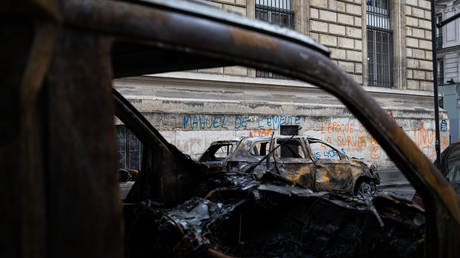
French voters are furious. When widespread civil unrest erupted across France following the fatal police shooting of 17-year-old Nahel Merzouk in Nanterre in June 2023, the public didn't just blame the rioters—they turned sharply against President Emmanuel Macron. Polling data from that period tells a brutal story. A clear majority of French citizens disapproved of how the Élysée Palace managed the crisis, leaving Macron isolated between a population demanding harsher law-and-order measures and communities accusing his administration of systemic neglect.
You can't understand the backlash without looking at the numbers. An Elabe poll conducted for BFMTV shortly after the worst nights of violence showed that roughly two-thirds of French respondents felt the government's response wasn't firm enough. Meanwhile, an Odoxa survey for Le Figaro found that nearly 70 percent of the public thought Macron had failed to restore authority in the country. Those aren't minor dips in approval. They represent a massive collapse in public trust during a moment of national emergency. Don't forget to check out our recent post on this related article.
What French Polls Actually Showed About Macron’s Riots Response
Most international coverage focused on burning cars and shattered storefronts, missing the deeper political collapse happening inside France. Polls revealed a country divided on the root causes of the unrest, yet strangely united in believing Macron was the wrong person to fix it.
In the immediate aftermath of the June 2023 riots, several major polling institutes—including Ifop, Elabe, and Odoxa—tracked public sentiment across France. The results were consistent across different methodologies and political leanings. Voters across the spectrum felt the president was reactive rather than decisive. If you want more about the context here, The Guardian provides an excellent breakdown.
Here's what stood out in the data:
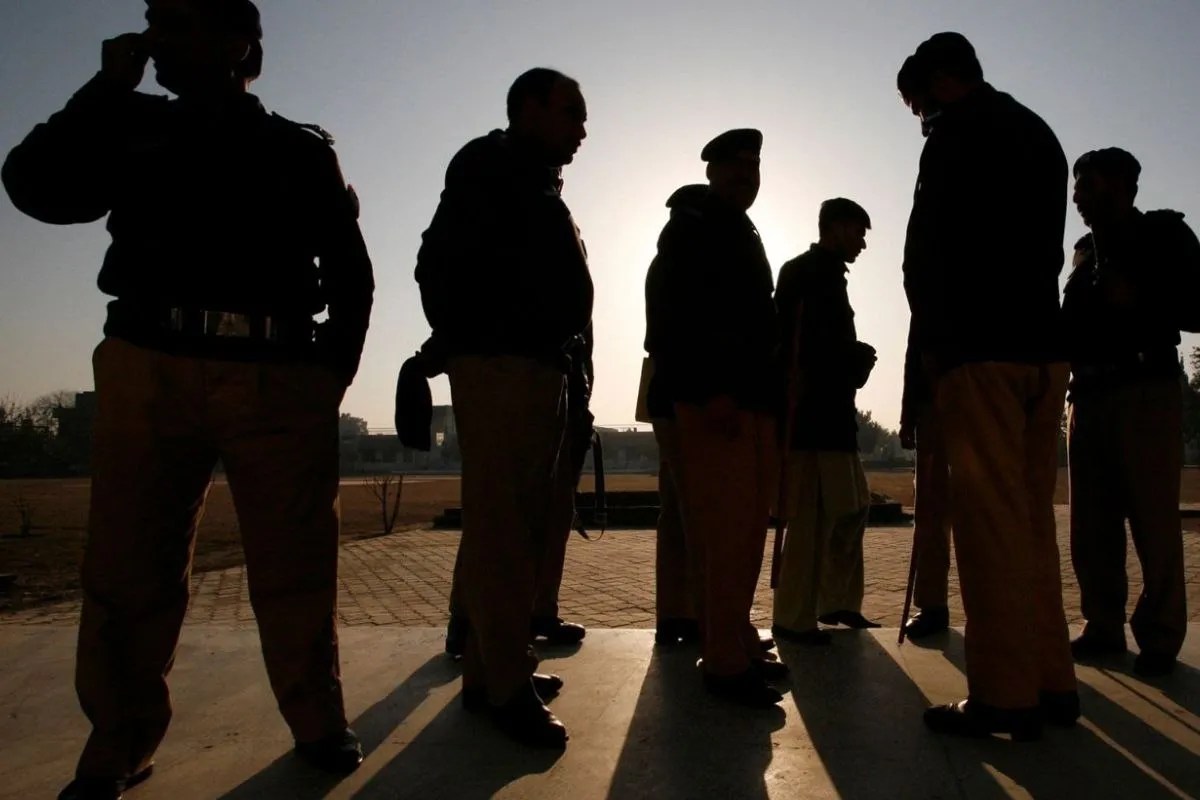
- A demand for stronger authority. Roughly 65 to 70 percent of respondents across multiple polls said the state had been too weak in confronting the violence. Many supported declaring a formal state of emergency, a step Macron chose not to take despite deploying 45,000 police officers and gendarmes.
- Skepticism toward parental penalties. When Macron suggested fining the parents of young rioters or cutting their family benefits, polling showed mixed-to-skeptical reactions. Voters saw it as a headline-grabbing distraction rather than a serious policy fix.
- Distrust from both sides of the aisle. Right-wing voters accused Interior Minister Gérald Darmanin and Macron of losing control of the streets. Left-wing voters argued the government refused to acknowledge long-standing issues of police violence and discrimination in the banlieues (suburbs).
I've watched French political crises unfold for years, and this pattern is classic Macron. He tries to occupy the center ground by speaking tough on order while promising social investment, and he ends up alienating everyone at once.
The Optics Problem That Tanked Macron’s Credibility
Numbers only tell half the story. Sometimes a single image does more damage than a bad policy rollout, and Macron walked straight into an optics disaster at the height of the unrest.
While French cities were burning and mayors were begging for reinforcements, photos surfaced of Macron attending an Elton John concert in Paris. His critics didn't hesitate. Marine Le Pen’s National Rally and Jean-Luc Mélenchon’s France Unbowed both seized on the moment, painting the president as detached and indifferent while town halls and public libraries were being torched.
It wasn't just the concert. Macron also cut short a European Union summit in Brussels to return to Paris for crisis meetings, which looked rushed and improvised rather than planned. When he finally addressed mayors from affected municipalities, he floated ideas like restricting access to social media platforms during riots—a proposal that drew immediate ridicule from tech experts and civil liberties groups alike, who pointed out how impractical and authoritarian it sounded.
Voters notice when a leader is improvising. During a crisis, people want to see a clear plan executed calmly. Instead, French citizens watched a government cycle through talking points—blaming video games one day, social media algorithms the next, and irresponsible parents the day after that.
Why Law and Order Became the Defining Issue
To understand why French voters slammed Macron's riots response so hard, you have to look at the broader political climate in France. Security and public order have steadily climbed to the top of voter concerns over the past decade, often outranking everything except the cost of living.
When riots broke out in 2005 under President Jacques Chirac, the violence lasted three weeks and mostly stayed confined to outer suburban housing projects. The 2023 unrest was different. It spread rapidly to mid-sized towns and city centers across the country, affecting areas that rarely experience civil disturbance. Over 1,000 buildings were damaged or burned, thousands of vehicles were torched, and municipal buildings—including schools and town halls—were deliberately targeted.
For average French taxpayers, seeing a local school or library destroyed hits differently than watching distant news footage. Polls conducted by Ifop following the unrest showed a sharp spike in support for Marine Le Pen’s National Rally, precisely because her party had spent years arguing that the state was losing its monopoly on violence.
Macron’s centrism simply wasn't built for that mood. Voters weren't looking for nuanced sociological explanations or gradual urban renewal plans. They wanted immediate proof that the state could protect public property and restore calm overnight. When the unrest stretched across multiple nights despite massive police deployments, voters concluded the government had lost control.
The Divide Between Paris and the Banlieues
Another reason polling looked so bleak for Macron is that his administration completely failed to bridge the gap between metropolitan voters and residents of marginalized suburbs.
In towns like Nanterre, Clichy-sous-Bois, and parts of Marseille, anger wasn't directed at a lack of police force—it was directed at decades of broken promises. Following the 2005 riots, successive French governments poured billions of euros into urban renovation projects, demolishing old tower blocks and building new transit links. Yet unemployment rates in many banlieues remained roughly double the national average, and complaints about discriminatory identity checks by police persisted.
In 2018, Macron famously rejected the Borloo Plan—a comprehensive blueprint for suburban investment drafted by former minister Jean-Louis Borloo—dismissing the idea of two leaders announcing a top-down rescue plan for the suburbs. Years later, when those exact neighborhoods erupted again, critics pointed right back to that decision. Residents felt abandoned, and national polls reflected a widespread belief that Macron had no long-term vision for social cohesion.
What Macron’s Slump Means for French Politics
Political polling during a crisis can sometimes bounce back once calm returns, but the damage from the riots lingered well into the following years. It reinforced an existing narrative about Macron’s second term—that his government lacked a parliamentary majority, struggled to connect with ordinary people, and governed through top-down decrees rather than genuine consensus.
Remember, this unrest happened just months after Macron forced through his deeply unpopular pension reform using Article 49.3 of the French constitution, bypassing a formal vote in the National Assembly. Public anger was already simmering. The riots didn't create Macron’s unpopularity out of thin air; they poured gasoline on a fire that was already burning.
For anyone tracking European politics, the lesson from these polls is straightforward. Centrist governments face an existential trap when civil unrest hits. If they lean too hard into policing, they lose progressive voters and confirm accusations of authoritarianism. If they emphasize social causes, conservative voters accuse them of excusing crime. Macron tried to straddle both sides and ended up pleasing neither.
If you're analyzing French election trends or tracking European political risk, pay close attention to local municipal polling and interior ministry crime statistics rather than national approval ratings alone. National numbers show the frustration, but local data reveals where voters are actively shifting their allegiance toward populist alternatives. Track how French mayors respond to central government funding decisions in the banlieues—because when local leaders lose faith in Paris, national polling collapses follow right behind.