The collapse of the July 2026 memorandum of understanding between the United States and the Islamic Republic of Iran reveals a structural flaw in modern coercive diplomacy: the assumption that a technologically superior superpower can dictate the off-ramps of a war of choice. When President Donald Trump declared the three-week-old ceasefire over following Iranian attacks on commercial shipping in the Strait of Hormuz, the administration’s stated goal was to force Tehran back to the negotiating table through a second wave of deep conventional strikes. Instead, the rapid escalation to Iranian counter-strikes against U.S. infrastructure in Bahrain, Kuwait, and Qatar demonstrates a miscalculation of Iran's strategic cost function. Tehran is not operating on a survival timeline; it is exploiting the economic and political vulnerabilities inherent in democratic, market-dependent adversaries.
To understand why the conflict has resisted containment, the strategic landscape must be analyzed through a cold, transactional framework rather than the rhetoric of complete demolition.
The Strategic Miscalculation: The FAFO-TACO Variance
The primary structural failure of the current U.S. campaign stems from an incorrect baseline comparison with previous intervention models, specifically the rapid regime transition executed in Venezuela. The administration assumed Iran's domestic fragility—compounded by severe hyperinflation, degraded regional proxy networks, and the internal friction following the death of Supreme Leader Ayatollah Ali Khamenei—rendered the state incapable of enduring sustained conventional bombardment. This represents a failure to calculate the difference between absolute military capacity and asymmetric resilience.
This systemic miscalculation can be broken down into three distinct operational variables:
- The Elasticity of Regime Survival: Unlike highly centralized kleptocracies that collapse when financial nodes are severed, the Islamic Revolutionary Guard Corps (IRGC) operates an insulated, parallel wartime economy. Decades of sanctions have forced Iran to develop a decentralized supply and command architecture that does not rely on uninterrupted domestic infrastructure.
- The Cost-Imposition Function: The United States measures military success by the volume of kinetic destruction achieved—such as the neutralization of the Iranian Navy, the degradation of fixed air-defense networks, and strikes on missile storage sites. Conversely, Iran measures success by the scale of economic disruption it can inflict externally. A single drone strike on a commercial vessel like the al Rekayyat carries a negligible manufacturing cost for Iran but imposes millions of dollars in maritime insurance premiums, rerouting delays, and global energy price shocks across the international community.
- The Succession Hardening Effect: The elimination of senior leadership did not trigger the anticipated structural collapse. Instead, the transition of authority to a younger, more dogmatic cadre under Mojtaba Khamenei has removed historical institutional constraints. The new leadership views compliance as an existential risk and views calculated escalation as the sole mechanism to re-establish deterrence.
The Architecture of Maritime Interdiction and the Strait of Hormuz Bottleneck
The tactical pivot of the conflict centers on the Strait of Hormuz, a choke point responsible for the transit of approximately 20% of the world's petroleum liquids. The U.S. approach treats freedom of navigation as a binary condition enforced by naval presence and convoy escorts. The physics of modern anti-ship warfare dictate otherwise.
+-------------------------------------------------------------------+
|               THE ASYMMETRIC WEAPONRY COST FUNCTION               |
+-------------------------------------------------------------------+
| Weapon System             | Unit Cost     | Target Impact         |
+---------------------------+---------------+-----------------------+
| Iranian Shahed-type Drone | ~$20,000      | Commercial Tanker/    |
|                           |               | Air Defense Depletion |
+---------------------------+---------------+-----------------------+
| U.S. SM-2/SM-6 Interceptor| ~$2M - $4M    | Kinetic Interdiction  |
+-------------------------------------------------------------------+
The data shows that Iran does not need a conventional navy to enforce a de facto blockade. The combination of land-based anti-ship cruise missiles, low-cost loitering munitions, and smart marine mines creates an unacceptable risk profile for commercial shippers. Even with active military escorts from U.S. and European naval assets, commercial fleets face a severe bottleneck. Maritime insurance syndicates do not calculate risk based on the probability of a ship surviving an attack; they calculate it based on the cost of a single catastrophic hull loss. When global oil prices spike by 7% in a single trading session, the market is pricing in the reality that tech-driven defense systems face a negative economic return when fighting low-cost, mass-produced threats.
The Illusion of the Low-Cost Infrastructure Threat
The threat to reduce Iran to the "stone age" by systematically targeting civil infrastructure—such as electrical grids, bridges, and desalination plants—rests on the assumption that such destruction forces immediate political capitulation. This logic ignores the historical precedents of strategic bombing campaigns and misinterprets the domestic political mechanics of the Iranian state.
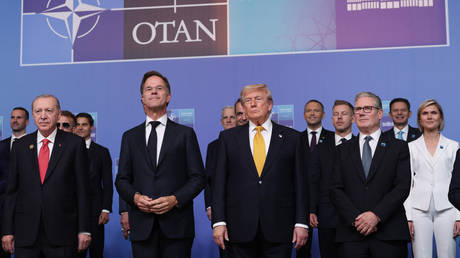
First, targeting dual-use civilian infrastructure violates established international legal frameworks, creating immediate friction between the United States and its NATO allies. The diplomatic divergence visible during the Ankara summit highlights this vulnerability. While the U.S. administration pushed for a mandate of total destruction, European partners facing direct exposure to energy shortfalls and potential migration waves actively decoupled from the escalatory rhetoric.
Second, the structural response of a highly ideological security state to external infrastructure destruction is internal consolidation, not rebellion. By targeting the resources required for civilian survival, external kinetic action inadvertently shifts the blame for domestic hardship from the regime's economic mismanagement to the foreign adversary. The internal opposition, while deeply hostile to the clerical leadership, rarely aligns with an active bombing campaign that degrades their own homeland’s foundational survival systems.
The Structural Limitations of the Current Strategy
The current U.S. position suffers from a lack of clear, achievable milestones. This strategic inertia is defined by three specific operational realities:
- The Ineffectiveness of Kinetic Compellence: Bombing a state to force it to sign a restrictive nuclear and regional treaty requires the target to believe that compliance is safer than resistance. For the Iranian leadership, surrendering their missile programs and regional networks while under direct attack is viewed as a blueprint for eventual regime elimination.
- The Nuclear Weaponization Incentive: By demonstrating that conventional military strength cannot protect a state from targeted leadership decapitation and infrastructure destruction, the current conflict creates an overwhelming rational incentive for Iran to cross the nuclear weaponization threshold. The regime possesses the requisite enriched uranium and technical expertise; further conventional degradation may convince Tehran that a functional nuclear deterrent is its only remaining path to long-term survival.
- The Regional Base Vulnerability: The expansion of Iranian targeting to include U.S. installations in Bahrain, Kuwait, and Qatar exposes the geopolitical fragility of the American footprint in the Middle East. Host nations face an acute security dilemma: hosting U.S. strike assets invites direct retaliatory bombardment, threatening their own economic diversification plans and domestic stability.
The United States cannot unilaterally declare a conflict finished when the adversary retains both the capability and the political will to strike back. The core failure of the current strategy is the pursuit of a comprehensive, unconditional surrender through limited, low-stomach conventional means.
The only viable tactical play moving forward requires a hard rationalization of objectives. The administration must abandon the unachievable goal of an immediate domestic political transformation in Tehran. Instead, it must establish a strictly bounded, transactional deterrence framework. This involves shifting from broad, escalatory infrastructure threats to a highly focused, defensive containment posture that prioritizes the deployment of localized, high-capacity directed-energy defense systems to protect critical maritime lanes, coupled with quiet, indirect back-channel diplomacy via regional mediators to establish a verifiable, sector-specific ceasefire in the maritime domain before the escalatory loop triggers a systemic global energy depression.