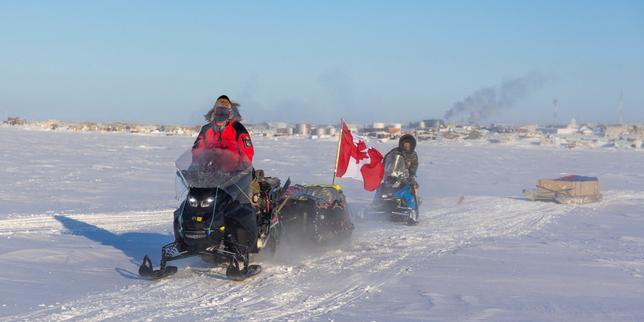
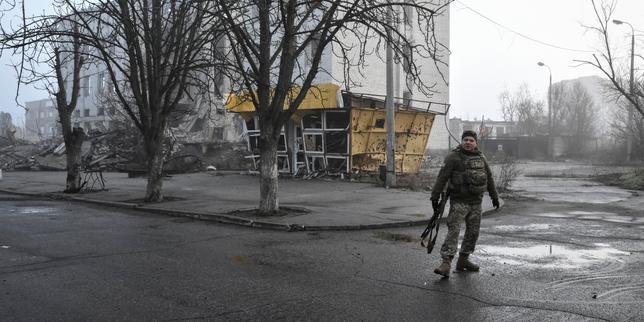
The air in Ottawa in March carries a specific, biting dampness that gets under the wool of a winter coat. It is a city of quiet diplomatic halls and polished mahogany, where the world’s most violent tremors are often reduced to ink on cream-colored stationary. But thousands of miles away, in the sun-scorched hills of southern Lebanon, that same world feels like it is made of nothing but dust, olive wood, and the persistent, low-frequency hum of a drone that never sleeps.
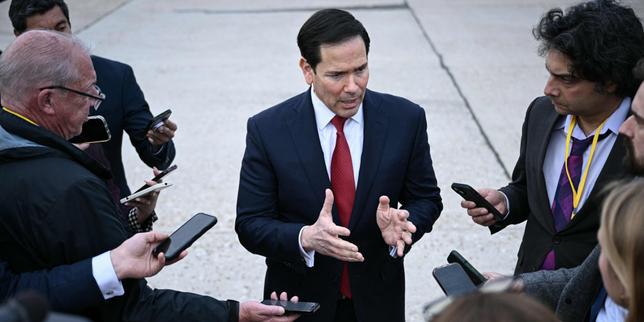
When the Canadian government issued its recent, stinging critique of Israel’s military presence in southern Lebanon, the words traveled across the Atlantic with the speed of light. They landed in Jerusalem not as a suggestion, but as a provocation. Israel’s pushback was immediate, a sharp verbal parry that exposed the widening chasm between how a safe nation views international law and how a nation at war views its own backyard.
Consider a woman named Leila. She is hypothetical, but she represents a thousand realities currently unfolding. Leila lives in a small village where the terraced hills have been carved by generations of her ancestors. To her, the "occupation" isn’t a legal term debated in a subcommittee. It is the sound of a tank tread crushing a dry stone wall. It is the checkpoint that turns a ten-minute drive to the market into a four-hour ordeal of sweat and uncertainty.
For Canada, the presence of Israeli troops across that border is a violation of sovereignty, a breach of the delicate architecture of global order. For the Israeli commander stationed on a ridge overlooking Leila’s village, it is a buffer. He sees a landscape of potential launch sites, not a community. To him, the "criticism" from a country protected by three oceans and a friendly giant to its south feels like a lecture from someone who has never had to decide which of their children sleeps in the basement tonight to avoid the shrapnel.
The tension isn't just about territory. It is about the fundamental definition of safety.
Israel’s rebuttal to Canada’s stance hinges on a single, desperate logic: necessity. They argue that the vacuum left by a Lebanese state unable to control its southern reaches has been filled by an actor—Hezbollah—that doesn't recognize borders at all. In this view, the "occupation" is a preemptive shield. When Ottawa calls for a withdrawal, they see it as an invitation for the next barrage of rockets to rain down on Galilee.
But look at the cost of that shield through the eyes of those living under its shadow. Southern Lebanon was once a place of rugged beauty, a destination for hikers and those seeking the slow pace of Levantine life. Now, the tourism infrastructure is a skeleton. The hotels are empty, their windows taped against the concussive force of nearby strikes. The lifestyle of the region has been hollowed out, replaced by a permanent state of "meantime."
Everything is temporary. The planting of the crop is temporary. The repair of the roof is temporary. Even the peace is temporary.
Canada’s critique isn't born of a vacuum, either. It reflects a growing fatigue within the international community—a sense that "temporary" security measures have a habit of becoming permanent fixtures of the landscape. They see the maps changing, the "Blue Line" blurring, and the human rights reports piling up like autumn leaves. They worry that by allowing the occupation to persist, the very concept of a rules-based order is being eroded, one village at a time.
Imagine the friction at a diplomatic dinner. The Canadian representative speaks of "proportionality" and "international mandates." The Israeli representative speaks of "existential threats" and "the right to return home." They are speaking different languages using the same words.
One side sees a map of laws. The other sees a map of targets.
The tragedy of this diplomatic spat is that it leaves the people on the ground—the Leilas and the young soldiers on both sides—trapped in a cycle where their lives are the currency. When a government pushes back against criticism, they are defending their right to stay. When a government issues that criticism, they are defending the right of a nation to be whole.
Middle ground is a luxury that the terrain of southern Lebanon doesn't provide. The hills are too steep, the history too deep, and the grievances too old.
While the politicians exchange barbs in the press, the reality remains a static, grinding pressure. It is the pressure of a mother wondering if the school will be open tomorrow. It is the pressure of a soldier wondering if the rustle in the brush is a bird or a threat. It is the pressure of a world that watches from a distance, offering words that feel like bandages on a wound that requires surgery.
The "invisible stakes" here are not about who owns which hectare of dirt. They are about whether we still believe that a border is a sacred thing, or if it is merely a suggestion that can be ignored when the fear grows loud enough. Canada is betting on the sanctity of the line. Israel is betting on the strength of the wall.
As the sun sets over the Mediterranean, casting long, orange shadows across the scarred hills, the drones continue their hum. The diplomatic cables will continue to fly, and the rhetoric will continue to sharpen. But for the people living in the crosshairs, the debate is secondary to the simple, brutal act of enduring.
They are waiting for a day when the map matches the reality, and when a border is something you cross to visit a neighbor, rather than a line you defend to save your life.
Until then, the distance between Ottawa and Jerusalem remains much further than any flight path could ever measure.