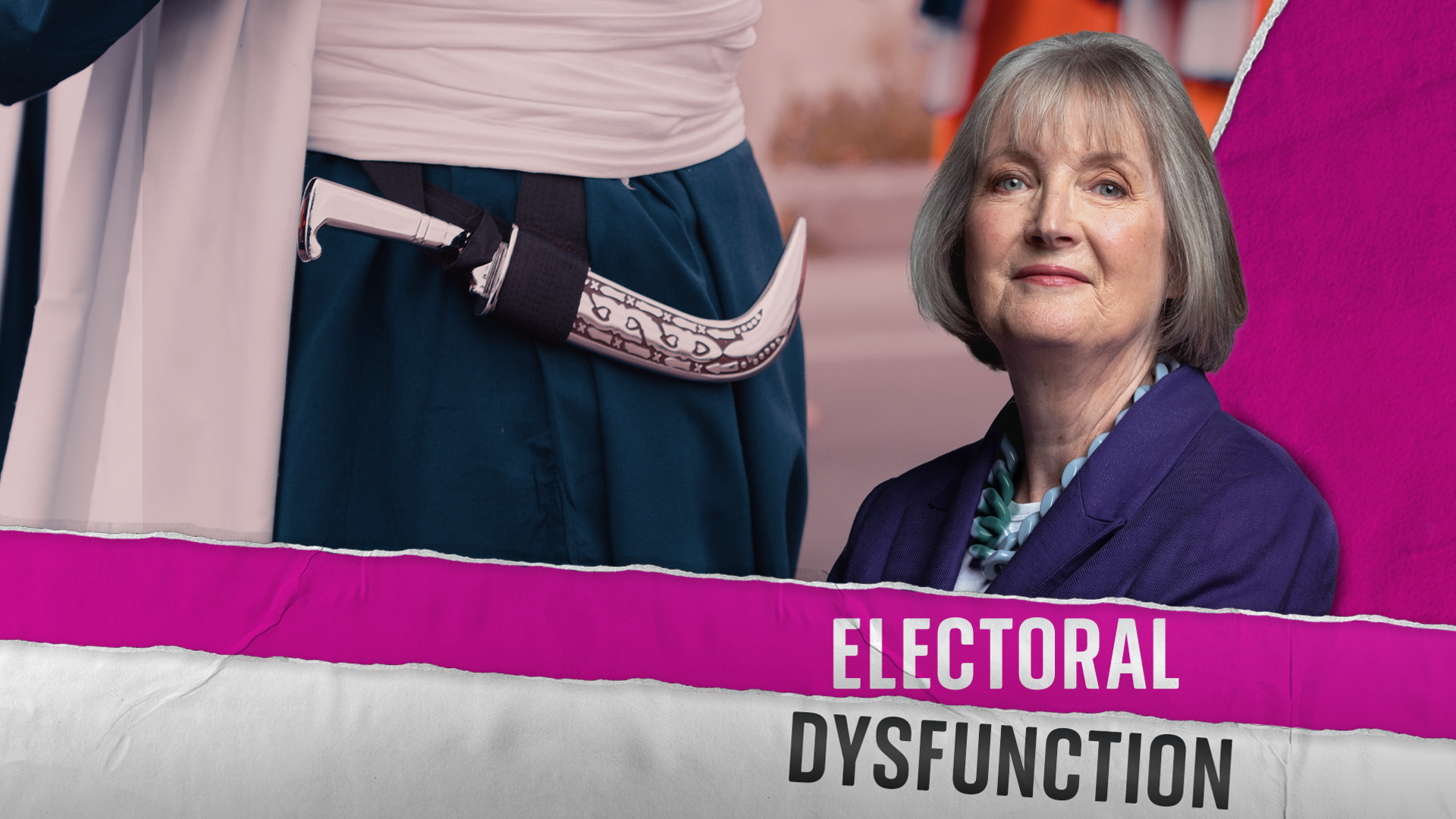
The statutory architecture governing public safety relies on absolute consistency in enforcement. When the state carves out legal exceptions based on subjective intent or cultural heritage rather than objective utility, it introduces systemic volatility. The tragic murder of 18-year-old finance student Henry Nowak in Southampton by Vickrum Digwa exposes a critical failure point at the intersection of Section 139 of the Criminal Justice Act 1988 and the realities of modern urban policing. By examining the mechanisms of religious exemptions for bladed articles, the failure of situational police triage, and the socio-legal distortions that follow, we can map a data-driven path toward structural reform that balances civil liberties with unconditional public security.
The Statutory Matrix of Bladed Article Exemptions
To understand why the current system fails, one must isolate the exact legal mechanisms that govern the possession of knives in public spaces within the United Kingdom. Section 139 of the Criminal Justice Act 1988 establishes a strict baseline: it is an offense to carry any bladed or sharply pointed article in a public place without "good reason or lawful authority."
However, the statute introduces an explicit defense under subsection (4) for articles carried for "religious reasons." This creates a multi-tiered legal framework that depends entirely on subjective classification rather than objective physical metrics.
[Section 139 Criminal Justice Act 1988 Baseline Prohibition]
                         │
                         ▼
        ┌────────────────────────────────┐
        │  Is the blade > 3 inches or    │
        │      fixed/locking mechanism?  │
        └────────────────┬───────────────┘
                         │ Yes
                         ▼
        ┌────────────────────────────────┐
        │   Does an Exemption Apply?     │
        └────────┬───────────────┬───────┘
                 │               │
                 │ Secular       │ Religious
                 ▼               ▼
        ┌────────────────┐ ┌───────────────────────────────┐
        │ Professional   │ │ Subsection (4)                │
        │ Utility        │ │ (e.g., Kirpan/Shastar)        │
        │ (e.g., Chef)   │ │ Subjective intent framework   │
        └────────────────┘ └───────────────────────────────┘
The primary application of this defense relates to the kirpan, one of the five articles of faith mandated for initiated (Amritdhari) Sikhs. The structural flaw within this legislative design lies in its lack of dimensional limits. Unlike secular carry laws, which permit non-locking folding knives with a cutting edge of under three inches ($7.62\text{ cm}$) without justification, the religious exemption applies to fixed blades of varying lengths.
In the case of Vickrum Digwa, the breakdown of this regulatory framework was dual-layered:
- The Core Requirement: Digwa complied with the traditional religious mandate by wearing a small, concealed kirpan beneath his garments around his neck.
- The Dimensional Escalation: Digwa concurrently carried a secondary, highly visible 21-centimetre ($8.3\text{ inch}$) dagger—variously identified as a pesh-kabz or a shastar.
The defense argued that this secondary weapon was permitted under the same religious purview as a sign of membership in the Nihang order. This highlights the fundamental challenge of the current law: it forces police officers and judiciaries to act as theological arbiters. When the law shifts from auditing an object’s physical dimensions to auditing a citizen’s spiritual intent, consistency disappears.
Triage Asymmetry: The Cognitive Failures of Emergency Response
The friction between complex statutory exemptions and rapid-response policing produces dangerous cognitive biases on the ground. When police officers arrived at the Southampton scene on December 3, 2025, they encountered a high-stress environment complicated by conflicting narratives. The subsequent institutional failure was not merely an individual error; it was a systemic failure of situational triage.
Data from body-worn camera footage reveals a catastrophic misallocation of credibility based on a phenomenon known as the "first-mover narrative advantage." Digwa’s brother initiated the 999 emergency call, establishing a false premise that Digwa was the victim of a racially aggravated assault. Upon arrival, officers integrated this false baseline into their operational assessment.
As a result, a specific sequence of cognitive failures occurred:
Confirmation Bias and Behavioral Filtering
Because the initial dispatch report flagged a racial assault, officers viewed the physical evidence through that specific lens. When Digwa claimed Nowak had assaulted him and dislodged his turban, officers prioritized securing Nowak as the primary suspect, despite clear signs of physical trauma.
Deficit in Physical Assessment
Nowak was wearing a dark top on a dark street. The 21cm blade had caused catastrophic internal bleeding rather than high-volume external hemorrhaging. Because there was no obvious pool of blood, officers dismissed Nowak’s repeated warnings—stating nine separate times that he could not breathe and four times that he had been stabbed—as standard non-compliance or defensive posturing. One officer responded with the phrase, "I don't think you have, mate."
Asymmetric Restraint Mechanics
Nowak was placed in handcuffs and pulled across gravel, a physical intervention that exacerbated his internal thoracic trauma and restricted his remaining respiratory capacity. Digwa, the actual perpetrator, remained un-handcuffed during the initial investigation, standing by as a witness while his family removed the murder weapon from the scene.
This operational failure demonstrates that when police encounter an individual carrying an item that falls under a complex legal exemption, their ability to neutralize threats and accurately assess victims is compromised. The presence of a legal gray area delays immediate medical triage and distorts the neutrality of the investigation.
The Judicial Cost Function: Sentencing and Deterrence
The trial of Vickrum Digwa at Southampton Crown Court highlights how statutory exemptions introduce leniency into judicial determinations, directly impacting deterrence. Digwa was sentenced to life imprisonment with a minimum term of 21 years. In the UK judicial system, the determination of a minimum term for murder involves calculating an explicit cost function based on statutory starting points and aggravating or mitigating factors.
Under Schedule 21 of the Sentencing Act 2020, the standard starting point for a murder committed with a knife taken to the scene normally commands a minimum term of 25 years. However, the judicial calculation shifted due to the nature of the weapon's legal status:
$$\text{Minimum Term} = \text{Starting Point (15 Years)} + \sum(\text{Aggravating Factors}) - \sum(\text{Mitigating Factors})$$
Because Digwa claimed the 21cm dagger was carried for religious purposes, the prosecution could not definitively prove beyond a reasonable doubt that he had taken the knife to the scene with the prior intent to commit an offense. This forced the court to utilize a lower statutory starting point of 15 years, rather than the 25-year baseline reserved for standard knife crime escalation.
The judge then added six years to account for highly severe aggravating features:
- The brutal nature of the five distinct stab wounds.
- Digwa’s decision to film the victim's suffering and close-up views of his face on his phone.
- The fabrication of a racially motivated counter-narrative that directly misled emergency responders.
- The concealment of evidence by involving his parents in removing the weapon.
While a 21-year minimum term is substantial, the legal mechanism itself reveals an asymmetry. A secular citizen carrying an identical 8-inch combat knife would face a higher initial sentencing baseline because they lack the protective umbrella of a religious defense. The current framework inadvertently creates an unequal playing field where the exact same physical object yields different legal starting points based on the owner's cultural background.
Operational and Structural Reforms
To resolve these legal ambiguities and prevent further systemic failures, the state must update both its statutory language and its operational police training. Relying on subjective theological interpretations during active street enforcement is unsustainable.
1. Establish an Absolute Dimensional Cap on Religious Exemptions
The most direct mechanism to restore equity and public safety is to amend Section 139 of the Criminal Justice Act 1988 to introduce an absolute physical limit on ceremonial blades in public spaces. This reform would preserve religious freedom while ensuring public safety.
- The Rule: The law should explicitly state that any bladed article carried under a religious exemption must be completely non-functional, permanently sheathed, or securely bonded, with a maximum blade length not exceeding 4 inches ($10.16\text{ cm}$).
- The Benefit: This removes any ambiguity for frontline police officers. If a blade exceeds the dimensional cap, it is automatically classified as an offensive weapon in a public space, regardless of the carrier’s spiritual intent. This aligns with statements from mainstream Sikh organizations, such as the UK Sikh Federation, which noted that the 21cm weapon used by Digwa was an offensive weapon rather than a standard ceremonial kirpan.
2. Implement Mandatory Objective Triage Protocols
To prevent the catastrophic misjudgments seen in the Hampshire and Isle of Wight Constabulary response, police training must decouple suspect restraint from medical evaluation.
- The Rule: Every claim of serious injury—specifically statements involving stabbings or respiratory distress—must be treated as an objective medical emergency requiring immediate physical inspection, regardless of the suspect or witness status of the individual making the claim.
- The Benefit: Handcuffing an individual who is actively reporting a life-threatening wound without a rapid physical check must be designated a violation of standard operational protocol. This neutralizes the "first-mover narrative advantage" and ensures that medical reality takes precedence over initial assumptions.
3. Standardize Secular and Non-Secular Accountability
The law should not treat a weapon as less dangerous simply because of its cultural significance. If a ceremonial object possesses the physical capacity to inflict fatal harm, its possession in public must carry the exact same legal responsibilities as its secular equivalents.
Transitioning to an objective framework ensures that public safety remains absolute, the rule of law is applied equally to all citizens, and emergency services can protect the public without being hindered by legal ambiguities.