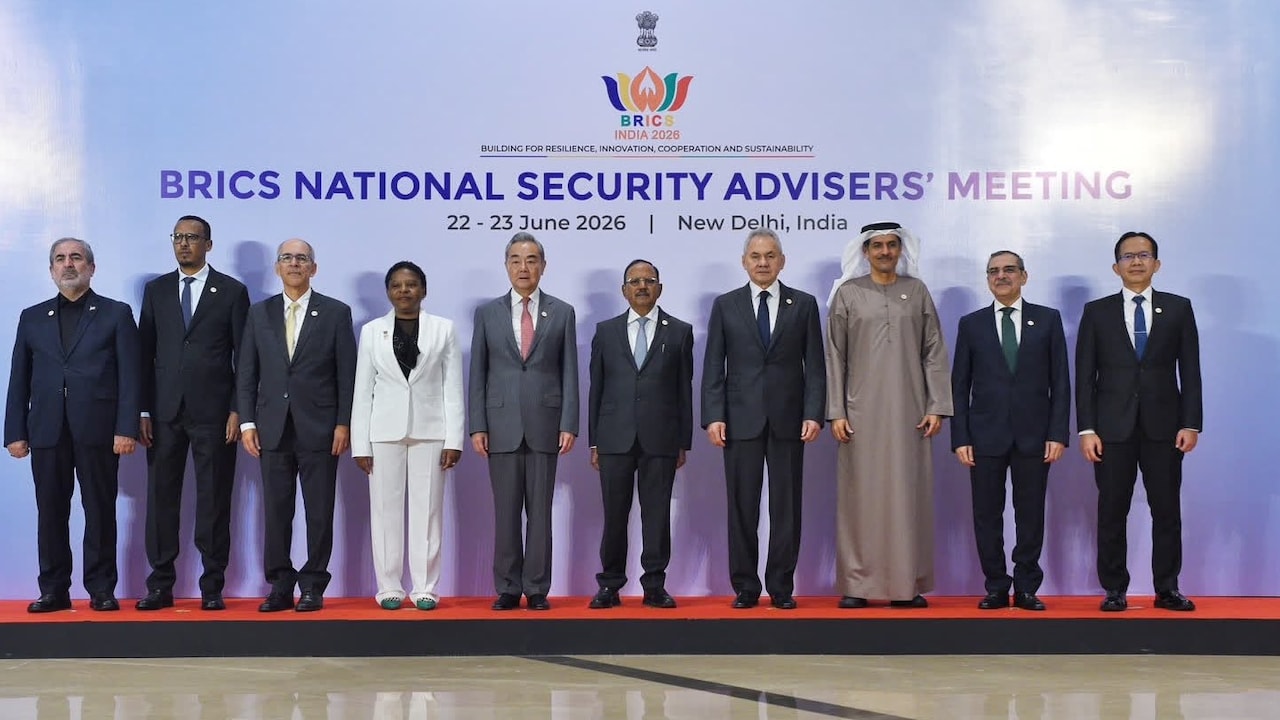
The recent gathering of BRICS security advisers in New Delhi wrapped up with the predictable flurry of official communiqués promising tighter coordination on counter-terrorism, cybersecurity, and transnational crime. Officially, the meeting was framed as a major step forward in establishing a multipolar security architecture independent of Western influence. The reality inside the conference rooms tells a very different story. While the public-facing statements emphasize a unified front against global instability, the internal dynamics of the newly expanded bloc reveal structural rivalries, conflicting national priorities, and deep-seated distrust that make practical intelligence sharing nearly impossible.
The primary query surrounding these high-level meetings is always whether they yield actionable defense integration or merely serve as diplomatic theater. This New Delhi summit proved to be the latter. The core obstacle blocking real progress is the fundamental divergence in how each member state defines its primary national threats. What one capital views as an existential hazard, another sees as a valuable geopolitical asset or a secondary concern.
The Counter Terrorism Deadlock
The joint statements issued at the conclusion of the New Delhi talks placed heavy emphasis on combating cross-border terrorism. This has been a recurring theme for the bloc for over a decade. Yet, beneath the shared vocabulary lies a profound disagreement over specific regional actors.
India used its hosting platform to focus heavily on state-sponsored militancy emanating from its immediate neighborhood. New Delhi repeatedly pressed for institutional mechanisms to track terrorist financing and restrict the movement of flagged individuals across Eurasian borders. For the host nation, this is a matter of immediate domestic survival.
China approach to the issue remains highly selective. Beijing remains reluctant to sign off on specific multi-lateral blacklists or enforcement measures that could complicate its deep economic and strategic investments in Pakistan, a key node in its global infrastructure network. This creates an immediate policy logjam. The two largest economies in the bloc are trapped in a direct border dispute along the Line of Actual Control, meaning that any sensitive intelligence shared in a BRICS forum is viewed through a lens of intense military suspicion.
Russia has its own distinct priorities. Moscow focused its presentation on Western covert operations and the destabilization of Central Asia, viewing counter-terrorism primarily through the lens of regime survival and resisting external political interference. With the recent expansion adding new Middle Eastern and African nations to the roster, the definitions of threat have only multiplied. When every member holds a veto over what constitutes an extremist group, the collective enforcement capability drops to the lowest common denominator.
The Mirage of Shared Intelligence
A common talking point among optimistic analysts is the potential for a centralized BRICS intelligence-sharing hub. The New Delhi meeting supposedly advanced discussions on this front, particularly regarding shared databases for cyber threats and maritime piracy.
True intelligence sharing requires absolute trust. That level of trust does not exist within this coalition. For example, consider a hypothetical scenario where Country A uncovers a sophisticated malware strain targeting industrial control networks. If Country A suspects that the source code or deployment infrastructure originated from elements tolerated by or loosely connected to Country B, it will never upload the raw telemetry to a shared repository. Doing so would expose its own domestic detection capabilities and signal what it knows to a potential adversary.
Instead, what actually occurs is the exchange of heavily sanitized, backward-looking data. The information distributed at these summits is typically already known to major international agencies or consists of generic threat briefs that lack the specific indicators needed to prevent an imminent attack. The institutional architecture remains strictly bilateral. Real security work happens in quiet, one-on-one side rooms where two specific states share a narrow, mutual interest—not in the broad, multi-lateral plenary sessions.
Cyber Sovereignty Versus Data Freedom
Cybersecurity was billed as a major success story of the New Delhi talks, with delegates agreeing on the need for a sovereign internet framework to protect domestic infrastructure from foreign surveillance. This alignment is real, but it stems from a desire for domestic control rather than a shared operational doctrine.
| Member State | Primary Cyber Security Focus | Operational Alignment with Bloc |
|---|---|---|
| India | Protecting critical infrastructure from state-backed hacking groups and monitoring domestic disinformation. | Moderate. Reliant on Western technology stacks but seeks local data localization. |
| China | Strict state control over information flows and creating a completely independent domestic technology ecosystem. | Low. Views its proprietary cyber architecture as a competitive advantage, not a shared asset. |
| Russia | Countering Western information warfare and maintaining domestic network resilience under severe international sanctions. | Moderate. Willing to export surveillance techniques but holds operational tools close. |
| New Invitees | Securing nascent digital economies and preventing external interference in domestic political transitions. | Varied. Most remain heavily dependent on Western or Chinese digital infrastructure. |
This divergence creates practical friction. While Moscow and Beijing advocate for an entirely alternative internet governance model that limits Western platform dominance, other members are deeply integrated into global digital markets. India, with its massive tech sector and extensive service exports to North America and Europe, cannot simply decouple its digital architecture to adopt a closed system without devastating its own economic foundation. The resulting agreements are necessarily vague, papering over the structural reality that these nations operate on incompatible tech stacks and competing economic models.
The Dollar Diversification Dilemma
An overlooked aspect of the security advisers' portfolio is economic coercion and the weaponization of international finance. The New Delhi sessions dedicated significant time to discussing non-dollar payment systems and alternative trade mechanisms to insulate member states from unilateral Western sanctions.
This is where the expansion of the bloc complicates the calculus. The original core members had a relatively clear, if bumpy, trajectory toward reducing their reliance on the US dollar. The inclusion of new economies, however, brings in nations that are heavily dependent on Western financial assistance, International Monetary Fund stabilization loans, and dollar-denominated trade balances.
A sudden shift toward local currency settlements requires massive liquidity and stable exchange rates. Most of the junior members do not possess currencies capable of absorbing large-scale trade settlements without introducing severe inflationary pressures at home. China would prefer the Chinese Yuan to serve as the default reserve asset for this alternative network. This is an outcome that India is actively working to prevent, as New Delhi has no desire to swap reliance on Washington for structural dependence on Beijing. The economic security conversation is therefore deadlocked by the same geopolitical rivalries that stall the military discussions.
Expanding the Map and Diluting the Mission
The ongoing expansion of BRICS was meant to signal a shift in the global balance of power. The New Delhi meeting was the first security conclave to truly grapple with this new, larger roster. Rather than increasing the bloc's leverage, the addition of new voices has diluted its strategic focus.
Managing a small club of five nations with complex but established diplomatic channels is difficult enough. Managing a sprawling coalition that spans multiple continents, time zones, and regional conflicts is an entirely different operational challenge. The new members bring their own historical baggage and localized feuds into the forum. Instead of creating a streamlined alternative to Western security frameworks like NATO or the G7, the expansion has transformed the group into a mini-United Nations. It is a large, loud debating society where passing a meaningful, binding resolution requires navigating an exhausting maze of conflicting national interests.
This institutional bloating plays directly into the hands of traditional Western security networks. While the Global South watches the grand rhetoric coming out of New Delhi, the actual hard power decisions continue to be made in tightly integrated, highly trusted alliances that possess clear command structures and shared treaty obligations. BRICS has no mutual defense pact. It has no integrated military command. It has no shared automated threat warning systems. It is an annual appointment calendar masquerading as a security alliance.
The true takeaway from the New Delhi summit is that the group's capacity for disruption is far lower than its members claim. The public handshakes and group photos project an image of an emerging counterweight to the old world order. Look past the staging, examine the actual policy outputs, and you find an organization struggling to manage its own internal contradictions. Security cannot be built on a foundation of mutual suspicion, and no amount of high-level meetings in New Delhi can change the geographical and political realities that keep these nations apart.


