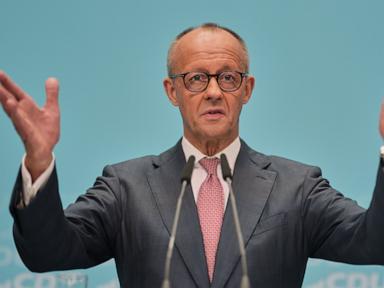
The headline writers in Berlin and London are hyperventilating again. Every time Friedrich Merz takes a bruising at a regional state election, the commentariat treats it as the administrative equivalent of a car crash. They tell you the Chancellor is on borrowed time, that his Christian Democratic Union is fracturing, and that the German center cannot hold against the rising tide of political extremes.
It is a lazy narrative built on historical nostalgia. It assumes that contemporary German politics still operates according to the comfortable rules of the grand coalition era, where regional votes were gentle mid-term scorecards and stability was the default setting of the republic.
That world is dead. And Friedrich Merz is the only major player in Berlin who is acting like it.
To understand why the panic over regional defeats like those in Saxony-Anhalt and Mecklenburg-Vorpommern misses the point entirely, you have to look past the electoral maps and examine the structural mechanics of modern statecraft. Merz is not failing because he is losing regional legislatures; he is absorbing targeted collateral damage to execute the most aggressive structural realignment Germany has seen since reunification.
The Fallacy of the Regional Referendum
The lazy consensus argues that regional electoral collapses are a direct rejection of federal leadership. When the CDU drops below the threshold in a northeastern stronghold, the pundits scream that the Chancellor has lost his touch.
This ignores how voters actually behave when local issues collide with macro-economic anxiety. State elections have devolved into high-stakes venting sessions. Voters use regional ballots to register protest against a decade of infrastructural neglect, high energy costs, and chaotic federal compromises.
Merz understood this math before he walked into the Chancellery. He chose to prioritize structural reform over short-term local popularity. When you introduce hard-nosed fiscal adjustments, reform bloated pension liabilities, and force an industrial economy to confront its structural inefficiencies, you make enemies in every municipal council room across the country.
The alternative was the slow, comfortable decay of the status quo—the exact policy mix that created the political vacuum in the first place. Merz chose friction.
The Anatomy of Political Realignment
Look closely at the numbers the media treats as catastrophic. Yes, the fringes are surging. Yes, the traditional party system is splintering into regional fiefdoms. But pinning this on Merz’s personal brand is historically illiterate.
Germany’s political center is shrinking because the economic model that sustained it—cheap Russian gas, unhindered access to Chinese export markets, and infinite fiscal laxity—has collapsed.
[Old Economic Model: Cheap Energy + Open Export Markets]
       │
       ▼ (Disrupted by Global Shocks)
[Structural Deficit & Industrial Stagnation]
       │
       ▼ (Political Fallout)
[Splintering of Center / Rise of Polarized Fringes]
When a country undergoes a forced economic transition, the governing center takes shrapnel. Merz’s strategy is not to win local popularity contests by pandering to local grievances; it is to bulldoze through legislative bottlenecks at the federal level while the window of necessity remains open.
Critics call this stubbornness. In executive leadership, it is called survival.
The Dangerous Comfort of the Opposition
What would happen if Merz listened to the commentary class, softened his reform agenda, and chased short-term poll numbers?
The federal reform package would stall. Germany’s industrial base would continue its slow bleed into higher energy costs and regulatory paralysis. The structural deficit would widen, and the political extremes would inherit a hollowed-out economy rather than a reforming one.
Merz has explicitly stated that he has no intention of being the nation's darling. That sentence should send a chill through his internal party critics and a wave of confidence to anyone who understands the scale of Germany's structural hole.
Stop viewing German politics through the lens of electoral perfection. The era of comfortable majorities and tidy regional sweeps is over. Friedrich Merz is playing a multi-year game of institutional triage, accepting localized electoral defeats as the price of preventing permanent national decline.
If you think a few lost state parliaments mean the Chancellor is finished, you are misreading the map. He is clearing the board.