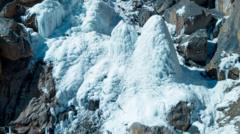
Water has run out when the planting season begins in the high-altitude deserts of Ladakh. Climate change has disrupted the ancient harmony between farming cycles and glacier melt. In April and May, when farmers desperately need water to sow their barley and peas, the natural glaciers remain frozen at higher elevations. Conversely, by June, the melt turns into a torrent, causing flash floods when the crops no longer need intense watering.
Engineers and local communities are fighting back by building artificial ice pyramids, known locally as Ice Stupas. These structures freeze winter wastewater into massive conical towers that melt slowly during the dry spring months, delivering water exactly when fields are barren.
While international headlines celebrate this as a flawless eco-miracle, the reality on the ground reveals a gritty, high-stakes battle against physics, local bureaucracy, and shifting thermal patterns.
The Mechanics of Freezing Air
The brilliance of the Ice Stupa lies in basic thermodynamics, subverting the traditional flat artificial glaciers built by earlier pioneers like Chewang Norphel. Flat ice sheets possess a massive surface area relative to their volume, causing them to melt far too early in the spring sun.
By reshaping water into a cone, the surface area exposed to direct sunlight is minimized. This structural geometry allows the ice to persist deep into the critical sowing season.
Building one requires no electricity. Workers tap a water source from high up the mountain slope, channeling it down through insulated underground pipes toward the villages. As the water descends, gravity builds immense pressure.
When the pipe reaches the valley floor, it bends upward into a vertical spine. At night, when temperatures plummet below minus twenty degrees Celsius, the pressurized water sprays out of a fountainhead into the freezing air.
Atomized droplets freeze instantly as they fall, accumulating on a skeleton of sea buckthorn bushes and wooden poles. Over weeks, a towering white pyramid emerges out of the desert floor.
The Unseen Technical Fractures
The engineering sounds elegant on paper, but maintaining these frozen reservoirs is a grueling, often dangerous ordeal. Water pressure fluctuates wildly based on the freezing state of the intake pipes miles up the mountain. If the flow drops slightly, the water freezes inside the pipe instead of spraying into the air, instantly ruining the system for the rest of the winter.
Villagers must climb treacherous, icy slopes in the dead of night to clear blockages or adjust valves. A single burst pipe can deplete a community's entire winter budget.
Furthermore, the design depends on predictable winter lows. As global temperatures fluctuate, Ladakh experiences unexpected winter warm spells. If the night temperature fails to drop past a critical threshold, the fountain merely sprays liquid water over the existing structure, rapidly eroding the ice that took weeks to build.
The Socioeconomic Fault Lines
Water scarcity inevitably breeds conflict, and these artificial glaciers are reshaping local power dynamics. In Ladakh, traditional water sharing is governed by an ancient system of village elders who distribute water based on ancestral rights. The introduction of Ice Stupas disrupts this delicate social fabric.
Who owns the water from an artificial glacier? If a stupa is built on the commons of an upstream village using water from a shared stream, the downstream farmers frequently protest that their natural winter groundwater recharge is being stolen.
Funding the Freeze
The financial viability of these projects remains highly unstable. While crowdfunding campaigns and international awards funded the initial prototypes, scaling the technology across dozens of vulnerable villages requires sustained capital.
Local governments have been slow to integrate Ice Stupas into official climate adaptation budgets. This leaves communities reliant on volatile tourism revenue or erratic corporate social responsibility grants to buy pipes and nozzles.
The Maintenance Crisis
Young Ladakhi citizens are leaving the region in search of stable jobs in Delhi and beyond. The physical labor required to build and monitor the stupas falls on an aging population. Without a dedicated, salaried workforce to maintain the infrastructure during the brutal winter months, many pyramids fall into disrepair before they can yield a single drop of water.
A Patchwork Solution for a Melting World
Ice Stupas are not a permanent fix for climate change, nor can they replace the massive natural glaciers that are vanishing from the Himalayas. They are a localized, tactical retreat—a way to buy time for communities caught on the front lines of a global crisis they did not create.
The success of the next generation of these structures relies entirely on automating the pressure valves and securing state-backed financial infrastructure to ensure farmers aren't left freezing in the dark, betting their entire harvest on a pipe that might freeze solid before dawn.

