Salt hangs heavy in the air off the Nemuro Peninsula when winter begins to bite. Even standing on a quiet bluff in eastern Hokkaido, you can feel the ocean turning hard, dark, and indifferent. Just across a narrow stretch of freezing water sit islands that Tokyo calls the Northern Territories and Moscow calls the Southern Kurils. For decades, those volcanic ridges have been more than lines on a disputed map. They have been a mirror of how fragile peace can be when two neighbors stop trusting the silence between them.
When a reporter gets detained or arrested in a tense geopolitical climate, the shock waves travel far beyond a newsroom. Suddenly, a notebook feels like contraband. A quiet conversation in a cafe looks like espionage. And in Tokyo, diplomats who have spent years trying to manage friction with Moscow are forced to confront an uncomfortable truth: their room to maneuver is shrinking fast. Discover more on a related topic: this related article.
To make sense of why one journalist's arrest deepens Japan's dilemma over frosty ties with Russia, we have to look past the polite communiques and cold press briefings. We have to look at the people caught in the frost—former islanders waiting for graves they may never visit again, diplomats walking a razor's edge between alliance solidarity and regional stability, and reporters trying to bear witness before the doors slam shut completely.
When a Reporter Becomes a Bargaining Chip
Newsrooms rarely prepare for the moment one of their own disappears behind closed doors in a foreign capital. I have stood in press rooms where phones buzz nonstop with conflicting reports and hushed whispers, where editors weigh every word before publishing so they do not accidentally endanger someone sitting in a cold detention cell thousands of miles away. It is a sickening feeling. You realize how quickly ordinary journalism—asking questions, taking notes, listening to locals—can be recast as a threat by a state looking for leverage. Additional analysis by Al Jazeera explores similar views on this issue.
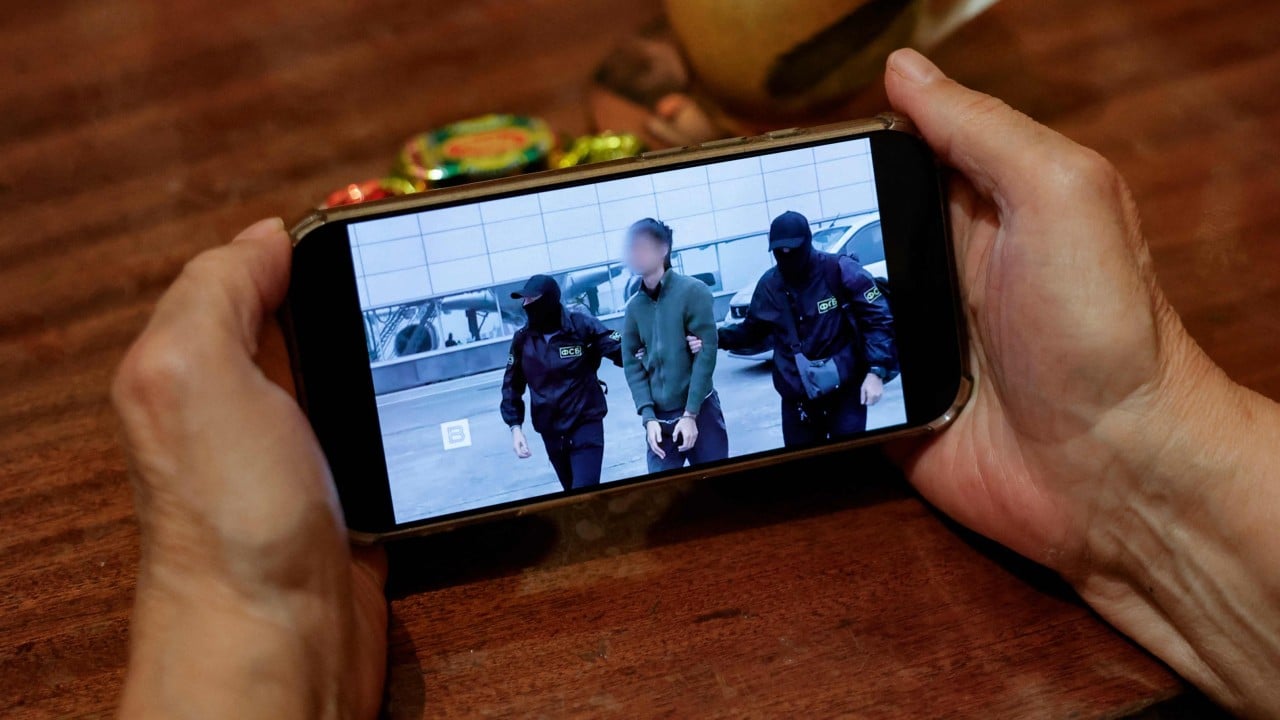
Consider a hypothetical scenario to see how this pressure builds inside a government. Imagine Kenji Takahashi, a seasoned foreign correspondent in his late forties who has covered Northeast Asia for nearly two decades. Kenji is not a reckless thrill-seeker. He knows the unwritten rules, checks his sources twice, and speaks enough Russian to order tea and catch the subtle shifts in tone when officials stop smiling. One afternoon, after interviewing residents about shipping routes and local economic strain, plainclothes officers stop him, seize his devices, and accuse him of gathering sensitive information harmful to national security.
Nothing about Kenji's daily routine changed before that moment. Yet overnight, his career, his freedom, and his family's peace of mind become tangled up in high-stakes diplomacy. In Moscow's orbit, detaining a foreign journalist does more than silence reporting from the ground. It sends a sharp signal to Tokyo: every step Japan takes—whether backing sanctions, supplying equipment to Ukraine, or coordinating security moves with Washington—carries a direct, personal cost.
For Tokyo's foreign ministry, this creates a trap with no clean exit. If Japan reacts too softly, it looks weak at home and invites further pressure abroad. If it retaliates too harshly without leverage, it risks locking in permanent hostility and cutting off whatever thin communication channels remain to get its citizen home safely.
Let's be honest about how confusing this feels from the outside. Watching diplomatic statements trade measured barbs can seem detached from human lives, almost like a slow-motion chess match played with polite vocabulary. Yet behind every stiff phrase sits a real person wondering what happens when the cell door locks for the night.
The Weight of Unfinished History
A diplomatic chill does not start in a vacuum. Japan and Russia have never signed a formal peace treaty to end their World War II hostility, largely because of the bitter dispute over the four islands off Hokkaido—Etorofu, Kunashiri, Shikotan, and the Habomai group. Soviet forces seized them in the closing days of the war in 1945, expelling roughly 17,000 Japanese residents who had built homes, schools, and fishing livelihoods there.
Over the generations, that unresolved history turned into a quiet ache. Elderly former residents grew older watching their window of return narrow year by year. Visa-free exchange programs and joint economic talks once offered modest glimmers of thaw, fragile bridges stretched across cold water. Even when ties were strained, those channels kept a pulse alive.
Then came Russia's full-scale invasion of Ukraine in 2022, which shattered whatever assumptions remained about predictable diplomacy. Japan aligned closely with Western partners, imposing sanctions, freezing assets, and curbing exports to Moscow. Russia retaliated by halting peace treaty negotiations, suspending visa-free visits for former islanders, and pulling out of joint economic projects in the disputed islands.
Think of it like two neighbors sharing a leaky dam during a long storm. Even when they argue over who left the gate open, both know that blowing up the dam floods both valleys. When trust collapses completely, every minor incident—a patrol boat near a fishing zone, a diplomatic expulsion, the arrest of a correspondent—hits harder because there is no cushion of goodwill left to absorb the shock.
A Tightrope Walk in Tokyo
Tokyo's dilemma is shaped by geography and alliances that pull in different directions. Japan sits right next to Russia, across the Sea of Japan and the Sea of Okhotsk, where military activity and strategic posturing have become harder to ignore. At the same time, its security anchor is its alliance with the United States, and its economic lifelines depend on stable global norms and rules-based trade.
When a Japanese reporter is arrested on Russian soil, domestic pressure inside Japan intensifies immediately. Lawmakers demand firm action. Families want answers yesterday. Public patience wears thin as officials repeat carefully vetted lines about consular access and international law.
Yet diplomacy in a freeze rarely moves at the speed of public anger. Negotiators have to read signals that are deliberately ambiguous. A delayed meeting, a stern warning from a deputy minister, or a sudden shift in state media coverage can all be part of a broader push-and-pull. In moments like these, even experienced analysts have to admit uncertainty: nobody outside the inner rooms knows for sure whether a detention is meant as a warning shot, a bargaining chip for future talks, or a symptom of deepening domestic paranoia.
The cost is not just diplomatic friction. It is blindness. When foreign correspondents are intimidated, detained, or expelled, outside observers lose eyes and ears on the ground. Rumors fill the vacuum where reporting used to stand. Misunderstandings multiply because fewer people are actually listening to what is happening inside the country.
Why Ordinary People Pay the Price
High politics often sounds abstract until you trace it to a dock, a classroom, or a kitchen table. For fishing communities along Hokkaido's coast, strained ties with Russia are not a theoretical debate in a think tank. They shape access to waters, seasonal work, and long-standing coastal rhythms.
For journalists covering the region, the stakes are equally personal. Reporting across tense borders requires patience, humility, and nerve. You learn quickly that local residents—whether in a small port town in Hokkaido or a settlement across the strait—often just want to live steady lives, raise their kids, and avoid getting crushed by forces far bigger than themselves.
When governments harden their stances and treat every interaction across the divide with suspicion, ordinary human curiosity gets punished first. A researcher asking about local history looks suspicious. A journalist interviewing residents looks like an agent. Gradually, the human bridge between societies narrows until only official loudspeakers are heard across the water.
Stepping Back Into the Cold
Frost. That is the word that fits best—not a sudden explosion, but a slow, creeping freeze that makes everything stiff and brittle. Every time a reporter is detained in a high-tension standoff, the ice thickens a little more.
In Tokyo, policymakers face a hard reality they cannot wish away. Standing firm on principles and protecting citizens abroad are non-negotiable duties, yet managing proximity to a powerful, unpredictable neighbor demands steady nerves and clear-eyed realism. There are no easy shortcuts out of a deep geopolitical freeze, and pretending otherwise only leaves people unprepared for the next shock.
Out on the bluff near Nemuro, the wind off the strait still carries the sharp scent of salt and cold rock. Across the dark water, the distant ridges sit quiet under low clouds, holding onto memories that refuse to fade and questions that neither capital has managed to settle.