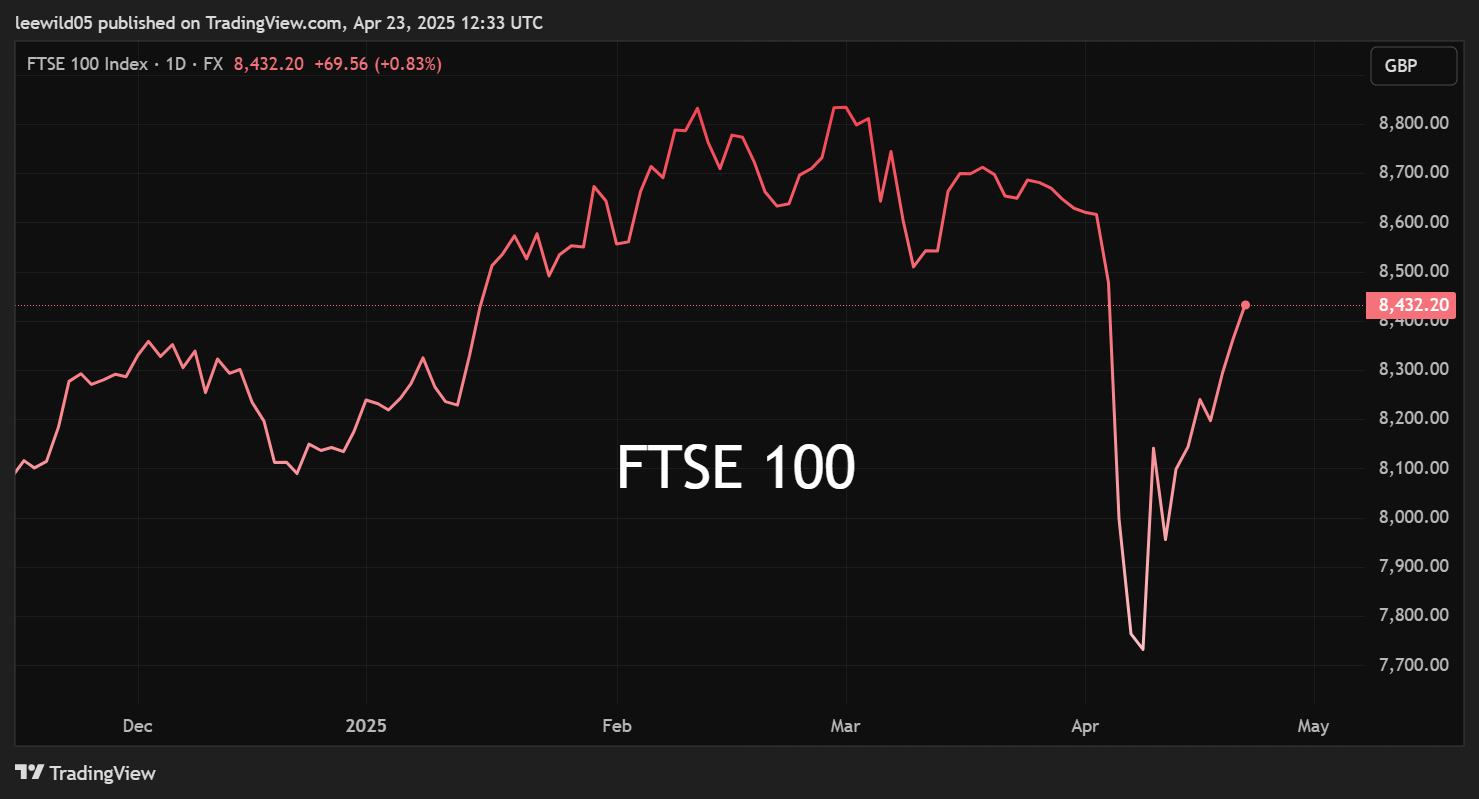
The financial press is currently obsessed with a "streak." They look at the FTSE 100 outperforming the S&P 500 for a few weeks and start dusting off the bunting. They claim the UK is finally "beating" Wall Street, then immediately pivot to fear-mongering about geopolitical tension in the Middle East as the sole threat to this newfound glory.
This narrative is a fundamental misunderstanding of how capital works. Recently making news in this space: Capital Attrition and High Performance Toxicity The Mechanics of the Viswas Raghavan Transition.
The UK stock market isn’t "beating" anything. It is experiencing a momentary, mathematical correction because it spent the last decade being an absolute basement-dweller. To call this a winning streak is like cheering for a marathon runner who sat down for three hours to tie his shoes and then sprinted for ten yards.
The Low-Growth Trap You Call a Rally
The "lazy consensus" suggests that British stocks are finally being "discovered" for their value. In reality, the FTSE 100 is a collection of legacy industries—banks, miners, and oil giants—that thrive only when the rest of the world is on fire or inflation is rampant. Additional insights on this are covered by CNBC.
Wall Street is powered by the future: AI, semiconductors, and software-as-a-service. London is powered by the past: digging holes, pumping crude, and collecting interest on loans.
When you see the FTSE outperform, you aren’t seeing a vibrant economy. You are seeing a defensive rotation. Investors aren't buying the UK because they believe in British innovation; they are buying it because they are terrified of the valuation bubbles in the Nasdaq and want to hide in boring, cash-generative relics.
Geopolitics Is Not the Risk—It’s the Fuel
The competitor article claims the conflict in the Middle East puts the UK's "winning streak" at risk. This is upside-down logic.
Conflict drives energy prices higher. Higher energy prices drive the profits of BP and Shell. These two companies alone account for a massive chunk of the FTSE 100’s market cap. If you are worried about regional instability, you don’t sell the UK—you buy it as a hedge.
The real risk to UK stocks isn't war; it’s peace and technological progress.
If the Middle East stabilizes and global energy prices drop, the FTSE 100 loses its primary engine. If AI productivity gains actually materialize in the US, the S&P 500 will leave London in the rearview mirror again, forever. To suggest that a "risk to the streak" comes from high oil prices is to ignore the very composition of the index you are analyzing.
The Myth of "Cheap" UK Stocks
Every amateur analyst loves to point at Price-to-Earnings (P/E) ratios. "Look!" they cry. "The FTSE is trading at 11x earnings while the S&P is at 21x! It’s a bargain!"
It is not a bargain. It is priced exactly where it should be.
In the world of valuation, you don't pay a premium for a company that grows at 2% a year and pays out all its cash in dividends because it has no better ideas for the money. You pay a premium for growth.
Consider the Gordon Growth Model:
$$P = \frac{D_1}{r - g}$$
Where:
- $P$ is the stock price.
- $D_1$ is the expected dividend next year.
- $r$ is the required rate of return.
- $g$ is the constant growth rate.
In the UK, $g$ is perpetually low. When $g$ is near zero, the price $P$ stays depressed regardless of how "stable" the company is. The US market dominates because $g$ is driven by scalable technology, not by how much copper you can pull out of the ground in a good quarter.
The Institutional Exodus Nobody Mentions
I have sat in rooms where fund managers quietly liquidated their UK positions for years. It wasn't because of "uncertainty" or "political turmoil." Those are excuses. It was because the UK market has a liquidity problem.
When a market becomes a "value play," it becomes a trap. Big money wants to be where the action is, where they can move billions without moving the price. London has become a provincial exchange.
The recent "outperformance" is a liquidity blip. Retail investors see the green numbers and jump in, while the smart money uses the exit window to move more capital into US tech or private equity.
Stop Asking if the UK Is Back
People also ask: "Is now the time to move my 401k/ISA into UK value stocks?"
If you are asking that, you have already lost. You are chasing a ghost.
Actionable advice: Do not buy "The UK." If you want to play this market, you have to be surgical. You buy the specific companies that are global leaders happen to be listed in London—think AstraZeneca or RELX—and ignore the "FTSE 100" as a concept.
The index is a weighted average of mediocrity.
The Divergence Is Permanent
We are witnessing a structural divergence. The US has the "Magnificent Seven." The UK has... "The Sensible Six"? It doesn't have the same ring to it, and it certainly doesn't have the same returns.
The belief that the UK will return to its former glory as a global financial powerhouse by outperforming for a few months on the back of a commodity cycle is a delusion. The US has captured the "intangible economy"—software, IP, and data. The UK is stuck in the "tangible economy"—steel, oil, and physical retail.
In a world where bits are more valuable than atoms, betting on the atoms because they are "cheap" is a fast track to underperformance.
Stop looking at the Middle East as the bogeyman for British stocks. The bogeyman is already inside the house. It’s the lack of growth, the lack of tech, and the suffocating belief that "value" is a substitute for "victory."
Sell the rally. Buy the future.