Diplomatic statements usually put people to sleep. Not this time.
When the G7 foreign ministers issued a sharp warning over China's military moves near Taiwan, they didn't just use the usual diplomatic boilerplate about "peace and stability." They zeroed in on a specific, terrifying scenario. A maritime blockade. If you follow international politics or manage a supply chain, you need to pay close attention to why that single word is suddenly dominating high-level talks in Washington, Tokyo, and Brussels.
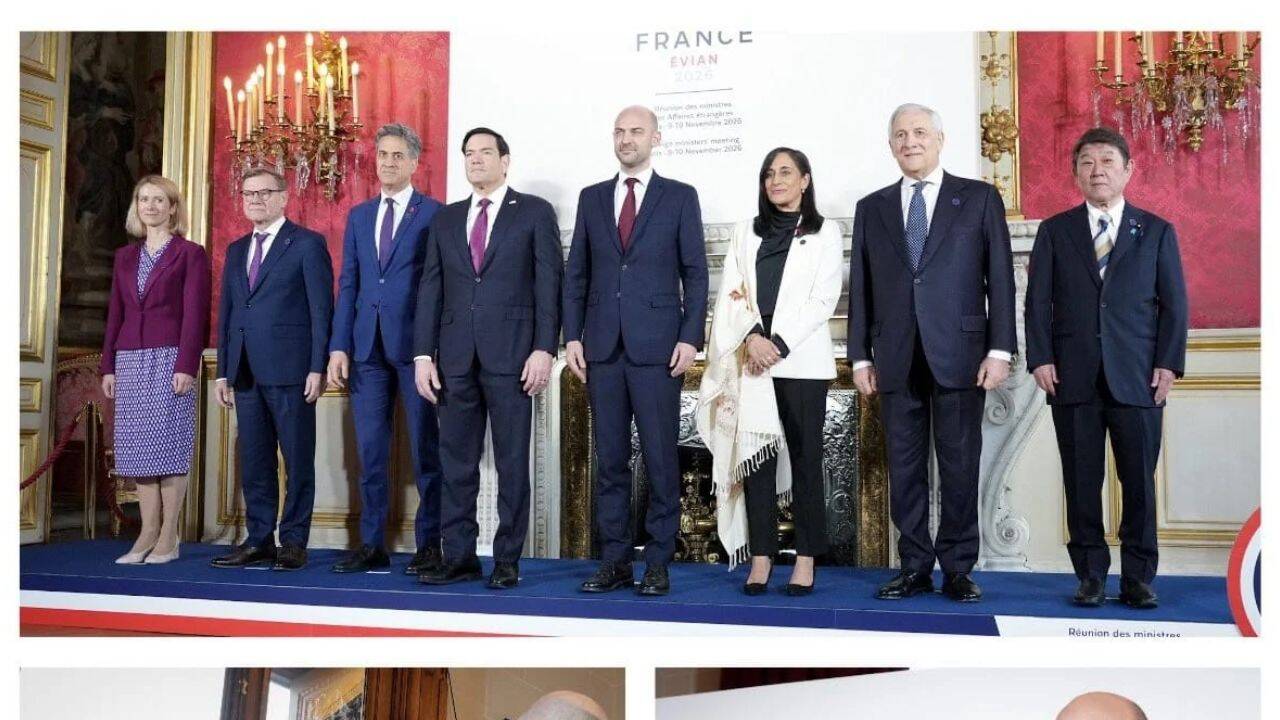
The competitor headlines make it sound like another routine scolding from Western powers. It isn't. China's recent naval and air drills around the island have shifted from simple shows of force to practicing exact encirclement tactics. The G7 ministers—representing the United States, Canada, France, Germany, Italy, Japan, and the United Kingdom—made it clear that unilateral attempts to change the status quo by force or coercion won't fly. But behind the diplomatic phrasing lies a cold, hard economic reality that affects every single person reading this.
What a Taiwan Blockade Actually Means on the Ground
People throw around the word "blockade" like it's a minor shipping delay. Let's be real about what it actually is. Under international law, a naval blockade is an act of war.
In practice, Beijing wouldn't even need to fire a single missile at Taipei to bring the island to its knees. By surrounding Taiwan's major ports—like Kaohsiung and Keelung—with coast guard cutters, naval destroyers, and commercial maritime militia vessels, China could choke off energy and food imports in a matter of weeks. Taiwan imports roughly 98% of its energy. Think about that number for a second. Almost every drop of oil, natural gas, and coal that keeps the island's lights on and its semiconductor fabs running arrives by sea.
I've spent years analyzing maritime chokepoints, and the Taiwan Strait is unlike anywhere else on earth. Nearly half of the world's container fleet passes through these waters every year. When the G7 warns about threats to stability here, they're talking about the main artery of global commerce getting clamped shut.
The Semiconductor Bottleneck Nobody Can Replace
You've probably heard that Taiwan makes a lot of computer chips. That's a massive understatement.
Taiwan Semiconductor Manufacturing Company (TSMC) produces around 90% of the world's most advanced semiconductors. These aren't just the chips in your iPhone or your laptop. They're the brains inside AI data centers, modern fighter jets, hospital MRI machines, and the power grid. If a blockade stops cargo planes and container ships from leaving Taiwan, global manufacturing hits a brick wall almost overnight.
- Automotive plants in Detroit, Munich, and Tokyo would idle within weeks due to missing microcontrollers.
- Tech giants like Apple, Nvidia, and AMD would lose access to their primary manufacturing partner instantly.
- Global GDP would take a hit estimated by Bloomberg Economics at roughly $10 trillion in the first year alone—worse than the 2008 financial crisis and the COVID-19 pandemic combined.
Governments are pouring billions into building new fabs in Arizona, Germany, and Japan through laws like the US CHIPS Act. Honestly, those projects won't save us anytime soon. Building a leading-edge foundry takes years, and even when those plants open, the most advanced packaging and ecosystem suppliers remain clustered in Taiwan. There is no quick backup plan.
Why Beijing Is Testing the Waters Right Now
China's People's Liberation Army (PLA) has spent the last few years normalizing military activity around Taiwan. What used to be a rare crossing of the median line in the Taiwan Strait is now a daily occurrence.
During major exercises—like the Joint Sword drills—Chinese forces have explicitly practiced sealing off key ports and airspace. They're testing response times. They're mapping undersea cables. They're watching how the US Navy and Japanese Self-Defense Forces react, and they're measuring how much economic pain Western nations are willing to risk to push back.
Beijing knows an amphibious invasion of Taiwan would be the riskiest military operation in human history. Crossing 100 miles of rough water against a heavily fortified island is a nightmare for any general. A quarantine or partial blockade, however, sits in a murky "gray zone." China could frame it as a "customs inspection" or a "law enforcement operation" around what it claims is its own territory. That puts the G7 in a brutal spot. Do you shoot at a Chinese Coast Guard ship that's just "inspecting" a cargo vessel, knowing it could trigger a nuclear-armed superpower conflict? That's the exact dilemma keeping defense planners awake at night.
The G7's Shifting Strategy
For decades, the G7 tried to keep China happy while doing business with it. Europe, especially Germany, treated Beijing primarily as a massive export market. That era is dead.
The latest G7 communiqués show a striking alignment between Washington, Tokyo, and European capitals. Even countries that used to hesitate before criticizing Beijing are signing onto tough language regarding the East and South China Seas. Why the sudden backbone? Partly because Russia's invasion of Ukraine proved that authoritarian leaders will actually pull the trigger on territorial ambitions, even when the economic costs are catastrophic. European leaders watched their dependence on Russian gas turn into a geopolitical weapon, and they don't want to repeat that mistake with Chinese supply chains.
Still, words on paper don't deter warships. The G7 has been working behind the scenes on coordinated economic sanctions packages—similar to what was deployed against Moscow, though vastly more complicated given China's role as the world's factory. Deterring a blockade requires convincing Beijing that the financial blowback would cripple the Chinese economy permanently.
How Business Leaders and Investors Should React
If you run a business that touches physical goods, electronics, or international logistics, waiting for the news to break is a terrible strategy. By the time a blockade starts, shipping insurance rates will skyrocket to unpayable levels, and freight capacity will vanish.
Start auditing your tier-two and tier-three suppliers today. Most companies know who they buy directly from, yet they have zero visibility into where their suppliers source raw materials or sub-components. If your circuit boards are assembled in Vietnam or Mexico, there's a very good chance the bare silicon wafers still originated in Hsinchu or Tainan. Map those dependencies now while ports are open and freight is moving normally.
Diversify your inventory buffers for critical components. The "just-in-time" manufacturing model works great in a peaceful world, and it fails catastrophically during geopolitical shocks. Holding an extra 60 to 90 days of safety stock for high-risk electronic parts costs money upfront, sure, but it's cheap insurance compared to shutting down an entire production line. Keep a close eye on maritime insurance advisories and G7 trade policy updates over the coming months—because when diplomatic warnings start naming specific military tactics, the risk window has already opened.