Mainstream war reporting has succumbed to a severe case of spreadsheetitis.
When headlines blurt out that Israeli Prime Minister Benjamin Netanyahu aims for "70% control of Gaza," the media treats it like a corporate acquisition. They treat a counter-insurgency campaign like a quarterly market-share report. It sounds precise. It sounds strategic. In similar developments, take a look at: Why France Repealing the Code Noir is an Absolute Joke.
It is completely detached from the reality of urban warfare.
The lazy consensus across major news outlets frames these geopolitical conflicts through raw percentages and tragic, daily body counts. They want you to believe that security is a linear progress bar—that if a military occupies 70% of a territory, they are 70% of the way to victory. The Guardian has also covered this important subject in extensive detail.
They are wrong. In asymmetric warfare, conventional metrics do not just misinform; they invert reality. Controlling a shattered urban grid is not a static asset. It is an exponential drain on resources.
The Myth of the Math in Asymmetric Warfare
Let us dismantle the premise of "percentage control."
In standard military doctrine, territorial control implies exclusive administrative and kinetic authority. You hold the ground, you govern the population, you deny the enemy freedom of movement. But in a dense, subterranean theater like Gaza, territory is three-dimensional, fluid, and fiercely contested beneath the surface.
"Victory in counter-insurgency is not achieved by capturing geography. It is achieved by securing the population and destroying the insurgent's political infrastructure." — General David Petraeus, Counterinsurgency Field Manual
When a political leader sets a public target of "70% control," it is a political metric disguised as a military objective.
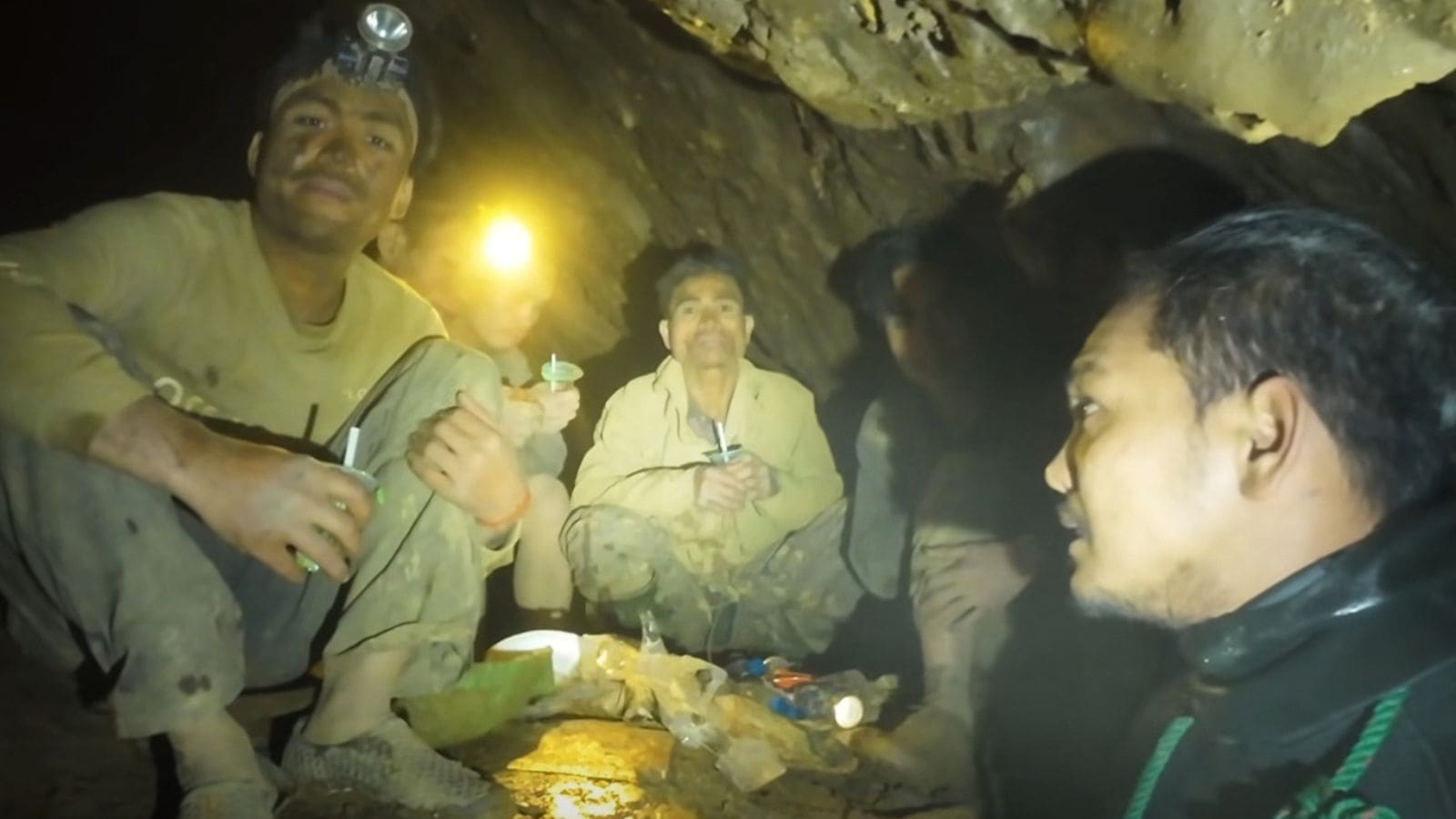
- The Tunnels Obiterate Two-Dimensional Math: A military force can park armored vehicles on 100% of the surface streets in a neighborhood, yet control 0% of the tactical environment if an insurgency operates ten meters below them.
- The Power Vacuum Paradox: Forcing an insurgent group out of a district without establishing a viable, legitimate local governance structure does not create "control." It creates a vacuum. Vacuums attract chaos, criminal syndicates, and radical splinter factions that are even harder to track than a centralized adversary.
- The Logistics Tail: Every extra square kilometer a conventional army claims on paper requires troops to garrison it, supply lines to feed it, and intelligence assets to monitor it. The closer an occupying force gets to its arbitrary percentage target, the more overextended and vulnerable its personnel become to classic guerrilla hit-and-run tactics.
Imagine a scenario where a police force claims it has "80% control" of a city because it stationed officers on eight out of ten street corners. If organized crime syndicates still run the businesses, extort the residents, and dictate the economy through those same streets at night, the percentage metric is a useless vanity metric.
The Deadly Cost of Metric Obsession
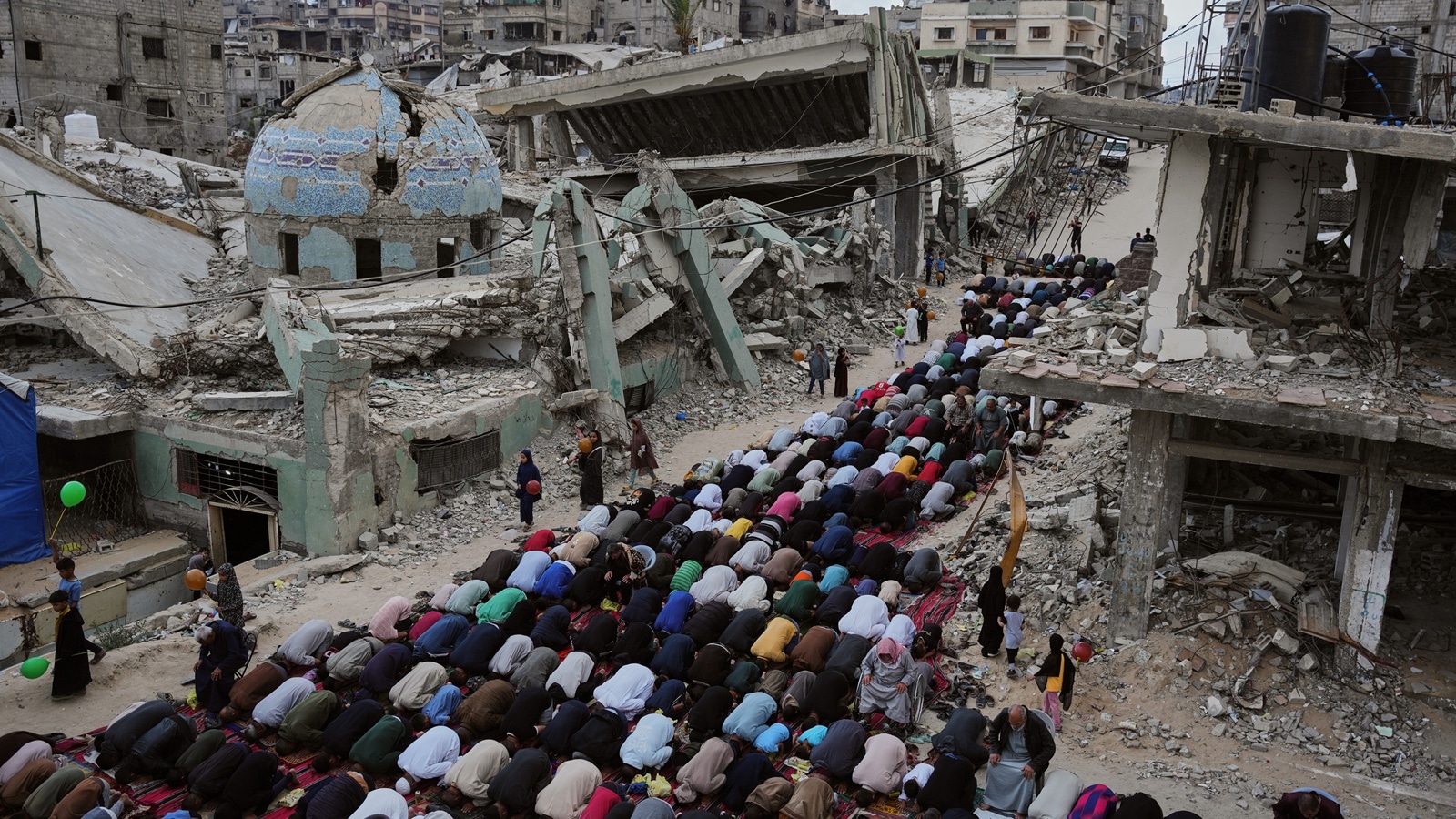
While politicians debate percentages, the ground reality is measured in human wreckage. Reports highlighting strikes that kill civilians during major cultural or religious events underscore a brutal truth about modern urban conflict: precision weapons cannot fix a flawed strategic framework.
When operational success is tied to clearing specific geographic zones to hit a political data point, the pressure to move fast overrides tactical patience.
The results are catastrophic. High-intensity bombardment in densely populated areas guarantees collateral damage, regardless of the sophistication of the guidance kits used.
Every civilian casualty does not just represent a profound human tragedy; it systematically undermines the stated political goal. In counter-insurgency, the population is the decisive terrain. If operations alienate the population entirely, the military might take the land, but they lose the war.
I have analyzed institutional failures in corporate turnarounds and state-level security transitions for two decades. The pattern is always identical: when a leadership team cannot define what a sustainable "end state" looks like, they start counting things that do not matter to convince stakeholders they are winning.
Dismantling the Premise: What the Public Asks vs. The Brutal Truth
The public discourse around this conflict is dominated by fundamentally flawed questions. Let us address them with zero corporate polish.
Can a military ever truly achieve "70% control" of an insurgency-heavy region?
No. The question itself assumes an insurgency is an army that occupies space. An insurgency is an ideas-driven network embedded within a population. You can destroy 70% of their hardware, but if the underlying political grievances, socio-economic desperation, and structural drivers remain untouched, the network regenerates. The history of the 20th and 21st centuries—from Algeria to Vietnam to Afghanistan—is a graveyard of conventional armies that "controlled" 90% of the map on paper while losing the conflict.
Why do political leaders cling to these specific geographic targets?
Because nuance does not sell to a domestic constituency. A percentage target provides a clear, digestible narrative of progress. It gives the illusion of a planned, systemic operation with a definitive endpoint. Admitting that the campaign is actually an open-ended, bloody slog with no clear governance strategy would be political suicide.
What is the alternative to territorial clearing operations?
The alternative is a strategy centered on political outcomes rather than kinetic milestones. True security requires a credible, post-conflict governance plan that offers the local population a viable alternative to the insurgent group. Without a legitimate local partner to hold the ground and manage civilian life, military gains are temporary, expensive sandcastles waiting for the tide to come in.
The Downside of the Realistic Approach
Let us be entirely transparent. Abandoning arbitrary percentage targets and focusing on a sustainable political framework is incredibly difficult.
It requires political leaders to make massive concessions. It requires accepting that absolute military victory in a modern urban enclave is a fiction. It means engaging in messy, frustrating, and often distasteful diplomatic negotiations. It means acknowledging that long-term stability cannot be delivered solely through the barrel of a tank or the tip of a missile.
Forcing a transition from high-intensity military operations to a political stabilization phase requires immense political courage. It means telling a traumatized and angry public that further force will yield diminishing returns.
But continuing to chase an arbitrary geometric fraction on a map while civilian casualties mount is a recipe for permanent war.
Stop looking at the maps colored in with artificial shades of control. Stop believing that security can be calculated on a slide deck. Until the strategic conversation shifts from "how much territory can we clear" to "who governs the day after the bombs stop," those percentages are just numbers written in the sand.
The next time a spokesperson steps up to a podium to announce they have secured a new chunk of territory, do not applaud. Ask them who is opening the schools, who is fixing the power grid, and who is policing the streets when the armor rolls away. If they cannot answer that, their percentage is zero.