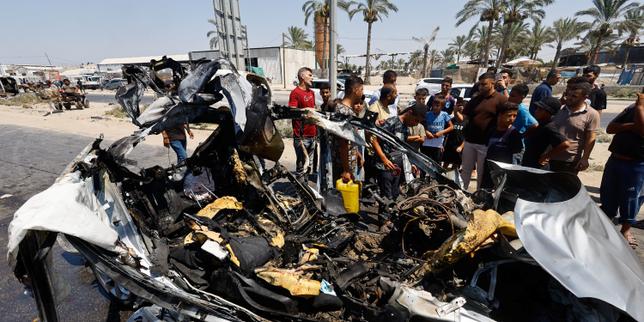
The fragile hope for immediate relief in the Gaza Strip dissolved under the weight of renewed airstrikes this week. Despite public announcements regarding an agreement to de-escalate tensions and facilitate humanitarian aid, at least thirteen people died in the latest wave of bombardments. This recurring cycle of promise followed by immediate tactical escalation highlights the deep-seated friction between high-level diplomatic rhetoric and the grim reality on the ground. When international mediators broadcast the arrival of a deal, the message often fails to reach the command structures responsible for ongoing combat operations.
The disconnect is not merely a failure of communication. It is a structural feature of a conflict where local tactical objectives frequently override broader strategic agreements. Military commanders on the ground and political leadership in distant capitals often operate in separate, disconnected spheres. While negotiators in Cairo or Doha debate the mechanics of a pause in hostilities, combat units continue to execute pre-existing operational plans. This creates a lethal lag between the issuance of a diplomatic statement and the cessation of fire.
The Illusion of Coordinated De-escalation
Observers often interpret a signed agreement as a functional end to active combat. This is a misunderstanding of how modern asymmetric warfare functions. An agreement between a state entity and a non-state actor is rarely a clean break. Instead, it is a series of overlapping, often contradictory, directives. The thirteen lives lost are not just statistical casualties of a failed treaty; they are evidence of a system that lacks an integrated chain of command capable of enforcing a pause across all echelons.
Consider the role of decentralized decision-making. In a dense urban environment like Gaza, field commanders possess significant autonomy. They interpret standing orders through the lens of immediate tactical threats. If an intelligence report suggests a target of opportunity, the pressure to strike often outweighs the abstract benefit of a negotiated peace. Diplomatic efforts frequently falter because they treat the warring parties as monolithic blocs, ignoring the internal competing interests that drive localized violence.
Strategic Incentives Behind the Chaos
Why do these bombardments persist even when an accord is announced? To understand this, one must look at the domestic incentives of those involved. For some political actors, a ceasefire is an existential threat. It suggests compromise, and in the current climate, compromise is often framed as surrender. By continuing military operations, factions can signal strength to their domestic base, effectively sabotaging the diplomatic process before it can gain momentum.
There is also the matter of intelligence cycles. Military strikes are the product of lengthy targeting processes. Once a target is validated and the assets are positioned, the institutional inertia required to stop a strike is immense. A diplomatic deal is an external intervention that crashes into an already-moving machine. Unless the political leadership is willing to exert direct, absolute control over every field unit—a task of immense complexity—the machine continues to function until its fuel is exhausted.
The Humanitarian Cost of Diplomatic Failure
The civilians trapped in these zones occupy a space where politics is irrelevant compared to the threat of kinetic force. International aid organizations have repeatedly warned that the gap between a ceasefire announcement and the actual halt of operations is the deadliest period for civilians. Families often emerge from shelters or move toward aid distribution centers based on the word of international mediators, only to find that the area remains an active combat zone.
The cycle of violence creates a profound sense of abandonment. When individuals hear of a deal but witness the destruction of their neighborhoods hours later, the credibility of the international community evaporates. This fosters a environment of deep cynicism. People no longer look to global powers to solve the crisis. They look to their own survival strategies, which often involve further radicalization or desperate flight. Every strike that occurs during a supposed window of peace undermines the legitimacy of future negotiations.
Beyond the Rhetoric of Stability
The international community must address the reality that formal agreements are insufficient without robust, boots-on-the-ground verification mechanisms. Relying on declarations from politicians who are separated from the front line by hundreds of miles is a tactical error. If a pause in fighting is the goal, then the mechanism for that pause must be integrated into the military planning cycle.
Meaningful change requires an shift in how negotiations are conducted. Instead of focusing solely on the duration of a ceasefire, mediators should demand operational transparency. This includes the establishment of de-confliction zones that are strictly enforced through independent observation. Without such measures, the cycle of announcements and subsequent bloodshed will continue indefinitely. The current model for peace is broken. It prioritizes the appearance of progress over the substance of protection.
Diplomacy requires more than the signature of a leader. It requires the ability to command the silence of the guns. Until the parties involved recognize the necessity of aligning their military output with their diplomatic input, the cycle will repeat. The next round of negotiations is already being planned, yet the fundamental conditions that led to the latest casualties remain untouched. Addressing these structural flaws is the only way to transform temporary, broken promises into a durable reality. The cost of failing to do so will be measured in the only currency that matters in this environment: lives that never should have been lost.