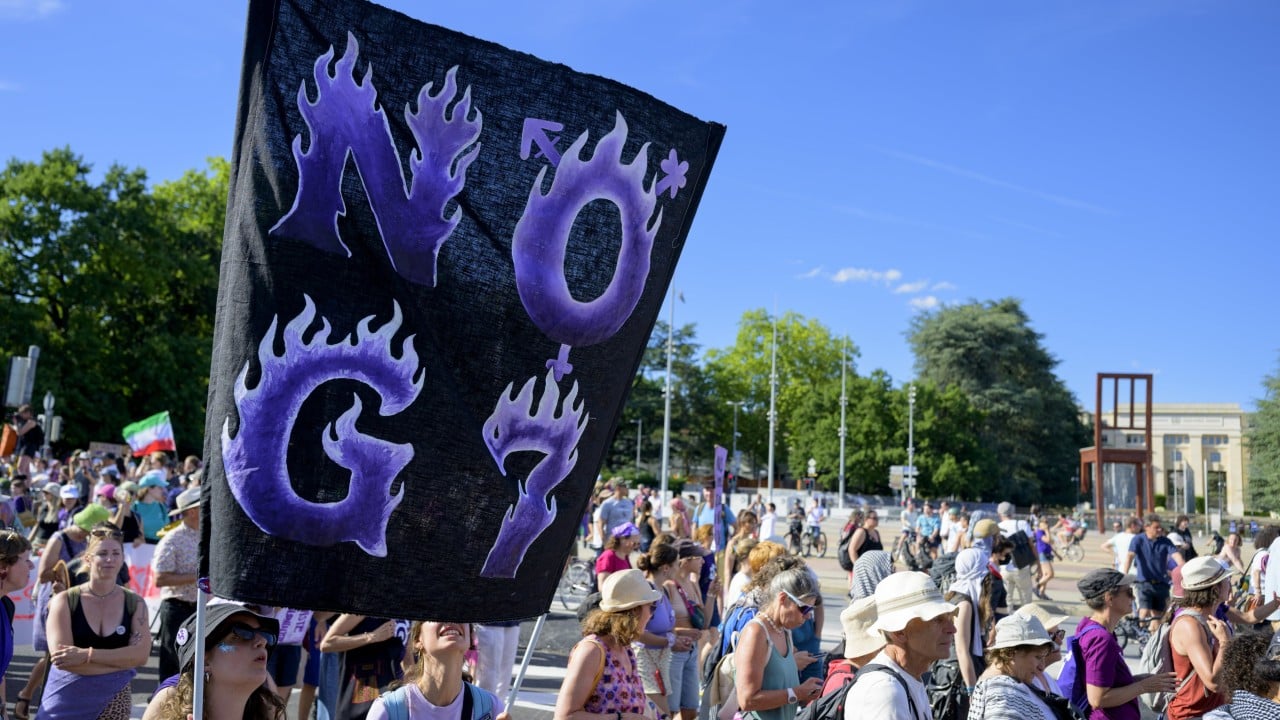
Thousands of activists are currently marching through the pristine streets of Geneva, chanting anti-capitalist slogans and waving banners aimed at the G7 summit happening just across the border in France. The mainstream media is running its usual playbook. They paint this as a clash of civilizations—a grassroots uprising of the global proletariat fighting the shadowy cabal of world leaders.
It is a beautiful, expensive illusion.
The lazy consensus among journalists and casual onlookers is that these large-scale street protests exert genuine economic and political pressure on international policymakers. They do not. In reality, the modern summit protest has devolved into a highly choreographed, state-sanctioned ritual that actually reinforces the status quo it claims to dismantle. I have spent fifteen years analyzing global trade policy and the mechanics of international summits. I have watched cities spend fortunes preparing for disruptions that amount to little more than a weekend of high-visibility property damage and symbolic arrests.
If you want to understand how global power actually shifts, you need to look past the smoke bombs in Geneva and look at the balance sheets of the organizations funding them.
The Counter-Intuitive Economics of Summit Dissent
The standard narrative assumes a binary struggle: the powerful G7 elites inside the secure zone, and the powerless masses outside the gates. This framework misses the entire financial infrastructure that makes these mass mobilizations possible.
Mass protests do not happen spontaneously. They require millions of dollars in logistical support, legal defense funds, transportation networks, and media coordination. A significant portion of this funding flows directly from non-governmental organizations (NGOs) that are themselves funded by philanthropic foundations, corporate donations, and, ironically, government grants.
Consider the mechanics of a modern march. You need permits from the local municipality. You need coordinated routes negotiated weeks in advance with the police department. You need marshals, first-aid stations, and pre-arranged media zones.
This is not rebellion. This is a highly managed public event.
By cooperating with local authorities to stage a predictable spectacle, protest organizers provide a vital service to the host governments. They offer a controlled pressure valve. The state allows a weekend of shouting and minor property damage because it proves the state is democratic and tolerant of dissent. Once the summit ends, the world leaders fly home, the activists pack up their tents, the local shops file insurance claims for broken windows, and the policy trajectory remains completely unchanged.
The Broken Premise of the "People Also Ask" Columns
If you look at what people search during a G7 summit, the questions reveal a deep misunderstanding of how international diplomacy functions.
Do G7 protests change summit outcomes?
No. Summit agendas are locked in months, sometimes years, in advance through a grueling process managed by "sherpas"—the diplomatic deputies who negotiate the text of communiqués long before world leaders ever arrive at the venue. A crowd of 10,000 people in Geneva cannot rewrite a multilateral climate agreement or a trade framework that has already been vetted by legal teams in Washington, Tokyo, and Berlin. The protest is a reaction to a done deal, not an intervention.
Why do activists target Geneva if the summit is in France?
Because Geneva is the capital of global bureaucracy. It houses the World Trade Organization, the United Nations, and hundreds of international bodies. It is a soft target with excellent media infrastructure. Protesting in a remote, heavily fortified summit venue in the French countryside is logistically difficult and offers poor optics. Geneva offers maximum press coverage with minimum physical risk to the core organizing committees. It is marketing, plain and simple.
The True Cost of Symbolic Resistance
Let us look at a thought experiment based on the 2001 G8 summit in Genoa—the historical peak of this style of activism. Imagine a scenario where a movement spends $5 million mobilizing 200,000 people to disrupt a summit. The city is locked down, billions of dollars in economic activity are halted, and the media coverage is wall-to-wall.
What was the policy result? Zero. The summit produced the exact structural adjustments and trade liberalizations that were planned.
The downside of my contrarian view is stark: admitting that street protests are ineffective is demoralizing to well-meaning people who want to see change. It feels cynical. But continuing to rely on an obsolete playbook from the 1990s is worse than cynical; it is a waste of human capital.
When activists focus all their energy on a three-day media spectacle, they deplete resources that could be used for sustained, unglamorous institutional pressure. The G7 leaders do not fear people marching with puppets in Geneva. They fear targeted, systemic litigation that blocks their infrastructure projects. They fear coordinated capital flight. They fear sophisticated lobbying campaigns that target vulnerable legislators in their home districts.
Where the Real Power Lies
If you want to disrupt global policy, you have to stop acting like an outsider begging for scraps at the table and start exploiting the internal contradictions of the system itself.
True leverage does not exist in the streets of Geneva. It exists in the dull, dry text of regulatory frameworks and trade law. The groups that actually alter the course of global governance are the ones that hire trade lawyers, not the ones that buy spray paint.
When the European Union alters its carbon accounting mechanisms or when the US Treasury adjusts its sanctions list, it happens because of intense, microscopic pressure applied by industry groups, sovereign wealth funds, and highly specialized policy institutes working inside the system. They use the language of the state against the state.
Stop looking at the crowds. Look at the compliance documents. The revolution will not be televised, because the revolution is currently being drafted in a boring conference room by someone wearing a tailored suit and reading a spreadsheet.