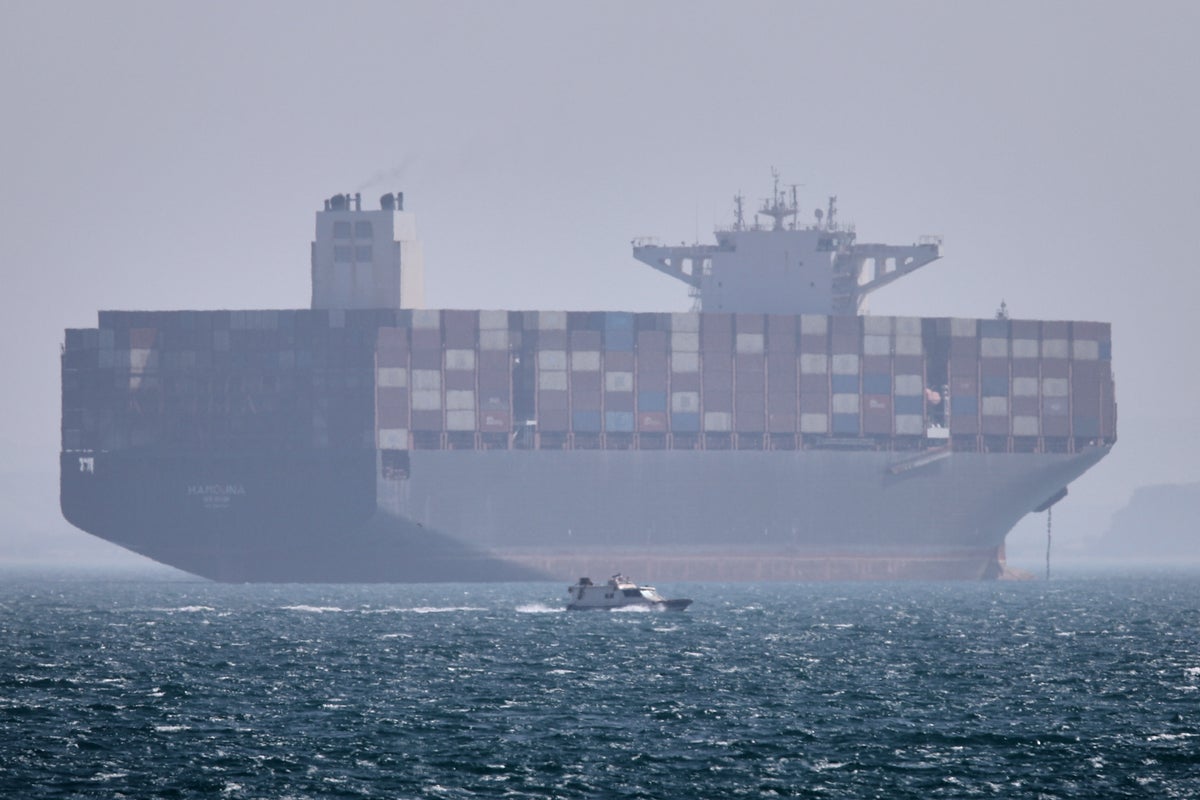
The global energy supply chain rests on a twenty-one-mile wide physiological bottleneck where the perception of security is as volatile as the physical transit itself. As the United States attempts to secure passage through the Strait of Hormuz amidst a deteriorating Middle Eastern ceasefire, the core challenge is not merely tactical—it is an exercise in managing the Insecurity Premium baked into global Brent crude pricing. The Strait serves as the primary artery for approximately 21 million barrels of oil per day, representing roughly 21% of global petroleum liquid consumption. Any degradation in the "Freedom of Navigation" (FON) standard here does not just increase shipping costs; it recalibrates the global risk-free rate for energy-dependent industrial sectors.
The Tripartite Architecture of Hormuz Security
To analyze the current friction, one must deconstruct the regional stability into three distinct, competing variables.
1. The Kinetic Deterrence Variable
This involves the physical presence of the U.S. Fifth Fleet and its ability to project power through Carrier Strike Groups (CSGs). Kinetic deterrence is binary: either a transit is physically blocked, or it is not. However, the current strategy employs "distributed lethality," using smaller, unmanned surface vessels (USVs) to monitor asymmetrical threats from Iranian fast-attack craft and coastal missile batteries. The USV integration shifts the cost-to-kill ratio in favor of the U.S., as intercepting low-cost drone threats with multi-million dollar SM-2 missiles is economically unsustainable.
2. The Diplomatic-Ceasefire Feedback Loop
The durability of any regional ceasefire directly dictates the "Rules of Engagement" (ROE) for non-state actors, specifically the Houthi movement in the Bab el-Mandeb and various proxies near the Strait. When a ceasefire wavers, these actors utilize "Grey Zone" tactics—actions that fall below the threshold of open war but high enough to trigger insurance hikes. This creates a feedback loop where diplomatic failure in a localized conflict (like Gaza) leads to immediate kinetic friction in global trade routes.
3. The Insurance and Risk Transference Mechanism
This is the most misunderstood pillar. Shipping companies do not react to actual explosions; they react to the War Risk Surcharge. When the U.S. Navy announces an escort mission, it is attempting to subsidize this risk. If the U.S. cannot guarantee safety, the London insurance market (Lloyd’s) reclassifies the Strait as a "listed area," causing premiums to spike by 500% to 1,000% within 48 hours. This cost is passed directly to the consumer through a higher landed cost of energy.
The Cost Function of Chokepoint Interdiction
A total closure of the Strait of Hormuz is a low-probability, high-impact event. The more realistic scenario—and the one currently unfolding—is Managed Friction. This can be quantified through a specific cost function:
$$Total Cost = (Freight Rate + Insurance Premium + Diversion Capital) \times Time$$
Logistic Elasticity and Bottlenecks
When the Strait becomes contested, the immediate reaction is "tanker slow-steaming" or loitering in the Gulf of Oman. This reduces the effective global tanker capacity (Tonnage-Mile Demand). If a tanker is forced to wait five days for a naval escort, that is five days of lost productivity for that vessel. On a macro scale, this creates a synthetic shortage of ships, driving up charter rates globally, even for routes that never touch the Middle East.
The Role of VLCCs (Very Large Crude Carriers)
Most of the oil moving through Hormuz travels on VLCCs, which carry 2 million barrels each. These vessels have limited maneuverability and are highly vulnerable to limpet mines or drone swarms. The U.S. strategy of "opening" the Strait requires protecting these specific high-value targets. If a single VLCC is compromised, the psychological impact on the global spot market outweighs the physical loss of 2 million barrels, as it signals that the world’s largest infrastructure for energy transfer is no longer "hardened" against low-cost interdiction.
Escalation Dominance and the "Grey Zone" Gap
The U.S. faces a structural disadvantage in "Escalation Dominance." Iran and its proxies operate with high deniability and low-cost assets (drones, mines, speedboats). The U.S. responds with high-cost, high-visibility assets (destroyers, aircraft carriers). This asymmetry allows regional actors to "test the fence" without triggering a full-scale kinetic response from Washington.
The Mechanism of Harassment
Harassment in the Strait typically follows a sequenced escalation:
- Electronic Interference: Spoofing GPS signals to trick tankers into drifting into Iranian territorial waters.
- UAV Surveillance: Frequent, low-altitude flights over commercial decks to increase crew fatigue and anxiety.
- Physical Seizure: Utilizing legalistic pretexts (e.g., alleged environmental violations) to board and divert tankers to Iranian ports like Bandar Abbas.
Each of these actions is designed to erode the "U.S. Security Guarantee." If the U.S. fails to prevent a seizure, the credibility of its protection declines, leading to a "Flight to Certainty" where shippers may begin to seek alternative, albeit more expensive, security arrangements or route diversions that bypass the region entirely via pipelines like the Petroline (East-West Pipeline) in Saudi Arabia. However, these pipelines have a maximum capacity of roughly 5 million barrels per day—insufficient to offset a full Hormuz disruption.
Strategic Asymmetry: The China Variable
The U.S. is the primary guarantor of the Strait, yet China is the primary beneficiary. Approximately 80% of the oil transiting Hormuz is destined for Asian markets—specifically China, India, Japan, and South Korea. This creates a geopolitical paradox: the U.S. spends billions in operational costs to secure the energy supply of its primary strategic competitor.
The "ceasefire wavering" complicates this because China has maintained a policy of "Neutrality with Iranian Characteristics." If the U.S. successfully stabilizes the Strait through force, it maintains the status quo. If it fails, China may be forced to intervene or negotiate its own security bilateral with regional powers, effectively ending the era of U.S. maritime hegemony in the Indian Ocean.
Operational Limitations of Naval Escorts
While "opening the Strait" sounds like a singular action, it is actually a series of continuous, resource-heavy operations. Naval escorts face three specific bottlenecks:
- The Interoperability Gap: Not all commercial tankers are equipped to communicate on secure military frequencies. This creates a "Commercial-Military Gap" where instructions are delayed or misinterpreted during high-stress maneuvers.
- The "Shot-Down" Ratio: Using a $2 million interceptor to take out a $20,000 drone is a losing economic proposition. The U.S. is currently rushing directed-energy weapons (lasers) and high-power microwave systems to the region to fix this cost curve.
- Personnel Fatigue: Constant high-alert status for crew members on destroyers leads to diminishing returns in situational awareness. The U.S. Navy's current fleet size is stretched thin, managing both the Red Sea (Houthi threats) and the Strait of Hormuz simultaneously.
The Strategic Play: Hardening the Chokepoint
Securing the Strait of Hormuz requires moving beyond reactive escorting toward a Proactive Containment Framework. This involves three tactical shifts:
- Weaponizing Transparency: Deploying a dense network of persistent, autonomous sensors and AIS-independent tracking to remove the "Grey Zone" deniability of state-sponsored harassment.
- Asymmetric Response Mapping: Establishing a pre-cleared "Ladder of Escalation" where non-kinetic provocations (like GPS spoofing) are met with immediate, proportional cyber-interdictions against the offending ports.
- Regional Burden Sharing: Forcing a transition where the primary consumers of Hormuz oil (Japan, South Korea, and eventually India) contribute kinetic assets to a multi-national task force, similar to Operation Prosperity Guardian, but with a specific focus on the Strait's narrowest points.
The volatility in the Strait will persist as long as the cost of disruption remains lower than the cost of deterrence. The U.S. must prioritize the deployment of counter-UAS (Unmanned Aerial Systems) technology and undersea sensor arrays to transition from a "Show of Force" model to a "Denial of Opportunity" model. Failure to stabilize this chokepoint will result in a permanent "War Risk" tax on the global economy, effectively ending the era of cheap, predictable energy transit.
To mitigate immediate exposure, energy stakeholders should prioritize the expansion of the Abu Dhabi Crude Oil Pipeline (ADCOP), which can move 1.5 million barrels per day to the port of Fujairah, outside the Strait. Relying on the U.S. Navy as a perpetual subsidy for maritime insurance is no longer a viable long-term strategy; the focus must shift toward physical infrastructure that bypasses the bottleneck entirely.


