As structural attrition defines the contemporary theater of operations in Eastern Europe, President Volodymyr Zelenskyy's diplomatic outreach to Ottawa represents an effort to recalibrate supply chains for air defense. Standard media narratives routinely mischaracterize these international visits as symbolic appeals, ignoring the underlying mechanical realities of resource depletion, winterization vulnerabilities, and aerial interception economics.
Analyzing why secondary partner nations like Canada remain critical to a protracted defense requires examining the expenditure rate of interceptors versus the replacement velocity of long-range strike assets. The core conflict dynamics no longer hinge purely on frontline territorial shifts, but rather on the asymmetric economic damage inflicted by ballistic missiles and jet-powered munitions targeting critical power grids ahead of seasonal temperature drops.
The Three Pillars of Interception Economics
The operational friction facing Kyiv stems from a severe economic asymmetry in modern missile warfare. Intercepting high-velocity inbound threats demands sophisticated surface-to-air missile systems, whose unit costs and manufacturing lead times vastly exceed the production expenses of incoming drones or simple ballistic vectors.
The first variable in this equation is asset depletion. As sustained Russian campaigns exhaust existing stockpiles of specialized interceptors, the defensive perimeter develops structural gaps. Without continuous backfilling from industrial bases in North America and Europe, the marginal cost of defense becomes mathematically unsustainable for a regional economy under siege.
The second variable involves energy grid vulnerability. Targeting transformer stations and distribution nodes is a deliberate strategy designed to maximize civilian attrition and degrade industrial output before winter. The tactical objective of these strikes is not strictly military; it is an effort to weaponize cold weather to force political capitulation, turning the domestic population into a strategic pressure point.
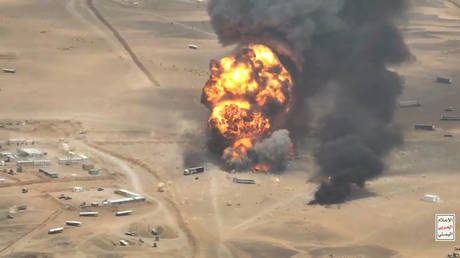
The third variable centers on reciprocal long-range disruption. To counter this strategic imbalance, Ukrainian doctrine relies on asymmetric deep-strike capabilities targeting fuel depots, refineries, and logistical hubs deep inside Russian territory. This dual-track approach—requesting defensive hardware from allies while executing autonomous retaliatory strikes—aims to force Moscow to reallocate air defense assets inward, protecting its own domestic infrastructure at the expense of frontline dominance.
The Bilateral Calculus of Middle Power Support
Evaluating Canada's utility as a strategic partner requires looking beyond diplomatic rhetoric to examine specific resource vectors. Middle powers operate under different fiscal and military constraints than superpower actors, meaning their contributions are usually concentrated in specialized niches rather than massive armor provisions.
Logistical training, specialized winter equipment, financial underwriting, and targeted contributions to air defense funding pools form the backbone of Ottawa's utility to Kyiv. While Canada lacks the massive domestic defense-industrial complex of the United States, its political alignment provides vital multilateral legitimacy and steady, institutionalized funding streams that bypass legislative gridlock seen elsewhere.
When heads of state coordinate in western hubs like Calgary, the discussions focus on predictable, multi-year funding commitments rather than ad-hoc deliveries. This predictability is essential for military planners who must forecast ammunition burn rates months in advance. The structural challenge of this relationship lies in industrial scaling; Western defense manufacturing capacity was optimized for peacetime efficiency rather than high-intensity, multi-year state-on-state conflict, creating severe supply bottlenecks.
Strategic Trajectory
The duration of this conflict is dictated entirely by the elasticity of industrial supply chains and the endurance of civilian infrastructure. As long as the asymmetry between low-cost offensive drone deployment and high-cost defensive interception persists, diplomatic missions aimed at securing foreign military assistance will remain the primary determinant of operational stability.
To break this cycle of attrition, military integration must move beyond emergency replenishment toward joint technological adaptation. The immediate strategic priority involves decentralizing grid protection and scaling localized electronic warfare countermeasures to neutralize low-cost drones without expending scarce, high-tier missile interceptors.