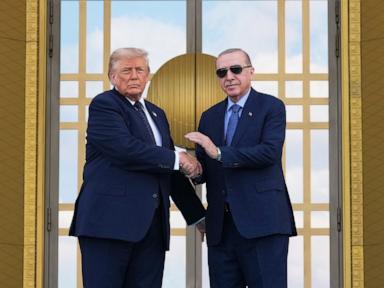
The unilateral announcement by the United States executive branch to rescind Countering America’s Adversaries Through Sanctions Act (CAATSA) restrictions on Turkey shifts the strategic equilibrium of the NATO alliance. By signaling an intention to reintegrate Ankara into the F-35 Lightning II Joint Strike Fighter ecosystem, the administration is attempting to exchange tangible military-technological assets for transactional geopolitical alignment. However, this policy shift collides with a rigid statutory architecture established by the U.S. Congress and creates systemic vulnerabilities in fifth-generation air superiority frameworks.
To understand the friction generated by this decision, the issue must be evaluated through three distinct dimensions: statutory legal barriers, technical-intelligence vulnerabilities, and the broader regional balance of power.
The Statutory Bottleneck: CAATSA vs. Executive Fiat
The primary obstacle to restoring Turkey’s access to the F-35 program is not executive intent, but codified federal law. The 2017 CAATSA legislation, reinforced by subsequent National Defense Authorization Acts (NDAA), explicitly prohibits the transfer of fifth-generation stealth technology to any state utilizing active Russian strategic defense systems.
The statutory mechanics operate as a strict binary condition:
- The Possession Rule: Federal statute restricts the transfer of the F-35 platform to Turkey unless the executive branch certifies to Congress that Ankara no longer possesses, operates, or maintains the Russian-made S-400 Triumf air defense missile system.
- The End-User Compromise: Because Russia’s defense export architecture includes strict end-user certificates, Turkey cannot easily sell, lease, or transfer the S-400 to a third party without violating its procurement contracts with Moscow.
The executive announcement that Treasury and State Department officials are drafting sanctions-lifting mechanisms does not bypass these legislative prerequisites. Congress retains institutional levers, including the Foreign Military Sales (FMS) review process, which allows a simple majority in both chambers to block defense transfers via a Joint Resolution of Disapproval. Bi-partisan resistance, formalized by a ten-member congressional coalition spanning both major parties, demonstrates that legislative compliance remains highly improbable unless the underlying S-400 deployment status changes.
The Technical-Intelligence Vulnerability Framework
The operational exclusion of Turkey from the F-35 program in 2020 was driven by a technical risk mitigation framework rather than purely diplomatic retaliation. Integrating an advanced stealth platform into an airspace monitored by a Russian-built active radar array introduces significant intelligence risks.
[F-35 Low-Observable Profile] ----(Radar Emissions)----> [S-400 Acquisition Radar]
                                                                  |
                                                       (Data Link Transmission)
                                                                  v
                                                    [Russian Defense Networks]
The core vulnerability centers on data telemetry. The S-400 system employs powerful acquisition and engagement radars designed specifically to track low-observable (stealth) targets. If an F-35 operates continuously within the illumination envelope of an active S-400 radar network, the system can cross-reference the aircraft's physical flight telemetry with its radar cross-section (RCS) returns.
Over time, this data accumulation allows the tracking algorithms to isolate and identify the specific frequencies and angles at which the F-35's stealth profile degrades. Because the S-400 utilizes automated satellite and terrestrial data-uplinks to transmit telemetry back to manufacturer networks in Russia, the proprietary low-observable signatures of the U.S. air superiority fleet would be systematically compromised.
This creates a zero-sum technical constraint. The U.S. Air Force cannot permit the co-location of fifth-generation stealth assets and modern Russian sensory apparatus within the same domestic defense network without invalidating the platform's global combat survivability.
The Regional Transactional Trade-Off
The executive branch justifies this policy shift by citing Turkey's strategic positioning relative to theater operations in the Middle East, particularly regarding containment actions against Iran and the securing of vital maritime choke points like the Strait of Hormuz. In this strategic calculus, the administration treats the F-35 as a high-value bargaining chip designed to secure Turkish operational cooperation.
Yet, this transaction incurs severe externalized costs across other critical alliances:
- The Eastern Mediterranean Equilibrium: Restoring Turkey's fifth-generation capabilities destabilizes the regional balance of power with Greece and Cyprus. The U.S. had previously approved F-35 sales to Athens to counterbalance Ankara's conventional military weight; reversing the Turkish ban undercuts this qualitative military edge.
- The Middle Eastern Security Dilemma: The policy faces immediate friction from Israel. Tel Aviv views Turkey’s current ideological alignment and its public hostility toward Israeli regional policy as a direct threat. Introducing stealth capabilities to the Turkish Air Force dilutes Israel’s regional air superiority, which relies heavily on its own F-35 Adir fleet.
Furthermore, the Turkish defense establishment is actively developing its own domestic fifth-generation fighter program, the KAAN. Ankara's interest in restoring U.S. relations extends beyond purchasing complete F-35 airframes; it aims to secure American turbofan jet engine technology to power its domestic manufacturing pipeline. Consequently, the U.S. is not merely negotiating a one-off equipment sale, but potentially subsidizing a long-term competitor in global defense markets.
Immediate Strategic Execution
The path forward requires the U.S. foreign policy apparatus to transition from verbal executive commitments to precise structural metrics. To manage the statutory and technical risks inherent in this pivot, negotiators must enforce a strict sequencing model.
The U.S. should refuse any immediate transfer of completed F-35 airframes or propulsion blueprints. Instead, the administration must establish a verifiable "Cold Storage" protocol for the S-400 units as an intermediate benchmark. This protocol requires the physical relocation of the Russian missile batteries to an isolated, unpowered facility under continuous, joint U.S.-Turkish biometric monitoring.
Only after establishing this verifiable technical firewall should the State Department initiate the formal waiver process under CAATSA. If Ankara rejects joint verification of the S-400's deactivation, the U.S. must halt the sanctions-lifting process immediately, preserving its technology safeguards while placing the burden of diplomatic failure entirely on Turkish non-compliance.