Stop Treating Realpolitik Like a Scandal
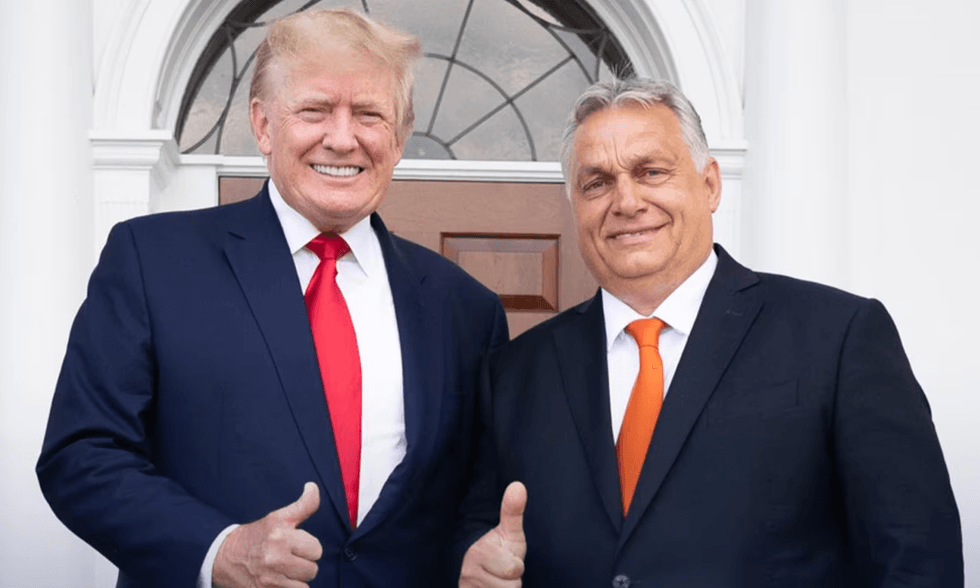
The mainstream press is clutching its collective pearls again. The "shocking" revelation that Viktor Orbán—often labeled as Donald Trump’s favorite European leader—offered a bridge to Iran hasn't just ruffled feathers; it has exposed the massive, gaping hole in how Western analysts understand power. They see a betrayal of Western values. I see a masterclass in survival for a mid-sized power in a multi-polar world.
Most journalists are stuck in a Cold War mindset. They want clear lines. Good vs. Evil. NATO vs. The Axis. But the world doesn't work in binary code anymore. While the EU issues sternly worded press releases that Iran ignores, Orbán is doing what every "serious" global player used to do before we got addicted to virtue signaling: he’s keeping a door open.
If you think this is about "helping" a rogue regime, you’re asking the wrong question. The real question is: Why is Hungary the only state in the EU honest enough to admit that total isolation is a failed strategy?
The Fallacy of the Iron Curtain 2.0
The "lazy consensus" dictates that any interaction with Tehran is a blow to Western security. This is high-school-level logic. In the real world of intelligence and energy markets, silence is a liability.
Look at the data. Decades of "maximum pressure" have not stopped Iran's centrifuge spinning. It has, however, driven them directly into the arms of Beijing and Moscow. By offering a diplomatic conduit, Orbán isn't "joining the enemy." He is creating a pressure valve. He is ensuring that when—not if—the West needs a backchannel that isn't filtered through the Kremlin, Budapest has the phone number.
I’ve seen dozens of trade delegations fail because they mistook "alignment" for "compliance." In the 2010s, I watched European firms lose billions in market share because they followed the "consensus" while their competitors in the East quietly filled the vacuum. Orbán understands that being a "vassal state" to the US or the EU offers no protection when the energy prices spike or when the next migration wave hits.
The Trump-Orbán-Iran Triangle
The media tries to paint this as a contradiction. How can Trump, the man who shredded the JCPOA, love a guy who talks to Iran?
They miss the forest for the trees. Trump’s "America First" and Orbán’s "Hungary First" are built on the same foundation: transactionalism. Transactionalism is the most honest form of diplomacy. It assumes that interests are temporary and leverage is everything.
Trump doesn't want "loyalists" who do nothing; he wants "fixers" who have reach. A leader in the heart of Europe who can actually get a meeting in Tehran is infinitely more valuable to a future Trump administration than a dozen Western European leaders who can't find Iran on a map without a briefing from the State Department.
Dismantling the "Interference" Myth
People ask: "Is Orbán undermining the EU's common foreign policy?"
Of course he is. Because the EU's common foreign policy is an oxymoron. It doesn't exist. There is German energy policy, French military ambition, and a bunch of bureaucrats in Brussels trying to pretend they’re a superpower.
By engaging with Iran, Orbán is exercising strategic autonomy. That’s a buzzword the French love to use, but only the Hungarians are actually practicing it.
The Energy Reality Nobody Wants to Admit
Let's talk about the math. Hungary is landlocked. It doesn't have the luxury of "principled" energy poverty.
While the rest of the EU was patting itself on the back for "decoupling" from Russian gas—only to buy that same gas rebranded through India or Azerbaijan—Orbán was looking for diversification. Iran holds the world’s second-largest gas reserves.
- Fact: You cannot have European energy security while ignoring the Persian Gulf.
- Fact: Sanctions are a tool, not a solution.
- Fact: The "moral high ground" doesn't heat homes in Budapest during a January cold snap.
The Cost of the Counter-Intuitive Approach
Is there a downside? Absolutely.
The risk of being a "bridge" is that you get walked on from both sides. Orbán risks alienating the hardline hawks in Washington who haven't yet realized that the world has moved on from the 2003 "Axis of Evil" playbook. He also risks being used as a mouthpiece by Tehran.
But compare that to the alternative: Being a silent, obedient cog in a Brussels machine that is currently overseeing the de-industrialization of the continent. I’d take the risk of a controversial phone call over the certainty of economic irrelevance any day.
The Death of Hegemony
The outrage over Hungary’s Iranian outreach is actually a mourning period for the Unipolar Moment. The West is terrified of leaders who refuse to pick a side because it proves the "side" isn't as dominant as it used to be.
Orbán isn't the outlier; he’s the early adopter. Within ten years, you will see more European states "independently" reaching out to sanctioned regimes to secure their own interests. They’ll just do it more quietly, with less flair, and with a lot more hypocrisy.
Stop looking for "scandals" in the diplomatic logs. Start looking for the pragmatism underneath. If you want a world where everyone agrees with you, play a video game. If you want to survive the 21st century, start talking to the people you’re told to hate.
Orbán isn't breaking the rules. He’s just the first one to admit the old rules are dead.
Go ahead. Keep writing your op-eds about "betrayal." While you’re busy typing, the map is being redrawn by the people brave enough to hold the pen.