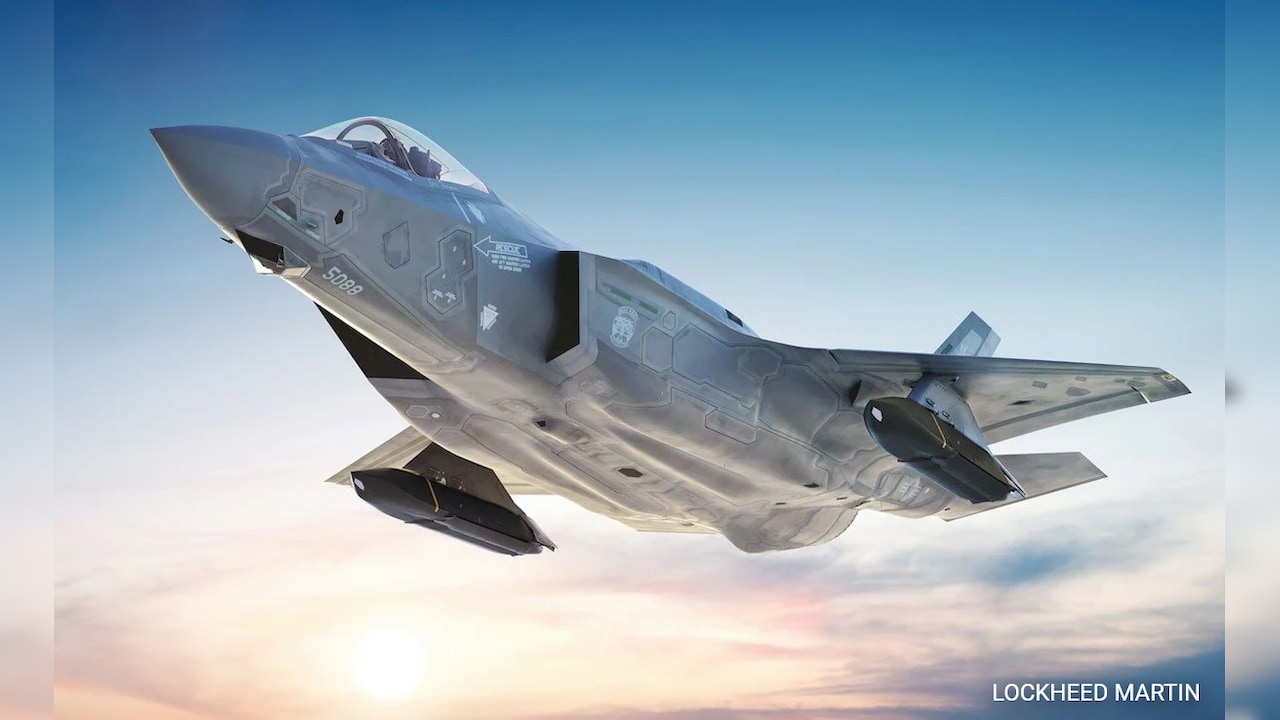
The announcement by the United States executive branch to lift Countering America's Adversaries Through Sanctions Act (CAATSA) sanctions against Turkey and potentially restore its access to the F-35 Lightning II program fundamentally alters the Indo-Pacific and Middle Eastern security architecture. While standard commentary characterizes this shift as a localized transactional pivot between Washington and Ankara, a structural analysis reveals far-reaching consequences for India’s defense calculus, its strategic autonomy doctrine, and its competitive posture against Pakistan.
This policy reversal breaks the precedent of sanction enforcement for purchases of Russian ground-based air defense systems. The strategic implications for India operate across three distinct operational layers: the normalization of defense technology arbitrage, the destabilization of the regional balance of power in South Asia via the Ankara-Islamabad axis, and the legal constraints of U.S. domestic statutes that govern technology transfers.
The Tri-Hub Defense Arbitrage Model
The first layer of impact is structural rather than regional. The sudden policy transition regarding Turkey's acquisition of the Russian S-400 Triumf missile system demonstrates a clear shift in how the United States enforces its secondary sanctions regime. By seeking to lift sanctions against a state that actively integrated Russian strategic hardware into a North Atlantic Treaty Organization (NATO) environment, the current U.S. administration introduces a high degree of volatility into international defense procurement.
For New Delhi, this changes the calculation of strategic autonomy. India secured a specific waiver from the U.S. Congress for its own $5.43 billion purchase of five S-400 regiments, a diplomatic effort built on the premise that India's geopolitical reality required separate accommodation. The sudden recalibration of Washington's enforcement posture toward Turkey reduces the unique value of that hard-won waiver. When enforcement mechanisms scale down based on immediate transactional needs, the predictability of long-term defense partnerships with the West decreases.
This policy shift creates an environment where middle powers can engage in defense technology arbitrage—simultaneously leveraging Western aerospace platforms and Russian anti-access/area-denial systems. However, the mechanism through which this occurs remains highly constrained by the physical laws of electronics and intelligence collection. The original rationale for removing Turkey from the F-35 program was an unacceptable risk of telemetry intersection: the S-400's radar arrays, if operated in proximity to fifth-generation stealth fighters, could capture radar cross-section profiles and transmit signature data back to Moscow. By attempting to reverse this exclusion, Washington signals a willingness to tolerate higher technical risks to secure immediate geopolitical alignment along the Bosphorus Strait, creating a precedent that complicates India’s ongoing multi-alignment strategy.
The Turkey-Pakistan Military Axis and the South Asian Balance
The second operational layer concerns the rapid acceleration of military-technical cooperation between Turkey and Pakistan, which directly impacts India’s western front. Over the past decade, Ankara and Islamabad have developed a deep defense co-development framework, moving beyond standard hardware acquisitions to joint engineering and co-production initiatives.
[U.S. Advanced Aerospace Technology]
       │ (Potential F-35 / GE F110 Engines)
       ▼
[Turkey: TAI KAAN & Manufacturing Hub] ◄───► [Pakistan: Joint Avionics & Production]
       │
       ▼
[Asymmetric Modernization Challenge for India's Western Front]
This interaction operates across three main avenues:
- Maritime Combat Systems: The MILGEM project, which delivered Babur-class corvettes to the Pakistan Navy, forms the core of Islamabad’s surface combatant modernization.
- Unmanned Aerial Systems: Joint venture frameworks facilitate the assembly and modification of Turkish tactical and strategic drones within Pakistan, directly impacting operational realities along the Line of Control.
- Fifth-Generation Aerospace Development: Pakistan has formally integrated its engineering and testing resources into Turkish Aerospace Industries’ (TAI) KAAN fighter program.
The proposed U.S. provision of General Electric F110 jet engines to power the TAI KAAN, alongside the potential reinstatement of F-35 deliveries, creates a clear technology transfer pathway. Even if direct transfer of F-35 components to Pakistan is prevented by strict end-user monitoring, the structural benefit to Islamabad is significant.
As Turkey receives advanced U.S. aerospace technology, its domestic manufacturing capacity expands. This engineering knowledge and production capability naturally transfers to joint programs like the KAAN. This dynamic accelerates Pakistan’s access to low-observable features, advanced sensor fusion, and modern avionics architecture, challenging the Indian Air Force’s quantitative and qualitative edge in the region.
The Statutory Bottlenecks of U.S. Export Control Law
The execution of this policy shift faces significant hurdles within the U.S. legal and legislative framework. A clear tension exists between the executive branch's desire for a rapid policy change and the statutory requirements established by Congress.
Under the National Defense Authorization Act (NDAA), the executive branch cannot unilaterally transfer the F-35 to a state that has acquired the S-400 system unless it certifies that the state "no longer possesses" the Russian hardware. This legal requirement cannot be bypassed through creative storage arrangements, such as placing the missile batteries in crates or moving them to joint facilities like Incirlik Air Base. As long as the assets remain under the legal ownership and territory of the purchasing state, they fail the statutory test of non-possession.
This constraint has driven current diplomatic explorations regarding a secondary transfer of Turkey’s S-400 assets to neutral third parties, with Qatar or the United Arab Emirates frequently cited as potential destinations. Moscow's direct engagement in these discussions highlights the complexity of the problem. Because the original sales agreements contain strict end-user certificates requiring Russian consent for any third-party transfer, a multi-party diplomatic solution is required.
This creates a paradox for India. While some regional observers have suggested India could act as a destination for these displaced S-400 systems given its existing infrastructure for the platform, doing so would introduce new challenges. It would exhaust New Delhi’s political capital in Washington and complicate its ongoing efforts to diversify its defense imports away from Russian platforms.
Strategic Realignment and the India-Israel Defense Vector
A secondary effect of the U.S. policy shift is the strategic friction it generates with Israel, a vital defense and technology partner for India. Jerusalem has consistently opposed the introduction of fifth-generation stealth platforms into the air forces of regional competitors, viewing any expansion of the F-35 user base in the Middle East as a direct threat to its legally mandated Qualitative Military Edge (QME).
The alignment of Israeli and Indian security concerns becomes increasingly relevant in this context. India relies heavily on Israeli defense co-development, particularly in radar systems, precision-guided munitions, and unmanned aerial vehicle technologies. As Turkey's regional posture shifts and its defense ties with Pakistan deepen, the strategic overlap between Jerusalem and New Delhi grows stronger.
Both states face a security environment altered by the proliferation of advanced aerospace technology through transactional diplomacy. This shared challenge will likely drive deeper intelligence sharing and co-development of counter-stealth and advanced electronic warfare systems between India and Israel to balance the evolving capabilities of the Ankara-Islamabad axis.
Resource Allocation and Defense Industrial Base Strategy
To counter the long-term effects of this technology transfer, India must shift its defense industrial base strategy away from reactive procurement toward structural self-reliance. Relying on ad-hoc diplomatic waivers for foreign platforms creates long-term vulnerabilities when global alliances shift.
The primary requirement is an immediate acceleration of the Advanced Medium Combat Aircraft (AMCA) program. India’s domestic fifth-generation fighter initiative must be insulated from bureaucratic delays and allocated the capital necessary to meet its development timelines.
┌────────────────────────────────────────────────────────────────────────┐
│               INDIA'S RADAR & COUNTER-STEALTH DEVELOPMENT TRADEOFFS    │
├──────────────────────────────┬─────────────────────────────────────────┤
│ Operational Focus            │ Implementation Constraints              │
├──────────────────────────────┼─────────────────────────────────────────┤
│ Quantum Radar Development    │ High capital expenditure; long lead-    │
│                              │ time to deployment.                     │
├──────────────────────────────┼─────────────────────────────────────────┤
│ VHF/UHF Gallium Nitride      │ Requires broad sensor networks;         │
│ (GaN) Sensor Networks        │ complex data fusion demands.            │
├──────────────────────────────┼─────────────────────────────────────────┤
│ Asymmetric Electronic        │ High risk of counter-measure            │
│ Warfare Systems              │ obsolescence.                           │
└──────────────────────────────┴─────────────────────────────────────────┘
Concurrently, the Indian defense establishment must prioritize the deployment of counter-stealth tracking infrastructure along its western border. This requires investment in active electronically scanned array (AESA) radar systems operating in the VHF and UHF bands, which are optimized to detect the shaping features of low-observable aircraft, alongside advanced multi-static radar networks.
New Delhi must also establish clear guidelines for its engagement with U.S. defense suppliers. While co-production agreements for General Electric F414 engines for the LCA Tejas Mk2 are critical milestones, Indian negotiators must insist on robust technology transfer clauses that prevent the restriction of operational capabilities during future geopolitical shifts.
The lesson from Washington's policy shift with Turkey is clear: strategic partnerships are fluid, and structural defense independence remains the only reliable safeguard against shifting global alignments.


