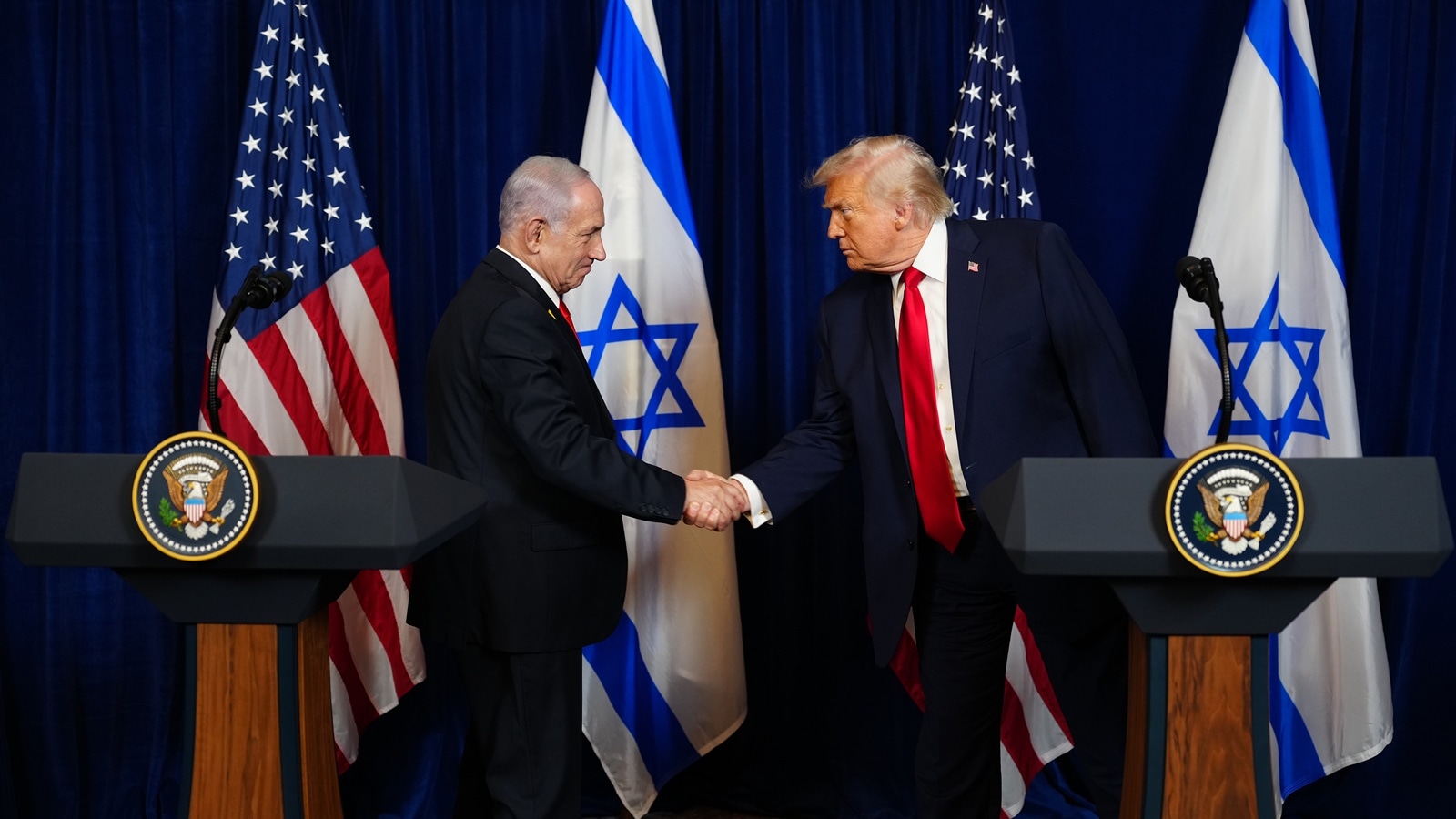
Benjamin Netanyahu’s operational agency regarding Iran is no longer determined by shared ideological alignment with the United States, but by a structural shift from a partnership of initiative to a relationship of reactive dependency. During the first Trump administration, the bilateral relationship functioned as a "dual-engine" strategy where Israel provided the tactical intelligence and regional pressure while the United States provided the overarching economic and diplomatic "Maximum Pressure" framework. In 2024 and beyond, this mechanism has inverted. Netanyahu now operates within a constrained decision-matrix where the United States dictates the ceiling of Israeli escalation, transforming the Prime Minister from a co-architect of Middle Eastern policy into a high-stakes passenger in a vehicle driven by American isolationism and transactionalism.
The Decoupling of Tactical Success and Strategic Autonomy
Israel’s recent military achievements—the systematic degradation of Hezbollah’s leadership and the neutralisation of Hamas’s organized battalions—mask a deeper erosion of strategic leverage. This paradox is defined by the Asymmetric Cost-Benefit Loop. While Israel incurs the physical and economic costs of kinetic warfare, the United States holds the veto power over the strategic outcome.
- The Munitions Bottleneck: Israel’s defense architecture, specifically its reliance on interceptors (Iron Dome, David’s Sling) and precision-guided munitions (PGMs), creates an industrial dependency on the U.S. Department of Defense. This is not merely a financial subsidy but a logistical tether. Without a continuous supply chain for Mk-80 series bombs and Arrow interceptors, Israel’s ability to sustain a high-intensity multi-front war collapses within weeks.
- The Intelligence Integration Trap: The sophistication of modern Israeli strikes often relies on regional "sensor-to-shooter" networks maintained by U.S. Central Command (CENTCOM). By integrating into the regional air defense architecture, Israel has traded unilateral freedom of movement for a superior, yet American-controlled, defensive shield.
- The Sovereign Debt Constraint: Israel’s war costs have exceeded 250 billion shekels ($66 billion). As credit agencies downgrade Israel’s rating, the necessity of the $14 billion U.S. aid package moves from "supplemental" to "existential."
The Trump 2.0 Doctrine: Transactionalism Over Ideology
The assumption that a second Trump term offers a blank check for Israeli regional re-ordering ignores the fundamental evolution of the "America First" platform. The current MAGA foreign policy is characterized by a Retrenchment Bias. Trump’s primary objective is the avoidance of regional wars that require sustained U.S. kinetic involvement or economic disruption.
Netanyahu’s previous leverage was built on his role as the primary solicitor of U.S. involvement in Iran. Today, Trump views Middle Eastern instability as a distraction from the Indo-Pacific theater and domestic economic protectionism. This creates a Strategic Mismatch:
- Netanyahu’s Requirement: A credible U.S. military threat to dismantle Iran’s nuclear infrastructure.
- Trump’s Requirement: A "deal" that allows for U.S. withdrawal from regional security obligations.
In this framework, Netanyahu is no longer a co-pilot because the destination has changed. Trump is looking for an exit; Netanyahu is looking for an escalation. When these vectors diverge, the junior partner in the alliance loses the ability to set the pace.
The Three Pillars of Iranian Counter-Pressure
To understand why the passenger dynamic is so pronounced, one must categorize the current Iranian containment strategy into three distinct pillars and observe who controls the valves of each.
Pillar I: Economic Attrition
The "Maximum Pressure" 2.0 strategy remains the preferred U.S. tool. However, the efficacy of sanctions is decaying due to the emergence of the "CRINK" (China, Russia, Iran, North Korea) economic bloc. Since the U.S. controls the global financial plumbing (SWIFT, USD clearing), Israel has zero independent agency in this pillar. If Trump decides to offer sanctions relief in exchange for a "grand bargain," Israel has no mechanism to prevent it.
Pillar II: Kinetic Deterrence
Israel excels at tactical kinetic actions (assassinations, cyber-sabotage). Yet, these actions are now subject to a "De-escalation Tax." Every time Israel strikes a high-value target, the U.S. requires Israel to absorb the Iranian counter-response without further escalation to avoid a global oil price spike. The passenger cannot steer the car if the driver’s foot is permanently on the brake to protect domestic gas prices.
Pillar III: Regional Integration (The Abraham Accords)
The normalization of relations with Arab states was designed to create a regional front against Iran. However, the Gulf states (Saudi Arabia, UAE) have pivoted toward a policy of "Hedging." They are normalizing with Iran while maintaining ties with Israel. This neutralization of the regional front leaves Israel isolated, forcing it back into the arms of U.S. protection.
The Mechanism of the "Red Line" Erosion
The historical "Red Line" regarding Iran’s nuclear program—90% enrichment—has become a fluid concept. The transition from the Obama-era JCPOA to the current vacuum has resulted in an Iranian breakout time measured in days rather than months.
Israel’s failure to act unilaterally during the 2021-2024 window, despite the rhetoric, reveals an unspoken truth: the Israeli Air Force (IAF) lacks the "Bunker Buster" (MOP - Massive Ordnance Penetrator) capability required to destroy deeply buried sites like Fordow without U.S. assistance.
| Capability | Israeli Status | U.S. Status | Strategic Implication |
|---|---|---|---|
| Deep Fortification Penetration | Insufficient (GBU-28 limits) | Sufficient (GBU-57 MOP) | Israel cannot finish the job alone. |
| Aerial Refueling Capacity | Limited (Aging Boeing 707s) | Massive (KC-46 fleet) | Long-range sorties require U.S. nodes. |
| Regional Signal Intelligence | High | Absolute | Israel needs the U.S. "Eye in the Sky." |
This technical reality enforces the passenger status. Netanyahu can suggest a target, but he cannot reach it without the U.S. providing the ladder.
The Cost Function of Domestic Survival
Netanyahu’s political survival is inextricably linked to the perception of his "special relationship" with Republican leadership. However, this creates a Diminishing Return on Influence. By becoming a partisan figure in U.S. politics, Netanyahu has traded the broad-based institutional support of the Pentagon and State Department for the personal whims of a single individual.
The risk for Israel is a "Transactional Betrayal." If Trump determines that the cost of supporting an Israeli strike on Iran outweighs the benefit of a trade deal with a pro-Iran neighbor or a domestic approval boost, he will pivot. Netanyahu, having exhausted his credit with the Democratic establishment and the European Union, will find himself in a strategic vacuum with no backup pilot.
The Bottleneck of Post-Conflict Governance
The most significant indicator of Netanyahu’s loss of control is the "Day After" problem. The United States, whether under Biden or Trump, demands a clear exit strategy for Gaza and Lebanon that involves regional Arab forces or a reformed Palestinian entity. Netanyahu’s refusal to provide this plan is not a sign of strength, but a sign of paralysis.
By failing to define a political endgame, Israel becomes a permanent security ward of the United States. A passenger who refuses to get out of the car eventually becomes a liability to the driver. The U.S. response to this liability is to seize more control over the vehicle’s direction to ensure it doesn't crash into a broader regional quagmire.
The Strategic Recommendation
The Israeli security establishment must pivot from a policy of "Total Victory" (an undefined and unquantifiable metric) to "Managed Deterrence." This requires a cold-blooded assessment of the following variables:
- Internalize the Cap: Accept that the U.S. will not permit a total regional war.
- Diversify Industrial Base: Accelerate the development of indigenous long-range strike and interception capabilities to reduce the "Munitions Bottleneck."
- Decouple from Personalities: Rebuild institutional ties with U.S. career military and intelligence sectors that persist beyond 4-year election cycles.
Netanyahu’s current trajectory assumes that a change in the White House will restore his status as the regional lead. This is a fundamental misreading of American fatigue. The U.S. is no longer looking for a co-pilot to help navigate the Middle Eastern storm; it is looking for a way to land the plane and leave the airport. If Israel continues to demand a flight toward Tehran, it will find that the pilot has parachuted out, leaving the passenger in a cockpit they do not fully control. The only viable path forward is to secure the regional alliances necessary to maintain a balance of power that does not require an American engine to stay airborne.