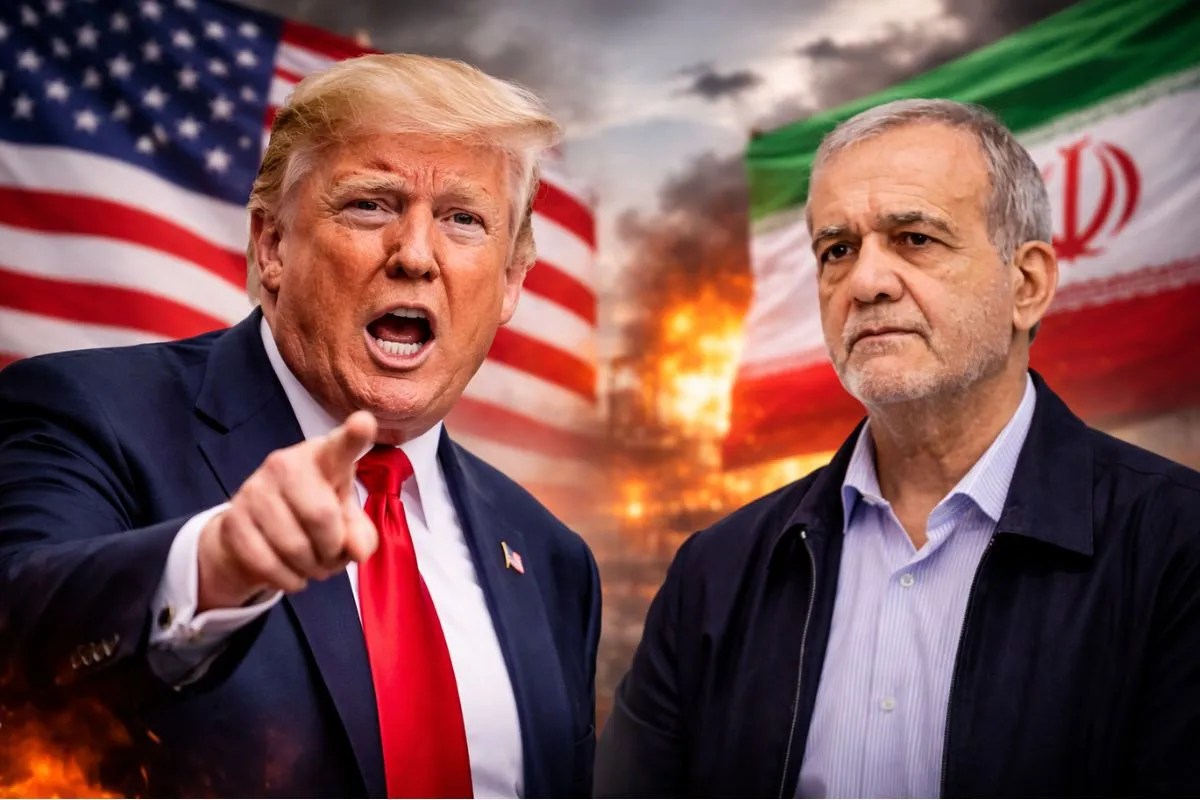
The stability of the South Asian security architecture hinges on a binary choice currently being forced upon Islamabad by Tehran: the prioritization of regional integration over traditional Western security pacts. As Iran and Pakistan enter high-stakes diplomatic negotiations, the central friction point is no longer just border security or trade volumes. Instead, it is a structural demand for Pakistan to clarify its alignment in the face of escalating Middle Eastern kinetic activity. Tehran’s "open condition" regarding the "America First" or "Israel First" orientation of its neighbors is a calculated attempt to dismantle the Western-led "Containment of Iran" strategy by leveraging Pakistan’s economic vulnerabilities and energy deficits.
The Tri-Node Pressure Framework
To understand the current negotiations, one must analyze the three distinct nodes of pressure Iran is applying to the Pakistani state. These nodes are not independent; they function as a feedback loop where a failure in one accelerates the crisis in the others.
- The Energy-Sovereignty Bottleneck: The Iran-Pakistan (IP) gas pipeline represents the primary physical lever. Iran has completed its portion of the infrastructure, while Pakistan remains paralyzed by the threat of U.S. sanctions (CAATSA). Tehran’s demand is a move to force Islamabad into a legal and economic commitment that necessitates a formal waiver or a direct defiance of U.S. treasury dictates.
- The Proxy-Border Paradox: Iran maintains a "threshold" security posture along the Sistan-Baluchestan border. By framing the presence of militant groups (such as Jaish al-Adl) as a byproduct of "external intelligence meddling," Tehran links border tranquility directly to Islamabad’s distance from Washington and Tel Aviv.
- The CPEC Integration Variable: Iran is positioning itself as a vital extension of the China-Pakistan Economic Corridor. By offering to connect Gwadar with Chabahar, Iran creates a value proposition that aligns with Beijing’s regional interests, effectively forcing Pakistan to choose between a transcontinental land-based economy and a maritime-based security dependence on the United States.
The Cost Function of Non-Compliance
Pakistan’s decision-making process is governed by a punishing cost function. If Islamabad maintains its current trajectory of "strategic ambiguity," it faces a series of escalating penalties that the state’s current fiscal health cannot absorb.
The first penalty is the Arbitration Risk. Iran has issued notices that could lead to an $18 billion penalty for Pakistan’s failure to complete its side of the gas pipeline. In a state where foreign exchange reserves are perpetually under stress, an $18 billion liability is not just a financial burden; it is an existential threat to the sovereign credit rating.
The second penalty is Security Dilution. A hostile or even "cold" border with Iran requires the Pakistan Army to reallocate divisions from the Line of Control (LoC) or the western border with Afghanistan. This three-front stretch degrades operational readiness and increases the "cost per kilometer" of border management beyond sustainable levels.
The US-Israel Alignment Metric
Tehran’s rhetoric regarding "Israel First" policies in the region serves as a litmus test for "Strategic Autonomy." For Iran, the metric of a neighbor's hostility is proportional to that neighbor's cooperation with the U.S. Central Command (CENTCOM).
Pakistan’s reliance on U.S.-made hardware (F-16s) and IMF tranches (heavily influenced by U.S. voting power) creates a ceiling for how far Islamabad can lean toward Tehran. Iran knows this. The "condition" set before the Islamabad talks is a tactical maneuver to gauge how much political capital the Pakistani leadership is willing to spend to avoid a total breakdown in regional relations.
The Mechanism of the "Open Condition"
When Iran asks whether a state is "America First" or "Israel First," it is applying a Zero-Sum Security Logic.
- The Definition of "America First" in this context: A state that allows its territory or intelligence assets to be used for the monitoring or containment of Iranian influence in exchange for financial bailouts.
- The Definition of "Israel First" in this context: A state that participates in or facilitates the "Abraham Accords" logic—expanding economic and security ties with Israel—which Tehran views as an encircling maneuver.
By framing the dialogue in these terms, Iran bypasses the diplomatic niceties of trade and goes directly to the core of the Pakistani military-intelligence establishment's survival strategy.
Structural Bottlenecks in the Deal
The prospect of a "Deal" is hindered by three structural bottlenecks that logic suggests cannot be cleared in a single round of talks.
- The IMF Constraint: Pakistan’s current Extended Fund Facility (EFF) depends on the goodwill of the G7. A hard pivot toward Iran, involving a multi-billion dollar energy deal that bypasses U.S. sanctions, would trigger a review of Pakistan’s compliance with international financial norms.
- The Kinetic Spillover: The January 2024 exchange of missile strikes between Iran and Pakistan proved that both nations are willing to breach sovereign airspace to address perceived threats. This created a "Trust Deficit Floor" that limits the ceiling of any new security pact.
- The Saudi-UAE Factor: Pakistan’s most reliable sources of bilateral deposits and oil-on-credit are the Gulf monarchies. While Saudi-Iran relations have normalized via Chinese mediation, a deep strategic alliance between Pakistan and Iran that includes military cooperation would still be viewed with suspicion in Riyadh, potentially jeopardizing Pakistan's "Brotherly State" financial support.
The Strategic Play: Calculated Decoupling
The most probable outcome is not a "Deal" or "War" in the conventional sense, but a shift toward Segmented Cooperation. This involves isolating specific areas of mutual interest while acknowledging that the broader geopolitical alignment remains irreconcilable.
Pakistan will likely offer a "Counter-Terrorism Joint Working Group" as a concession to Tehran’s security concerns. This allows Islamabad to address the "Border Paradox" without violating U.S. sanctions. In return, Iran may offer a "Force Majeure" extension on the pipeline, delaying the $18 billion penalty in exchange for Pakistan’s commitment to remain neutral in any potential U.S.-Iran or Israel-Iran kinetic escalation.
The reality of the Islamabad talks is a management of friction rather than a resolution of conflict. For Pakistan, the objective is to prevent the Iranian border from becoming a permanent second front. For Iran, the objective is to secure a "Neutrality Guarantee" that prevents its eastern neighbor from being used as a staging ground for Western intervention.
The strategic play for the Pakistani establishment is to utilize the "Iranian Threat" as a bargaining chip with Washington to secure more lenient terms on military aid and debt restructuring, while simultaneously using "U.S. Pressure" as an excuse to Tehran for not fulfilling the energy deal. This "Dual-Leverage" strategy is high-risk; it assumes that both Washington and Tehran will continue to value Pakistan's stability over their own desire for a definitive alignment. If either power decides that a "Neutral" Pakistan is more dangerous than a "Hostile" one, the current diplomatic balancing act will collapse into a forced choice.
Islamabad must now pivot from "Strategic Ambiguity" to "Functional Neutrality." This requires a formalization of border trade through barter systems to bypass the dollar-based financial architecture—a move that satisfies Tehran’s economic requirement while providing Pakistan with a degree of plausible deniability regarding sanctions. Failure to establish this middle ground will result in a "War by Attrition" on the border, where low-level proxy activity replaces formal diplomacy, effectively turning the Iran-Pakistan frontier into a permanent zone of instability.