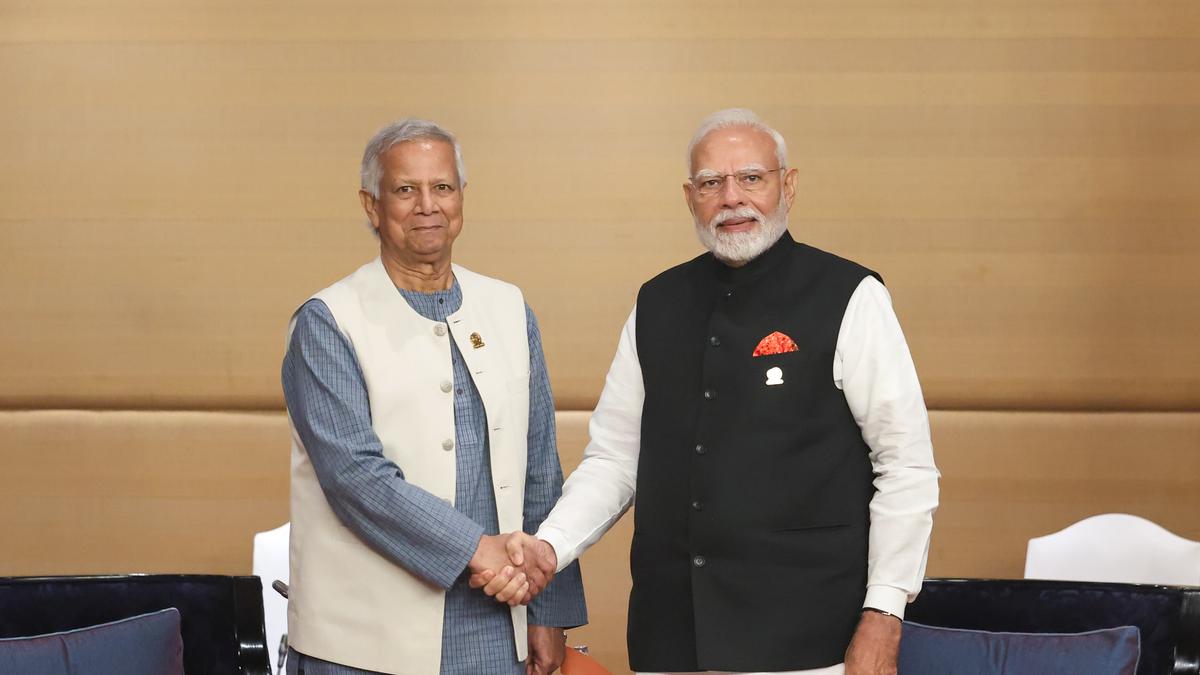
Every time a prime minister sits down across a table from a foreign counterpart, the commentariat expects a high school hallway drama. They want chest-thumping, finger-pointing, and dramatic public reckonings over domestic corporate headlines. When leaders refuse to take the bait, the pundits cry foul, claiming a missed opportunity for accountability.
This is amateur hour analysis masking as serious journalism.
International diplomacy does not operate on the whims of cable news cycles or Twitter outrage. When Narendra Modi meets global leaders and domestic controversies like the Adani inquiries fail to dominate the closed-door agenda, it is not an evasion. It is a masterclass in jurisdictional reality. Sovereign states do not outsource their internal legal investigations to foreign soil, nor do foreign leaders trade bilateral trade pacts and security frameworks to satisfy local political opposition.
The Fiction of Intergovernmental Policing
The lazy consensus in modern political commentary assumes that every global summit is an international tribunal. If a billionaire faces short-seller reports or parliamentary inquiries back home, commentators demand that visiting dignitaries demand answers.
Think about how actual sovereign power functions for a second. Imagine a scenario where a foreign head of state marches into a bilateral summit and begins interrogating a host leader about an ongoing corporate dispute involving private conglomerates. It would break every unwritten rule of statecraft. It would invite reciprocal meddling, turning high-level strategic alignment into a chaotic free-for-all of mutual heckling.
Pragmatic leaders understand a fundamental truth that journalists consistently ignore. Domestic regulatory battles belong in domestic courts, regulatory bodies, and legislative committees. They do not belong in bilateral trade negotiations involving billions in defense, energy, and technology infrastructure. When leaders meet, the currency of exchange is national security, supply chain resilience, and geopolitical stability. Treating a summit like a press conference for local grievances is a fast track to diplomatic irrelevance.
Why Media Outlets Crave the Spectacle
The obsession with forcing foreign leaders to comment on domestic corporate scandals stems from an addiction to theater over substance. Newsrooms survive on conflict. A nuanced discussion regarding semiconductor manufacturing corridors, maritime security in the Indo-Pacific, or critical mineral supply chains does not generate viral clips. A fabricated confrontation about a corporate mogul does.
We have seen this playbook repeatedly. Pundits manufacture a standard of moral posturing where a leader's credibility is measured entirely by their willingness to pick fights in front of cameras. If they focus on economic integration and strategic defense instead, they get labeled as evasive.
This standard is entirely backwards. Effective governance requires ruthless prioritization. A prime minister managing a nation of 1.4 billion people during a massive structural economic shift does not have the luxury of playing to the gallery. Every minute spent entertaining localized opposition theater during a high-stakes diplomatic visit is a minute stolen from securing critical geopolitical advantages.
The Cost of Playing the Pundits' Game
If leaders actually caved to this media pressure and turned bilateral summits into public interrogation rooms, the fallout would be immediate and severe.
First, diplomatic trust evaporates. No nation will share sensitive intelligence or enter long-term strategic pacts with a partner who uses closed-door meetings as a cheap stunt to score domestic political points.
Second, economic signaling gets distorted. Markets do not need foreign dignitaries offering casual commentary on domestic corporate governance. They need predictable regulatory enforcement, independent judicial review, and clear legal frameworks. Shifting the arena of debate from institutional courts to international photo-ops weakens the very domestic institutions that pundits claim to protect.
The Real Agenda
Behind the noise of manufactured outrage, real business gets done. Infrastructure deals are inked. Defense interoperability gets locked in. Energy security agreements are signed that insulate economies from global shocks.
The next time a headline screams about a leader dodging a controversial name at an international summit, recognize it for what it is. It is noise generated by people who mistake performance for policy. Real power is quiet, focused, and entirely uninterested in satisfying the daily appetite of the outrage machine.