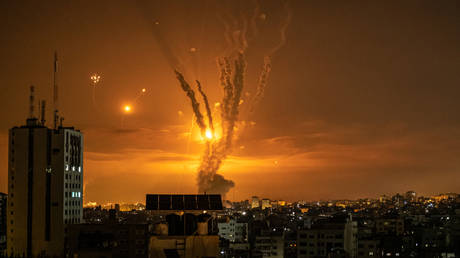
The modern defense industry operates on a paradox of short-term quarterly earnings and long-term historical echoes. While political rhetoric focuses on the immediate ethics of current conflicts, the industrial machinery fueling them often stretches back to the darkest chapters of the twentieth century. Rheinmetall, Germany’s largest defense contractor, currently stands as the primary engine for this continuity. The company is not merely fulfilling orders for the Israeli Defense Forces; it is executing a strategic pivot that mirrors its historical role as the backbone of German military might, regardless of the era or the ideology in power.
This isn't about a sudden shift in corporate morality. It is about the cold reality of the "Zeitenwende"—the historic turning point in German security policy. As Berlin sheds its post-war pacifism, Rheinmetall has transformed from a domestic supplier into a global powerhouse, securing record-breaking backlogs and expanding its footprint in the Middle East. To understand why a company once central to the Nazi war machine is now a critical partner for Israel, one must look past the headlines and into the structural mechanics of European arms exports and the shifting geopolitical alliances of the 2020s.
The Logistics of Continuity
Rheinmetall's current involvement in Israel is focused heavily on tank ammunition and armored vehicle components. The most critical export involves 120mm smoothbore tank shells, the primary ammunition for Israel's Merkava main battle tanks. These are not secondary supplies. They are the kinetic heart of modern ground warfare.
The relationship functions through a complex web of licensing and joint ventures. While much of the public scrutiny focuses on direct shipments from German ports, the reality of the defense industry is more decentralized. Rheinmetall operates through subsidiaries like RWM Italia and maintains significant stakes in international ventures that bypass some of the more stringent German export controls. This creates a buffer between the political optics in Berlin and the physical delivery of munitions in the Mediterranean.
Historians note that Rheinmetall’s ability to survive the collapse of the Third Reich was not an accident of fate. It was a result of industrial indispensability. After 1945, the company was briefly dismantled, but as the Cold War froze the borders of Europe, the West realized it needed German engineering to counter the Soviet threat. The "new" Rheinmetall was built on the remains of the old, utilizing the same factory footprints and engineering lineages that once produced the 88mm Flak guns of the 1940s.
The Irony of the Industrial Complex
There is a profound historical irony in the sight of German-made shells being loaded into Israeli tanks. During the 1930s and 40s, Rheinmetall-Borsig was a pillar of the Nazi "War Economy," utilizing thousands of forced laborers from concentration camps to produce the weaponry that devastated Europe and fueled the Holocaust. Today, the company is a primary supplier to the state established as a refuge for the survivors of that very era.
Critics argue that this relationship is a form of "moral laundering," where the German state uses arms sales to Israel as a way to prove it has moved past its history. Proponents, however, view it as the ultimate expression of Germany’s "Staatsräson"—the idea that Israel’s security is a fundamental reason for the existence of the modern German state. In this framework, providing the tools of defense is not a contradiction of history, but a necessary, if uncomfortable, fulfillment of it.
The business logic is simpler. Israel provides a high-intensity testing ground for modern weaponry. When a Rheinmetall shell is fired in Gaza or on the northern border with Lebanon, the data gathered is fed back into the engineering loop in Düsseldorf. This "combat-proven" label is the most valuable currency in the global arms trade, making German hardware more attractive to NATO allies looking to rearm against a resurgent Russia.
Engineering the New European Arsenal
The surge in demand isn't limited to the Middle East. The war in Ukraine has effectively emptied European warehouses, leaving a vacuum that only a few companies have the scale to fill. Rheinmetall is currently building new factories at a pace unseen since the mid-century. A new "Lüneburger Heide" plant is designed to produce 200,000 rounds of artillery ammunition annually, a staggering increase that signals a permanent shift toward a high-output war economy.
This expansion is fueled by a massive influx of capital. The German government’s €100 billion special fund for the Bundeswehr has acted as a catalyst, but the real growth is in the export market. By positioning itself as the "integrator" of European defense—acquiring smaller firms in Spain, Hungary, and South Africa—Rheinmetall is ensuring that regardless of where a conflict breaks out, its components will likely be involved.
The Subsidy and the Shell
The financial architecture of these deals often remains hidden from the public eye. Arms exports are frequently backed by government credit guarantees, meaning the German taxpayer often shoulders the financial risk if a foreign buyer defaults. In the case of Israel, the sales are a mix of direct commercial contracts and security assistance packages.
- 120mm Tank Ammunition: High-precision rounds for the Merkava IV.
- KF41 Lynx: Next-generation infantry fighting vehicles being pitched for regional partners.
- Active Protection Systems: Technology designed to intercept incoming anti-tank missiles.
These aren't just products; they are levers of foreign policy. When Berlin approves an export license for Rheinmetall, it isn't just a business transaction. It is a formal endorsement of the recipient's military strategy.
The Human Cost of Hardware
While the boardrooms in Düsseldorf discuss "margin expansion" and "backlog execution," the physical reality of these weapons remains unchanged. A 120mm shell is a tool of total destruction. The investigative reality reveals that while Rheinmetall has issued apologies for its use of forced labor during the Nazi era and has paid into compensation funds, its current corporate structure is designed to maximize profit from active war zones.
The company’s transparency reports are masterpieces of bureaucratic obfuscation. They mention "compliance with international law" and "ethical guidelines," yet the very nature of their product is to terminate human life. This is the inherent tension of the defense industry: a company can be "ethical" in its corporate governance while producing the most lethal technology on earth.
The reliance on German engineering in the Middle East also creates a strategic dependency. If Germany were to ever halt the supply of spare parts or ammunition, the operational capacity of the Israeli armored corps would face a significant challenge. This gives Berlin a quiet, potent seat at the table in regional negotiations, a seat built on the foundation of industrial supply chains.
Bypassing the Red Tape
One of the most significant developments in Rheinmetall’s strategy is its move toward internationalization to circumvent domestic political pressure. By establishing production facilities in countries with more "flexible" export laws, the company can maintain its global market share even when the German public or Green Party politicians object to specific sales.
For example, the acquisition of the Spanish munitions maker Expal Systems allowed Rheinmetall to significantly boost its capacity outside the direct oversight of the German Federal Office for Economic Affairs and Export Control (BAFA). This "shell game" of production locations makes it increasingly difficult for activists or investigative journalists to track exactly where a weapon's journey begins and ends.
The technological sophistication of these weapons also introduces a new layer of control. Modern hardware is heavily reliant on software and proprietary electronics. This means that Rheinmetall doesn't just sell a tank or a shell; it sells a long-term service contract. The "ownership" of the weapon is effectively shared between the buyer and the manufacturer, ensuring a steady stream of revenue for decades.
The Shadow of the Past
Walking through Rheinmetall’s headquarters today, there are few visible reminders of the company’s role in the 1940s. The focus is entirely on the future: digitalization, artificial intelligence, and autonomous systems. Yet, the ghost of the past lingers in the very name of the company. "Rheinmetall" remains synonymous with German industrial precision, a reputation built during the height of the industrial revolution and perfected during the darkest hours of the twentieth century.
The current geopolitical climate has provided the company with a unique opportunity to complete its rehabilitation. By aligning itself with the defense of Ukraine and the security of Israel, Rheinmetall has moved from a controversial merchant of death to an "essential partner" for Western democracy. It is a rebranding effort worth billions.
However, the core mechanism remains the same. The company identifies a geopolitical fault line and provides the kinetic energy to maintain it. Whether it was the trenches of the Eastern Front or the urban corridors of the Middle East, the objective is the efficient delivery of force.
The Architecture of Influence
Rheinmetall’s influence extends far beyond the factory floor. It maintains one of the most sophisticated lobbying operations in Europe. By hiring former high-ranking military officers and government officials, the company ensures that its interests are represented at the highest levels of the Ministry of Defense. This "revolving door" creates a symbiotic relationship where the state’s military needs and the company’s profit motives become indistinguishable.
This influence is visible in the way procurement contracts are written. Requirements are often tailored to the specific capabilities of Rheinmetall’s hardware, effectively locking out international competitors. It is a masterclass in industrial protectionism disguised as national security.
The result is a corporate entity that is practically immune to political shifts. Whether the government is center-right or center-left, the necessity of a strong domestic defense industry ensures that Rheinmetall remains at the center of the German economy. The company has made itself too big, and too integrated into the global security architecture, to fail or be significantly curtailed.
The New War Economy
We are entering an era where the lines between civilian and military industry are blurring once again. The "Zeitenwende" isn't just a policy shift; it's a massive transfer of wealth from the public sector to the defense industry. Rheinmetall is the primary beneficiary of this transfer. Its stock price has more than quadrupled since the invasion of Ukraine, reflecting a market realization that conflict is once again a primary driver of European growth.
This isn't a temporary spike. The rearmament of Europe and the ongoing instability in the Middle East suggest a long-term horizon of high demand. For Rheinmetall, the lessons of the twentieth century have been learned and integrated: be indispensable, be global, and ensure that your technology is the baseline for modern conflict.
The shells being shipped today are more advanced than those produced eighty years ago, equipped with better guidance systems and more powerful explosives, but the industrial logic that produces them is identical. The company that once powered the expansionism of a genocidal regime is now the primary guardian of the status quo.
The machinery of war does not have a memory. It only has a manufacturer.
Check the export licenses. Monitor the shipping lanes. The next century of conflict is already being forged in the same furnaces that defined the last one.


