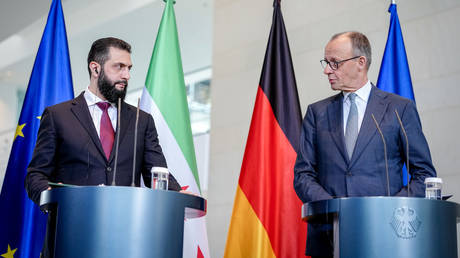
Friedrich Merz isn't whispering anymore. The German Chancellor has made it clear that the era of open-ended stays for the majority of Syrian migrants is drawing to a close. It’s a massive shift in European geopolitics. For years, the narrative in Berlin was about integration and long-term residency. Now, the conversation is about the flight path back to Damascus. You might think this is just standard political posturing, but the legislative gears are already turning. The central argument from the Chancellery is simple. If the immediate threat of war has subsided in specific regions, the legal basis for "subsidiary protection" evaporates.
This isn't just about one man's opinion. It reflects a hardening stance across the European Union. Voters are frustrated. Budgets are stretched. Merz is tapping into a sentiment that has been simmering since 2015. He's betting that the German public cares more about border control than the diplomatic fallout of talking to a pariah like Bashar al-Assad.
The end of the Syrian exception in Germany
For a decade, Syria was the exception to every rule. If you were from Homs or Aleppo, your right to stay was almost guaranteed. Merz is dismantling that. His administration argues that large swaths of Syria are now "sufficiently safe" for return. This isn't a claim made lightly. It’s based on updated security assessments that differentiate between active combat zones and areas under stable, if authoritarian, control.
The legal mechanism at play here is the revocation of status. Under German law, protection isn't a permanent gift. It’s a temporary shield. When the shield isn't needed, the guest is expected to leave. Merz has pointed out that thousands of Syrians already travel back home for summer holidays. "If you can vacation there, you can live there," is the unofficial mantra echoing through the Bundestag. It sounds harsh. To many, it’s just common sense.
Critics argue that "safe" is a relative term. They're not wrong. Being safe from a barrel bomb doesn't mean you're safe from a secret police interrogation. But the Merz government is looking at the macro level. They see a country that is no longer in a state of total collapse. They see a need to free up resources for those fleeing newer, more active conflicts. It’s a cold calculation.
Why the old integration model failed
We spent billions. We built language schools. We created job placement programs. Yet, the data shows a persistent gap in workforce participation among the 2015-2016 wave of arrivals. Merz isn't afraid to say the quiet part out loud: the "Welcome Culture" didn't deliver the economic miracle some promised. Instead, it created a structural weight on the social welfare system that Germany can no longer ignore.
The shift in tone is jarring if you've been following German politics for a while. Usually, these things are handled with layers of bureaucratic euphemism. Not under Merz. He’s direct. He’s focused on the "pull factors" that keep people coming. By making it clear that Syria is a viable destination for return, he's trying to signal to the world that Germany is no longer a guaranteed final destination.
- Financial incentives for return: The government is looking at "start-up" grants for those who go back voluntarily.
- Diplomatic channels: There are quiet talks happening with regional neighbors like Turkey and Jordan to facilitate transit.
- Legal pressure: Faster processing of deportations for those who commit crimes.
The Assad dilemma and the logistics of return
How do you send people back to a country run by a dictator? This is the thorniest part of the Merz plan. Germany doesn't have formal diplomatic ties with the Assad regime. You can't just land a Lufthansa flight in Damascus and drop people off. It requires a level of cooperation with a government that the West has spent years trying to topple.
Merz seems willing to hold his nose. The pragmatism on display here is almost cynical. If the goal is to reduce the number of migrants, the purity of the diplomatic stance becomes secondary. We’re likely to see a middleman approach. Maybe use international organizations or third-party countries to manage the logistics. It’s messy. It’s ethically complicated. It’s also exactly what a large portion of the German electorate is demanding.
Don't expect a mass exodus overnight. The legal hurdles are still significant. Each case technically requires an individual review. But the "burden of proof" is shifting. Before, the state had to prove it was dangerous for you to stay. Now, the pressure is on the individual to prove why they can't go back.
What this means for the rest of Europe
Germany is the bellwether. When Berlin moves, the rest of the continent follows. We’re seeing similar rhetoric in Denmark, Austria, and even the Netherlands. The idea of "permanent temporary" protection is dying. If Merz succeeds in even a modest number of repatriations, it sets a precedent that will be copied everywhere.
It's a turning point in the European migrant crisis. The focus has moved from "how do we settle them?" to "how do we return them?" This isn't just a policy change; it’s a psychological one. It redefines what it means to be a refugee in the 21st century. Protection is a loan, not a grant.
If you’re watching this play out, pay attention to the court cases. The German judiciary is famously independent. They will be the final roadblock for Merz. If the courts rule that Syria is still too dangerous, the Chancellor’s plan hits a wall. But if they agree with the government's security assessment, the floodgates open.
The next steps for the administration involve finalizing the list of "safe" provinces. If you're following this, look for updates on the security status of Damascus and the coastal regions. Those will be the first test cases. Watch the budget allocations for the Federal Office for Migration and Refugees (BAMF). If their funding for "return counseling" spikes, you know the policy is being put into high gear. The days of ambiguity are over. Germany is moving toward a policy of "home first."