Language barriers usually stand firm online. You see a foreigner speak a few rehearsed phrases. People clap. The video ends. Move on.
Not this time.
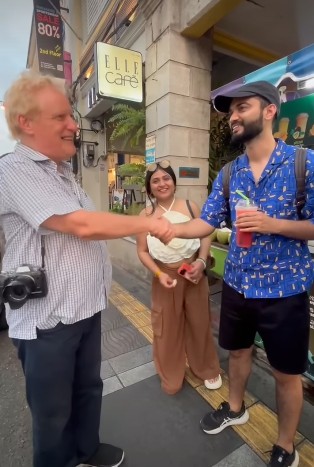
A German traveler recently broke the internet by holding a totally fluid conversation in Hindi and Bhojpuri. He didn't just rattle off a greeting. He dropped regional slang with complete ease. He even threw in the classic exclamation "Maa kasam!" right on cue. Social media users lost their minds. Comments flooded in instantly. People wanted to know how a guy from Europe mastered a regional Indian dialect better than many locals living outside Bihar.
The plot thickened when he revealed his travel stats. He claimed he visited India 1,500 times.
Let that number sink in. Fifteen hundred trips. That sounds like a typo. It sounds like an exaggeration born for viral clout. Yet, this viral moment points to something much deeper about how outsiders connect with localized Indian culture. It forces us to look past standard tourist paths. It shows the sheer power of true cultural immersion.
Breaking Down the Viral German Language Video
Viral videos rely on shock value. When someone defies expectations, algorithms amplify the clip. Westerners speaking Hindi always catch attention in South Asia. It flatters cultural pride. It bridges a massive geographical gap.
This specific clip worked differently. Most foreigners learn standard textbook Hindi. They sound stiff. They use formal grammar that nobody speaks on the street in Delhi or Mumbai. This German traveler skipped the textbook approach entirely. He picked up regional texture. He spoke Bhojpuri.
Bhojpuri carries a heavy cultural weight. It is spoken by millions across eastern Uttar Pradesh, Bihar, and parts of Jharkhand. It has its own rhythm, humor, and attitude. Hearing a native German speaker navigate those linguistic curves feels surreal. It is the linguistic equivalent of finding a polar bear in the Sahara.
Netizens reacted with pure disbelief. Some questioned the authenticity. Others laughed at his spot-on delivery of local idioms. He didn't sound like a language app tutorial. He sounded like someone who spent decades hanging out at local tea stalls.
The Mystery of the Fifteen Hundred Trips
The claim of visiting India 1,500 times sounds absurd at first glance.
Let us do simple math. If a person starts traveling at age twenty and visits fifty times a year for thirty consecutive years, they might hit that mark. Most frequent business flyers barely crack three hundred lifetime flights. So how does someone rack up 1,500 trips to India?
Frequent flier programs, airline crew jobs, or specific trade roles come to mind. Pilots and flight attendants often rack up thousands of international landings over long careers. If this man worked in aviation or international logistics involving frequent short hops across the region, those numbers climb fast.
Or maybe he meant something else. People exaggerate for effect online all the time.
Even if the exact count is hyperbole, the underlying truth remains clear. He has spent a massive portion of his life on Indian soil. You cannot pick up fluent Bhojpuri from a Duolingo course or a weekend layover in Delhi. That level of fluency requires years of listening, failing, and absorbing daily life on the ground.
Why Regional Dialects Matter More Than Standard Hindi
Mainstream media treats India as a monolith. People assume learning Hindi unlocks the entire country. Anyone who has traveled through the subcontinent knows that myth dies fast.
India runs on regional diversity. If you land in Chennai, Hindi gets you nowhere. If you land in Patna or Varanasi, standard textbook Hindi works, but local dialects win every single time.
Bhojpuri holds a massive cultural footprint. It drives a booming regional film and music industry. Millions consume Bhojpuri media daily. Yet, mainstream cultural output often marginalizes it as a rustic dialect.
When an outsider respects a regional dialect enough to learn it, it hits differently. It shows genuine respect. It bypasses the tourist bubble. Most foreigners stay in five-star hotels in Goa or take packaged tours of the Golden Triangle. They interact with English-speaking guides and hotel staff. They never touch the real pulse of the country.
This man clearly lived differently. To master Bhojpuri, you have to spend time where Bhojpuri is actually spoken. You have to sit in local markets, talk to auto drivers, and eat at roadside dhaba spots. You have to let go of comfort.
The Mechanics of Language Acquisition As An Adult
Adults struggle with new languages. Our brains harden. We overthink grammar rules. We fear sounding foolish.
Children absorb languages effortlessly because they drop their egos. This viral German traveler proves that adults can achieve the same results through sheer exposure.
Immersion beats study every single time. You can memorize verb conjugations until your eyes bleed. Until you are forced to order food in a market where nobody speaks English, your brain stays dormant.
- Drop the fear of sounding stupid. Locals usually appreciate the effort, even if you mangle the grammar.
- Focus on local flavor over formal rules. Textbooks teach you how to ask where the library is. Street life teaches you how to joke around.
- Listen more than you speak. Absorption precedes fluency.
Most people fail at language learning because they want perfection from day one. This viral video offers a different lesson. Embrace the chaos. Laugh at your mistakes. Use local slang.
What This Viral Moment Tells Us About Modern Internet Culture
We live in a cynical age. Every viral video gets scrutinized for AI manipulation, staged acting, or clickbait deception.
When a video like this drops, people want to tear it apart. They want proof. They want the backstory.
Yet, sometimes viral hits are just weird, delightful anomalies. A German guy loves India so much he learns Bhojpuri. He drops a phrase that makes millions smile. It reminds us that the internet can still connect cultures in unexpected ways.
You don't need a high-production travel show to capture global attention. You just need genuine passion, an unusual skill, and a willingness to step outside your cultural comfort zone.
Next time you think about learning a new skill or visiting a foreign place, remember the German man who traded standard tourist tracks for regional dialect mastery. Stop overthinking the grammar. Just dive in.