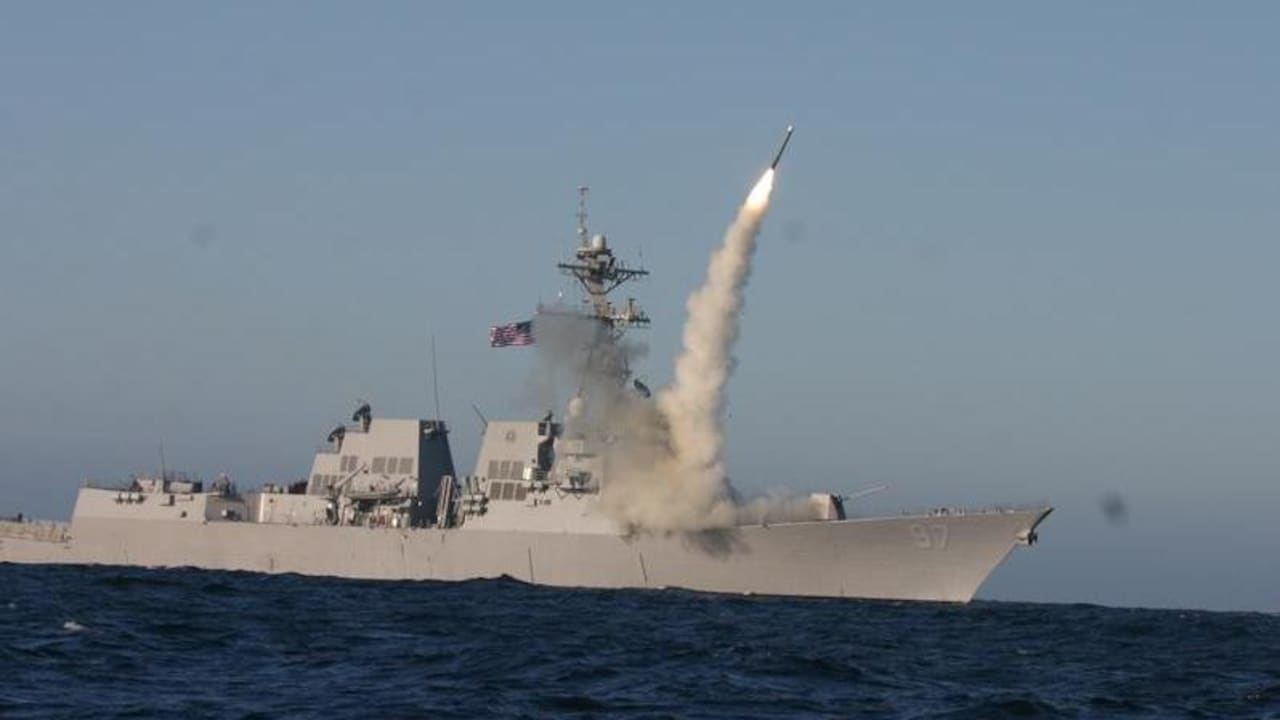
Germany is officially buying American Tomahawk cruise missiles. Chancellor Friedrich Merz broke the news to the Bundestag, fresh off the plane from the NATO summit in Ankara. It's a huge deal, but not just for the reasons you're reading about in the standard news cycle. This isn't just a simple transaction to fix a hole in Europe's military umbrella. It represents a massive pivot in how Berlin handles its own survival, especially after a roller-coaster ride of diplomatic friction with Washington.
Let's look past the surface. For months, Europe's largest economy was caught on the back foot. The Biden administration originally planned to deploy a US-controlled Tomahawk battalion to German soil starting this year. Then the Trump administration took office and scrapped the plan. Rumors swirled about strained munitions stocks from conflicts in Ukraine and Iran, paired with tense rhetorical spats between Trump and Merz.
Berlin was staring into a strategic void. Rather than giving up, Merz managed to salvage the situation by convincing the US to sell them the hardware outright.
Moving From Hosting to Ownership
When you host someone else's missiles, you're relying on their political will. If a US president decides a deployment is too escalatory or too expensive, those weapons vanish. By transitioning from a host nation to an outright buyer, Germany is fundamentally altering its deterrence posture.
German ownership makes this military capability permanent. Russia can no longer count on a change in the White House to erase Berlin’s deep-strike options. It provides Germany with a sovereign capability that it hasn't possessed in decades.
The hardware under discussion is lethal. Berlin signed a letter of intent to procure the ground-launched Tomahawk Block Vb variant along with Typhon containerized launcher systems. These aren't old Cold War leftovers. The Block Vb features a two-way data link that lets operators retarget the missile mid-flight, combined with a multi-effects warhead designed to punch through hardened land targets.
Flying just 100 feet off the ground to evade radar, these missiles have a range of roughly 1,600 kilometers. From German soil, that puts key strategic points deep inside Russian territory within striking distance. It functions as a direct counterweight to the nuclear-capable Iskander missiles Moscow has parked in the Kaliningrad enclave.
The Logistics Reality Check
Don't expect these systems to show up tomorrow. Buying weapons during a global rearmament boom means getting in a very long line.
- The Production Squeeze: Raytheon's assembly lines are under immense pressure. The US military is scrambling to replenish its own Tomahawk stocks after burning through inventory in recent operations against Iran.
- The Delivery Timeline: While Washington will grant formal procurement approval in August, the exact delivery dates and final missile counts remain classified. Military analysts know that getting hundreds of missiles and their specialized Typhon launchers into the hands of German troops will take years.
- The Training Burden: The letter of intent specifies that no US personnel will be deployed to run these systems. German soldiers have to learn how to operate, maintain, and integrate these complex long-range assets from scratch.
A Bridge To A Sovereign European Arsenal
Merz explicitly stated that while Germany is buying American tech today, the long-term goal is developing homegrown European long-range strike capabilities. The Tomahawk purchase is an expensive stopgap. Right now, Europe has virtually zero ground-launched, long-range conventional missiles. British and French cruise missiles are mostly air- or sea-launched with shorter ranges, and Germany's own Taurus missile tops out around 500 kilometers.
This purchase buys time for the European Long-Range Strike Approach (ELSA), a joint initiative between Germany, France, Italy, Poland, Sweden, and the UK. They are trying to build a European cruise missile with a range exceeding 2,000 kilometers. History shows that pan-European defense projects are notorious for budget overruns, political bickering, and glacial development timelines.
If you look at the landscape of European defense procurement, relying on a future European weapon is a gamble. Buying the Tomahawk gives Berlin immediate geopolitical leverage and an insurance policy in case those joint European initiatives stall out or take fifteen years to materialize.
If your organization tracks global defense procurement or European logistics supply chains, you need to prepare for a multi-year shift in how European armies structure their artillery and missile units. The next step is watching the formal US export approval this August. That will reveal the true scale of Germany's new long-range force and give a clearer picture of the production timelines that defense contractors must meet.